
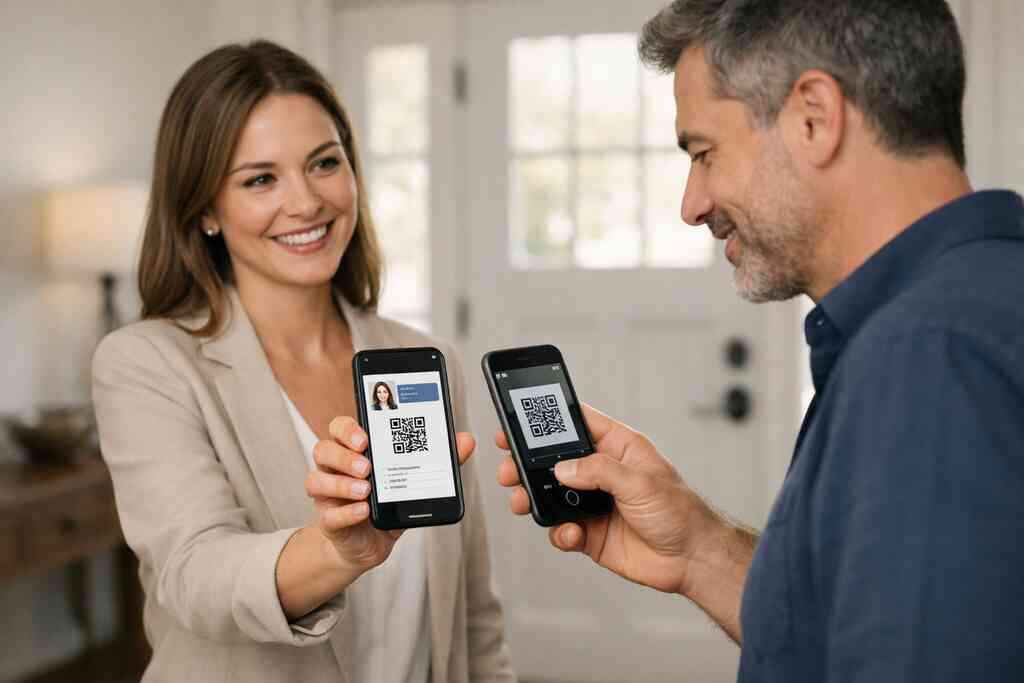
A good lead can vanish in seconds. One minute you are talking price, schools, and timelines. The next, your paper card is bent in a coat pocket or buried in a car console. If that sounds familiar, take a breath. That frustration is real, and it happens to agents every week.
Why paper cards disappear the moment a real estate lead gets serious
What agents lose when a paper card ends up in a car console instead of a CRM
Paper cards create a painful gap between interest and action. The lead has your name, but not your context, your listing link, or your next move. That is why a digital business card changes the equation so quickly. It keeps your contact details in one place instead of scattering them across a desk, a wallet, and a glove box.
A paper card also loses memory. After an open house, people juggle ten conversations and a dozen flyers. They may remember the kitchen island, but not your email. On the projects we’ve finished this year, that missing follow-up detail has mattered more than the handshake itself. A digital business card gives the prospect a cleaner path back to you.
Here is the part most agents miss. The real cost is not the card itself. It is the lost momentum when a warm conversation cools before you can respond. I have seen this happen after broker tours in Long Island, New York, when everyone leaves with a stack of paper and nobody leaves with an easy next step.
How a digital business card keeps your name, phone, and listing link in one shareable place
A virtual business card solves the problem by putting the important pieces together. Your name, phone, email, website, and listing link can live in one shareable view. That makes follow-up simpler for the buyer and cleaner for you. It also looks more polished than handing over a folded card.
That matters in real estate because your contact has to work in motion. Someone may be walking a hallway, standing in a driveway, or checking details between showings. A create digital business card for listings flow lets them save your information without typing everything by hand. It reduces friction, and friction kills follow-up.
One agent we heard from in the Garden City area shared a smart fix. She stopped handing out paper at showings and started using a shareable digital card on her phone. Her contacts could save her details, then tap straight into the listing page. That tiny change made her follow-up feel much faster and more intentional.
Why open houses, broker tours, and quick hallway conversations punish paper more than you think
Open houses are noisy. Broker tours are rushed. Hallway conversations are even worse. In all three settings, paper cards get damaged, misplaced, or ignored. A QR code business card or electronic business card works better because it fits the pace of the room.
Think about what happens at the end of a showing. People are carrying shoes, brochures, keys, and coffee. Nobody wants another loose rectangle of cardstock. This is where paperless networking wins. It respects how busy the interaction already is.
For real estate agents, that is not a small detail. It is a practical advantage. On a Saturday in Commack, for example, you may speak with ten prospects before lunch. A card that gets scanned and saved is far more useful than one that gets smudged on the car ride home. That is why many agents now treat a paper card as backup, not the main tool.
What changes when a real estate digital business card replaces the old handoff
How contactless sharing makes showings smoother for agents and property professionals
Contactless sharing removes a small but constant source of friction. You do not need to fumble for a card holder or hand someone a stack of paper. Instead, you can share your details in seconds. That is especially helpful during crowded showings, busy broker opens, and safety-conscious meetups.
This is where contactless sharing becomes more than a buzzword. It keeps the interaction smooth and professional. It also helps property professionals who meet multiple people in one day. For real estate digital business cards, the benefit is simple: less scrambling, more talking.
The best part is the tone it sets. A smooth exchange says you are organized. It also says you respect the other person’s time. In real estate, that first impression matters because trust often starts before the first showing ends.
Why QR code business cards and NFC business cards fit fast-paced client meetings
Speed matters in real estate, and both QR and NFC help with that. QR code business cards work well because almost every modern phone can scan them. NFC business cards add another fast option, especially when someone wants to tap and save. If you want a deeper look at tap-to-share basics, our NFC and QR business cards guide is a useful place to start.
There is also a reliability angle worth mentioning. Apple’s Core NFC framework supports tap-based interactions on compatible devices, and the ISO 14443 standard underpins many NFC exchanges. QR codes follow the ISO/IEC 18004 standard, which helps explain why scanning is so widely supported. That does not mean every phone behaves the same, but it does mean the underlying systems are mature and familiar.
For a sales-minded agent, the practical takeaway is easy. QR helps when scanning is faster. NFC helps when tapping feels easier. A smart business card strategy often uses both, so you can match the moment instead of forcing one behavior.
Where a virtual business card for agents gives you more room than a printed card ever could
A printed card gives you inches. A virtual business card for agents gives you room to explain. That extra space can hold listing links, office details, social profiles, and a clearer call to action. It can also point people to your digital business card for LinkedIn profile without crowding the front of the card.
That extra room matters because real estate marketing is rarely about one contact point. People want to check your website, confirm your service area, and sometimes compare several agents. A smart business card helps them do that without digging through old messages. It also gives you flexibility for sales professionals, freelancers, and corporate teams inside real estate offices.
FeaturePaper cardVirtual cardSpace for detailsLimitedFlexibleListing linksNot practicalEasy to addUpdatesReprint neededEdit quicklySharingPhysical handoffContactless sharing### How a smart business card can keep your branding consistent across every interaction
Consistency builds trust. If your open house flyer looks polished, but your card looks outdated, the brand feels scattered. A smart business card helps keep your colors, logo, photo, and message aligned. That alignment matters when you work across listings, neighborhoods, and team events.
It also matters for custom branding. Real estate buyers notice the details, even if they do not say it out loud. A clean digital design can feel more current than a generic card template. It says you care about presentation, and that often translates into confidence.
We see this often with digital business cards for networking in Long Island and digital business cards for networking in New York. People move between office hours, commuter trains, and late-day showings. A consistent card keeps your identity intact across all of it. That kind of small discipline can make your outreach feel much more professional.
The details that make buyers remember you after the open house ends
Which business card details matter most for real estate marketing and why less is often more
The best card details are the ones people use. That usually means name, title, phone, email, and one strong next step. For some agents, that next step is a listing page. For others, it is a profile, a booking link, or a team contact. The key is keeping the card useful, not crowded.
A lot of agents try to cram everything onto one surface. That usually backfires. More details do not always mean more action. In fact, a simpler business card example often performs better because it reduces decision fatigue. Buyers should know what to do next in seconds.
A strong business card design also avoids visual noise. Thin fonts, too many icons, and overloaded headlines make the card feel less trustworthy. The clearer the layout, the easier it is to remember. Here is the part many guides miss: in real estate, clarity often signals competence.
How custom branding and digital card design shape trust before the first call
Trust starts long before a phone call. If your digital card design for real estate branding looks sharp, people assume your process is sharp too. That is not vanity. That is presentation psychology. A clean layout can help a lead feel more confident reaching out.
This is where digital business card design and virtual card design matter. You want a card that looks like your market, not like a generic tech sample. The background image, color palette, and profile photo should all feel deliberate. The result is not just nicer-looking. It is easier to remember.
For agents working in competitive markets, that matters a lot. A prospect comparing multiple names after a showing may not recall every detail. They do remember what felt polished. That is why custom branding for property professionals deserves real attention, not leftover effort.
Why digital business card templates work better when they are built for listings and local markets
A strong template saves time and protects consistency. Digital business card templates for realtors in NY are especially helpful because they already account for common real estate needs. They can include listing links, team identifiers, and neighborhood cues without starting from scratch. If you want options, our templates page can help you compare layouts.
Templates are not about being generic. They are about removing design friction. That matters when you are balancing showings, open houses, and client calls. A good business card template should make your card easier to launch and easier to update.
You may also find that local context improves the result. In Suffolk County, for example, agents often need a card that speaks to specific neighborhoods and commuting concerns. A template that already leaves room for those details saves time. It also keeps your branding from feeling overloaded.
How Long Island, New York agents can use neighborhood context without crowding the card
Local context is powerful when it is used carefully. On Long Island, buyers care about school districts, commute times, and neighborhood feel. In NYC, they may care more about transit access and timing. Your card can reflect that without turning into a flyer. A smart approach is to use one local signal, not five. You might mention Long Island, New York, or a service area like Suffolk County. Then let the listing page carry the deeper details. That keeps the card clean and still relevant. Agents who work both local and commuter markets need this balance most. The person coming from Manhattan to a weekend showing has different needs than the neighbor walking over from two blocks away. A well-made online business card lets you speak to both without crowding the screen. That is a subtle advantage, but it is a real one. 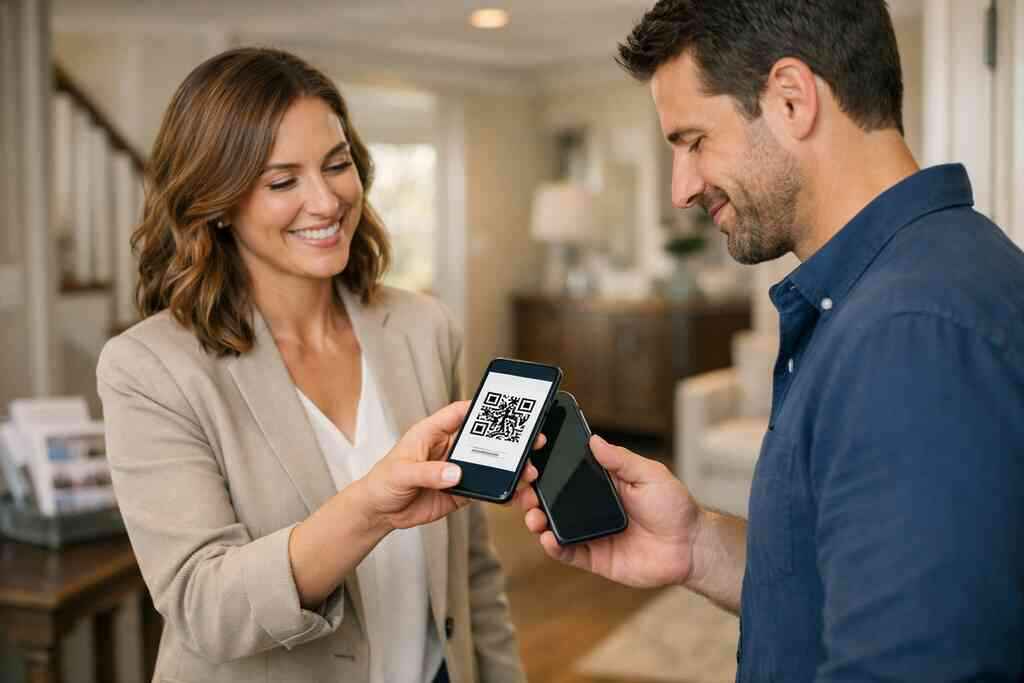
When lead capture starts doing the heavy lifting for your follow-up
How share contact info instantly can turn a casual scan into a warmer next conversation
Fast sharing matters because interest fades quickly. If someone scans your card and saves your details in the moment, you are far more likely to stay in their mind. That is the real strength of share contact info instantly. It keeps the relationship warm while the conversation is still fresh.
A paper card often creates a delay. The lead has to type, sort, or remember. A digital card removes that pause. It turns a casual scan into a direct path back to you, which is exactly what busy buyers need.
This is especially useful after open houses. People often leave with a list of maybe three agents they liked. The one who made contact easy usually gets the first callback. That small timing edge can matter more than a longer brochure ever will.
What digital card analytics can show you about interest after an event or showing
A strong digital setup does more than share details. It helps you see what happens after the share. Digital card analytics can show you when people engaged, what they clicked, and which cards got attention after an event. If you want a deeper breakdown, our lead capture guide explains the tracking side in more detail.
That information helps you separate curiosity from real interest. A lead who clicks your listing link twice may deserve a faster follow-up than someone who only saved your number. That is why lead capture matters so much in real estate marketing. It gives you better signals, not just more names.
Data should guide your next move, not overwhelm you. If you know which listings get the most clicks, you can sharpen your message. If you know which events create the most saves, you can show up there again. The point is to work smarter, not harder.
Why CRM integration and follow-up automation matter for busy real estate teams
Real estate teams need speed and order at the same time. That is where CRM integration for real estate marketing becomes valuable. It helps your contacts move into the right workflow without manual copy-paste work. For teams that handle a high volume of leads, that saves real time.
Follow-up automation for agents also keeps good leads from going cold. A quick thank-you message, a listing reminder, or a check-in can happen without delay. That does not replace personal outreach. It supports it. The best systems still sound human.
If you are comparing tools, look at how they support your process. A digital business card app for networking should not create extra admin. It should reduce it. That is especially important for corporate teams and busy offices that need everyone aligned.
How electronic business card exchange helps NYC commuters and Suffolk County agents stay organized
Commuter traffic changes the way people network. NYC agents may meet prospects between train stops, lobby conversations, and evening events. Suffolk County agents may bounce between properties and brokerage offices. In both cases, an electronic business card exchange helps keep contact details organized.
I once heard from an agent who split her week between Long Island and Manhattan. She said her biggest challenge was not getting leads. It was sorting them before they got buried in her phone. Once she moved to a digital card workflow, her follow-up felt less chaotic. That is the quiet benefit of a cleaner system.
For local networking, this matters beyond real estate too. People at a Hauppauge business mixer or a Commack co-working space rarely want to exchange paper and move on. They want a quick save and a clear next step. That is exactly where digital business cards near me in Long Island, New York starts making practical sense.
The move that turns a digital card from a nice tool into a growth system
How to create digital business card assets that match your listings, your team, and your market
A good card is not just a contact tool. It is part of your marketing system. When you create digital business card assets that match your listings, your team, and your local market, you make every interaction work harder. That includes open houses, listing presentations, and casual introductions.
Start with the basics. Keep your message clear, your design readable, and your links current. Then match the card to the role it plays. A solo agent may need one version. A team leader may need another. A property professional serving multiple neighborhoods may need a flexible setup.
If you want examples, our real estate digital business card examples page can help you think through structure. The goal is not to copy a layout. The goal is to choose a format that feels easy to use and easy to update.
Where to compare free digital business card options with premium digital card plans on our pricing page
Cost matters, especially for small business owners and independent agents. Some people want a free digital business card option to test the waters. Others prefer premium digital card plans for more control and flexibility. If you want to compare them, our pricing page is the right place to review the current options.
The key is to compare what you actually need. Do you need a simple digital card for networking? Or do you need deeper tools for branding and team use? Not every agent needs the same setup. That is why digital card pricing should be judged against your workflow, not against a headline alone.
A digital card vs paper comparison usually ends up being about efficiency. Paper is familiar, but digital is easier to update and share. If your market changes often, that flexibility is worth more than a box of reprints sitting in your office.
When to use our how it works guidance to set up a card without slowing down your week
Setup should not eat your week. That is the point of a useful system. If you need a simple walkthrough, our how it works guidance can help you get oriented without guesswork. It is especially useful if you are new to the digital business card app side of networking.
A good setup usually follows three moves:
- Fill in your profile.
- Add the right contact and listing details.
- Test how the card shares on your phone.
That sounds simple because it should be simple. The best tools do not make you learn a new habit from scratch. They fit into the way you already meet people. That is why so many agents prefer a cleaner digital workflow over another stack of printed cards.
Why real estate digital card examples and our templates can help you choose a cleaner next step
Examples help you decide faster. When you see a digital business card example built for real estate, the choices become easier. You can judge what belongs on the card and what should move to the listing page. You can also see how a business card template for real estate handles space, hierarchy, and branding.
That matters for brokers, agents, and property consultants who do not want to overthink design. A template gives you structure. A good example gives you confidence. Together, they shorten the path from idea to usable card. That is valuable for anyone who wants a smarter next move without adding more work.
If you are ready to compare formats, look at what fits your market first. Long Island agents may want neighborhood context. NYC agents may want transit and mobile speed. Either way, the cleaner path is usually the stronger one. Start by choosing one card version you can actually use this week, then refine from there.
Frequently Asked Questions
Question: What makes What Makes Digital Business Cards Better for Real Estate useful for real estate agents compared with a traditional paper card?
Answer: Digital business cards are better for real estate because they keep your contact details, listing link, and next step in one easy-to-share place. In fast-paced settings like open houses, broker tours, and hallway conversations, a paper card can get lost, bent, or forgotten before the lead follows up. A digital business card helps agents share contact information instantly, which makes it easier for buyers and sellers to save your details and come back later. That is especially helpful for real estate agents, property professionals, and sales professionals who need a cleaner way to stay organized. It also supports paperless networking and contactless sharing, which fits the way people already communicate on their phones. For teams that want a more polished first impression, a smart business card can also improve business card design and make your branding feel more consistent.
Question: How do QR code business cards and NFC business cards support open houses and property showings?
Answer: QR code business cards and NFC business cards are a strong fit for open houses and property showings because they make sharing simple and fast. A guest can scan a code or tap a card and save your details without typing anything manually. That reduces friction, which is important when people are carrying brochures, keys, coffee, or just trying to move quickly between showings. For real estate digital business card use, this matters because the goal is not just to hand over contact details, but to make it easy for people to take action afterward. A digital business card app can help you share contact info in a way that feels smooth and professional. It also works well for electronic business card exchange at open houses, where paper can be overlooked or misplaced. For agents in Long Island, New York, Suffolk County, or NYC, that kind of speed can make networking feel more natural and more effective.
Question: How can a virtual business card for agents improve lead capture and follow-up automation after a showing?
Answer: A virtual business card for agents can improve lead capture by making it easier for someone to save your details the moment interest is highest. Instead of relying on someone to type your email later, a digital card gives them a direct and immediate path back to you. That can support follow-up automation for agents, especially when the contact is tied into your workflow or CRM integration for real estate marketing. It also makes it easier to track who engaged with your card and which links they chose to open, which is where digital card analytics can be valuable. While the exact features of any digital business card app may vary, the general benefit is clear: less manual work and a better chance of staying organized after a busy event. For agents handling multiple leads, that can make a real difference in professional networking and response time.
Question: What should a strong business card template for real estate include, and how does custom branding help?
Answer: A strong business card template for real estate should focus on the details people actually need, such as your name, title, phone number, email, website, and one clear next step. In many cases, less is more. A clean digital business card design for agents can also include a listing link, service area, or digital business card for LinkedIn if that supports your outreach. Custom branding is important because it helps your card match the rest of your marketing. If your open house flyer, listing presentation, and online business card all feel consistent, people are more likely to remember you. That kind of branding works well for real estate digital business card use, especially when you want the card to look professional without becoming cluttered. A good business card template should feel easy to use, easy to update, and adaptable for agents, brokers, freelancers, and corporate teams in real estate offices.
Question: How can Digital Business Cards help Long Island and NYC agents choose between free digital business card options and premium digital card plans?
Answer: Digital Business Cards can help agents compare options by making it easier to decide what fits their workflow, their branding, and their budget. Some real estate agents only need a simple free digital business card to get started, while others may want premium digital card plans for more flexibility. The right choice depends on how you plan to use the card for digital business cards for networking, lead capture, and follow-up. If you work in Long Island, New York, Suffolk County, or NYC, you may also want a setup that supports fast sharing and strong presentation across many different client interactions. The best approach is to review the available digital card pricing carefully and compare it with the business card features you actually need. That way, you can choose a platform that works for your day-to-day routine without paying for extras you may not use. If you want to understand the setup process first, the how it works guidance on Digital Business Cards is a helpful place to start.