
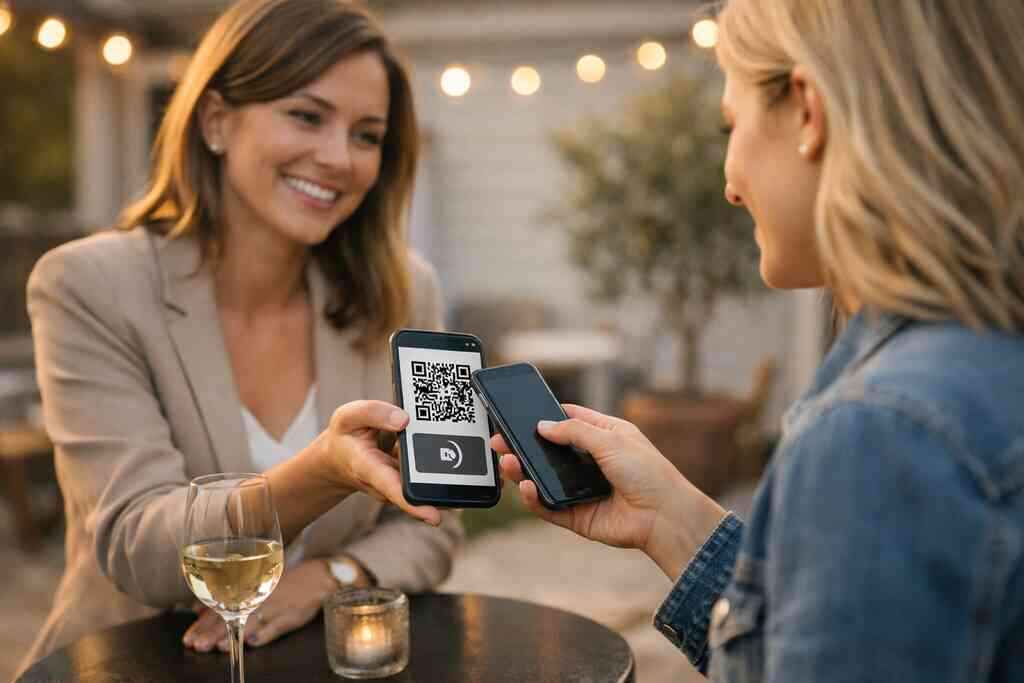
1) The open house card that never gets tossed in the trunk
The worst feeling is simple: you leave an open house with a pocket full of damp paper cards, and none of them survive the drive home. In Long Island and NYC, that happens faster than most agents admit. People grab a card, stuff it near their phone, and forget it before dinner. If that sounds familiar, breathe. This is exactly where digital business cards earn their keep.
Why paper cards disappear fast after a busy showing in Long Island and NYC
Open houses move quickly. One buyer asks about taxes, another asks about commute time, and a third wants school details. Paper cards get handed out in a rush, then they disappear into cars, tote bags, and coat pockets. A digital business card stays available after the conversation ends. That matters when you are juggling showings from Garden City to Brooklyn. It also matters when weather turns a card into a wrinkled mess.
Here is the part most agents miss. Buyers rarely lose interest first; they lose the card first. A clean online business card for real estate gives them one place to return later. It also supports paperless networking without making you look overly technical.
How a digital business card keeps your contact info one scan away at open houses
A good virtual business card solves the follow-up problem before it starts. You show the card. They scan it. Your phone, email, website, and social links are right there. That is much easier than digging through a drawer of leftover paper cards later. It also helps when buyers are comparing several agents after one afternoon of showings.
On the projects we’ve seen this year, speed has mattered more than decoration. A QR code business card works well because it lets someone scan and move on. If you want a broader look at structured layouts, top digital business card templates for realtors in New York can help frame the options. The key is keeping the scan obvious and the next action clear. That usually beats a crowded card with too many boxes.
What a realtor digital card should show before a buyer ever asks for your number
A strong realtor digital card design answers basic questions fast. Buyers should see your name, role, brokerage, photo, and one or two clear contact methods. They should also know where you work and what area you cover. If you focus on listings, say so. If you work on the buyer side, make that obvious. Clarity builds trust faster than fancy graphics.
For a real estate agent, the best business card details are the ones that reduce hesitation. Add a direct call button, a text option, and a clean website link. If you use a digital card maker, keep the layout simple enough to read on a phone screen. That is especially useful during crowded weekend showings. You want the card to feel helpful, not busy.
2) The QR code business card template that works when you need speed more than flair
A QR code business card template is often the smartest choice when time matters more than ornament. Real estate moves in bursts. A listing tour, a sign-in table, and a quick hallway introduction all reward fast sharing. Busy designs slow people down. Simple layouts help them act.
When a simple QR code layout beats a busy real estate business card template
A simple layout wins when the setting is noisy or rushed. Think sidewalk conversations, broker previews, and lobby meetings. A buyer may only have ten seconds. A real estate business card template loaded with gradients, icons, and multiple images can feel clumsy. A clean QR-first design feels more confident. It says you know how people actually exchange information.
The QR standard itself is not a gimmick. QR code contact sharing works because the scan action is familiar and fast. The ISO/IEC 18004 standard supports that reliability. For many agents, that is enough. You do not need a flashy card if the card does the job. You need a card that scans cleanly and loads quickly.
Which business card details matter most for listing agents and buyer agents
Listing agents and buyer agents use digital cards differently. Listing agents usually need stronger branding, listing links, and a clear service area. Buyer agents often need quick contact access and a short bio that signals responsiveness. The right business card template should support both without feeling crowded. Keep the core fields visible at a glance.
A useful business card example for an agent usually includes these items:
- Name and title
- Brokerage or team name
- Headshot
- Phone number
- Email address
- Website or profile link
- Service area
A simple set of details often performs better than a long profile. You want the person scanning to know who you are and how to reach you. That is the whole point. If you need a real estate-focused comparison, best business card templates for real estate agents in 2026 is a helpful benchmark.
How to create digital business card designs that scan cleanly on phones and signs
If you want to create digital business card designs that actually work, test them in poor light and on small screens. That sounds basic, but it saves headaches. A QR code on a sign should still scan from a few feet away. A QR code on a phone should not be buried under clutter. White space matters more than most people expect.
The best digital card maker for real estate professionals gives the code room to breathe. Keep contrast high. Keep fonts large. Keep the call to action short. In our experience, that simple structure improves contactless sharing at open houses and curbside sign meetings. If the card is hard to scan, it is not finished.
3) Why NFC business cards feel smoother at networking events but are not always the best pick
There is a reason NFC business cards for real estate networking get attention. Tap feels elegant. It feels quick. It feels modern without needing much explanation. Still, smooth is not the same as best. The right choice depends on the room you are in.
How tap to share changes the room at mixers and client introductions
Tap-to-share changes the rhythm of an introduction. You meet someone at a Hauppauge business mixer, you tap, and the contact lands instantly. That small motion removes awkward steps. No typing. No spelling. No fumbling with paper. It can make a first meeting feel polished. It also makes a strong impression when you want the exchange to feel memorable.
For readers comparing options, near field communication for tap-to-share cards explains the basic idea well. Apple’s Core NFC framework and the ISO 14443 standard are part of why the category has become more dependable. Still, tap only works when the other phone or card setup cooperates. That is why many agents keep both NFC and QR options in mind.
When NFC business cards for real estate networking make sense in New York offices
NFC cards work well in controlled environments. Think office meetings, association events, and recurring networking groups. They can be especially useful in Manhattan and downtown Long Island offices where people are used to touchless tools. A smart business card can feel efficient in those settings. It also looks clean during repeated introductions.
One agent we spoke with used a tap card during a Commack co-working event. The card worked beautifully with people who wanted a fast exchange. But a few guests still preferred scanning, because their devices or settings made tap slower. That is the honest tradeoff. NFC is smooth, but QR still wins on universal familiarity.
What to check before choosing a smart business card over a QR code option
Before you choose NFC, ask a few practical questions. Will your audience know how to use it? Will their phones support it easily? Will your card still work if someone wants a screenshot or a saved link? Those questions matter more than style. A digital business card app should support real-world behavior, not just a demo.
Use this quick comparison:
OptionStrengthWatchoutQR codeFast and familiarNeeds a clear scan targetNFCFeels premium and quickNot every phone flow is equalHybridFlexible for more situationsRequires careful setupIf you want a deeper local comparison, QR and NFC card differences for NYC teams is worth a look. For many agents, hybrid flexibility is the safest bet.
4) The custom branding template that makes a realtor look established before the handshake ends
Branding does quiet work. Before someone reads a word, they already feel your style. A custom branding template helps a realtor look established, organized, and credible. That matters in luxury listings, but it matters in every price range. People trust what looks thought through.
How custom branding changes the feel of an online business card for real estate
A branded electronic business card does more than share contact details. It tells the buyer what kind of experience to expect from you. A well-matched font, color palette, and photo style can make your card feel aligned with your listing presentations. That creates consistency. Consistency feels professional.
For agents building a stronger visual identity, custom branding tips for digital business cards in 2026 is a useful resource to keep in view. The goal is not decoration for its own sake. The goal is recognition. When your card, email signature, and listing packet all look connected, people remember you faster. That is especially useful in competitive NY markets.
Which colors, headshots, and property imagery work best for luxury listings and local teams
Luxury listings usually respond well to restrained colors. Navy, charcoal, white, and deep green often feel calm and credible. Bright colors can still work, but they should be intentional. Headshots should be sharp and recent. Property imagery should support your brand, not distract from it.
Teams need a different approach. Shared branding should let each agent feel distinct without breaking the overall look. A digital business card design with one strong logo, one photo, and one clean hero image usually performs well. If you serve Long Island, New York, and NYC, keep the visuals adaptable. One template can still feel local without becoming repetitive.
How to keep your virtual card design consistent with your listing presentations and social profiles
Consistency is where strong branding becomes useful. If your listing presentation uses one tone and your card uses another, people notice the gap. Your virtual card design should mirror your typography, colors, and tone across channels. That includes LinkedIn, email, and social bios. It also includes how you describe your service area.
Here is what almost no online guide mentions: people judge coherence in seconds, not perfection. If your card, website, and social profile all tell the same story, your credibility rises. That is a quiet advantage in professional networking.
5) The lead capture layout that turns a quick share into a real follow-up opportunity
A card swap is nice. A follow-up opportunity is better. That is why lead capture belongs near the top of your checklist. A digital card should do more than exchange information. It should help you stay organized after the room gets noisy again.
What digital card features matter most when you want more than a contact swap
When you need more than a name and number, look for features that reduce manual work. A good digital card should support contact sharing, direct links, and a clear action path. It may also support CRM integration or follow-up workflows, depending on the platform. Those are useful because they cut down on forgotten notes. Less friction means better response.
The most practical digital business card features are the ones you will actually use. That can include a call button, email button, website button, and social links. If available, digital card analytics can help you see what people tap most. That is not flashy. It is useful.
How lead capture and follow-up automation can support busy sales professionals
Busy agents do not need another inbox problem. They need a system that catches the lead before it drifts away. Follow-up automation can help by turning a card exchange into a structured reminder. That can be especially useful after a weekend open house or brokerage event. It helps you respond while interest is still warm.
The question we get more than any other from first-time users is simple: “Will this save me time later?” Often, yes. Not because the tool does the work for you, but because it keeps the work visible. One agent in Suffolk County told us she used to lose track of handwritten notes after showings. A digital card workflow reduced that scramble. The method mattered more than the gadget.
Why digital card analytics matter for agents tracking which links get opened and shared
Analytics give you context. If people keep tapping your listings page and not your bio, that tells you something. If your email link gets ignored while your text option gets used, that tells you something too. Digital business card analytics for lead tracking and follow-up ROI can help you see those patterns. That is valuable for agents who want better timing.
For a deeper look, digital business card analytics for lead tracking and follow-up ROI connects the idea to real workflows. Just keep privacy in mind. If you store shared contact details, handle them carefully. GDPR-style principles still matter for consent and storage discipline, even when your audience is local. Good systems respect people.
6) The template built for LinkedIn, email, and every place buyers actually reply
Some leads reply by text. Others reply on LinkedIn. A few reply by email, often after a delay. Your card should work in all three places. That is why the best template for agents travels well across channels. ### Why a digital business card for LinkedIn can outperform a static profile link 
A static profile link gives people a destination. A digital card gives them a path. That difference matters on LinkedIn, where attention is thin and options are endless. A digital business card for LinkedIn realtors can move someone from curiosity to action faster than a bare profile URL. It gives them phone, email, and branding in one place.
If you want to compare channel use, digital business cards for LinkedIn networking in 2026 is a practical reference. The point is not to replace LinkedIn. The point is to use LinkedIn as one more doorway. That helps agents stay visible without forcing people to search for basics.
How to share contact info through email, text, and direct messages without losing momentum
Momentum disappears when links are clumsy. If you send a strange file or a cluttered signature, the lead slows down. A workflow that lets you share contact info instantly with clients should feel natural in email, text, and DMs. Keep the message short. Keep the link clean. Keep the next action obvious. That makes response easier.
A good electronic business card exchange usually follows the same pattern:
- Share the link or QR code.
- Confirm the recipient can open it.
- Point them to one action, such as calling or booking.
- Send a short follow-up later.
That is simple on purpose. Simple gets done. Complex gets postponed. Agents in NYC and Long Island both benefit from that discipline.
Which electronic business card exchange habits help New York agents stay memorable
Memorable does not mean loud. It means useful. When you exchange cards at a NYC commute stop or a Long Island networking breakfast, send a short personal note with the card. Mention the neighborhood, the property type, or the topic you discussed. That makes the exchange feel human. It also improves recall later.
One client at a Garden City event shared his digital card after a conversation about school districts and train access. He followed with a brief message referencing both. That small detail made the contact feel specific instead of generic. The card did not close the deal. It kept the conversation alive. That is the real win.
7) The paperless networking template that fits solo agents, teams, and small brokerages
Not every office works the same way. A solo agent needs speed. A team needs consistency. A small brokerage needs both. A paperless networking template can serve all three if it is built with discipline.
How digital business cards for networking scale from one agent to a full office
A single agent can get by with a basic layout. A larger office needs structure. Digital business cards for networking scale better because updates are centralized and easier to manage. When someone changes a phone number or listing area, the update should not create chaos. That is one of the quiet strengths of a digital system.
The best approach is to define shared fields. Then let each agent personalize the rest. That keeps the office cohesive. It also prevents mistakes during busy seasons. A consistent template supports better handoffs between agents, assistants, and marketing staff.
What corporate teams and small business users should prioritize in a template
Corporate teams and small business users need clarity first. A template should be easy to read, easy to update, and easy to standardize. It should also respect hierarchy without becoming rigid. For example, the team name, role, and main contact line should stay obvious. That keeps the network experience smooth for clients and prospects.
If you are comparing broader uses, digital business cards for small business owners in 2026 gives a good parallel. The lesson is the same: keep the template usable before you make it pretty. If the card confuses people, the design failed. If it guides them, it worked.
How a digital card maker helps keep contact details consistent across people and departments
A digital card maker for real estate professionals can simplify updates across a team. When every profile follows the same structure, fewer details get missed. That matters for brokerages with multiple agents, showing assistants, and marketing staff. It also matters when you want one shared standard for branding. Consistency saves time later.
Here is a practical benefit list:
- Fewer outdated phone numbers
- Cleaner team branding
- Faster profile updates
- Easier seasonal refreshes
- More predictable client experience
Those are not glamorous benefits. They are real ones. And in real estate, real usually wins.
8) The sustainable business card template that clients notice before they even read it
People notice waste. They also notice restraint. A sustainable business card template signals that you care about efficiency without making a speech about it. That can be appealing to clients who prefer simpler tools and cleaner systems.
Why paperless networking matters to clients who prefer cleaner, simpler tools
Some buyers just like less clutter. They do not want a stack of cards, brochures, and flyers after every meeting. Paperless networking for realtors fits that preference nicely. It also matches the way many people already manage contacts on their phones. That makes your follow-up feel more natural.
This is not about being trendy. It is about meeting people where they already are. A clean digital card vs paper comparison usually favors digital for convenience and storage. Paper can still have charm. But charm does not help when the card is lost. Digital keeps the conversation alive.
How sustainable business cards compare with the old digital card vs paper tradeoff
The tradeoff is straightforward. Paper is tangible, but it is easy to misplace. Digital is searchable, shareable, and editable. The old paper card also creates reprint waste every time your title changes or your team updates its branding. A digital system avoids that churn. That can save effort even when you are not thinking about sustainability.
For agents who want a local angle, this matters in Long Island, New York, where many buyers already expect practical, modern tools. A digital business card app for property professionals fits that expectation without asking much from the recipient. The card should feel lighter, not more complicated. That is the real advantage.
What makes a free digital business card option different from premium digital card plans
A free digital business card option can be a good starting point. It helps you test the format and see how clients respond. Premium options usually make more sense when a team needs consistency, branding control, or broader coordination. The exact features vary by platform, so check carefully before you commit. Do not assume every plan includes the same tools.
If you are evaluating budget and growth together, pricing and plans for premium digital card options for real estate teams is the right place to compare possibilities. The best choice is the one that fits your workflow now and leaves room to grow. You do not need every feature on day one. You do need a template that will not box you in later.
9) The Long Island realtor template that fits Garden City polish and Suffolk County pace
Long Island real estate moves with two rhythms at once. One side is polished and formal. The other is fast, practical, and local. A strong template should handle both. That is where regional nuance matters.
Which digital business card templates for real estate agents feel natural in Long Island, New York
The best digital business card templates for real estate agents in Long Island, New York, usually feel clean and direct. They do not overdo animation or clutter. They make room for your headshot, title, and service area. They also fit the professional expectations of Garden City, Huntington, and surrounding markets. Buyers notice when a card feels aligned with the market.
If you want a local shortcut, best digital business cards for Long Island real estate professionals gives a strong regional context. A good template should support your local identity without tying you to one neighborhood alone. That balance matters if you cover multiple towns. You want local credibility and broad flexibility.
How NYC commuters and Suffolk County agents can use one card across different markets
Many agents work both commuter and suburban markets. They may meet a buyer in Manhattan, then show homes in Suffolk County the next day. One card should handle both audiences. That means clear branding, broad service area language, and contact methods that work anywhere. A virtual business card for agents helps keep that consistency.
A simple rule helps here. If the card works on a train platform, in a driveway, and in an office lobby, it is ready. That is not a technical test. It is a practical one. Agents who cross markets need tools that do not force separate systems for each audience.
What local networking tools should support agents meeting in Commack, Hauppauge, and nearby business hubs
Local networking still matters. People remember who shows up. If you meet at a Commack co-working space or a Hauppauge business mixer, your card should feel immediate and professional. It should also be easy to save. That is where Long Island realtor networking tools really matter. They should fit the pace of local introductions.
The most useful tools support quick contact sharing, clean branding, and easy follow-up. They also reduce the chance that your details get lost between meetings. For agents who want an organized presence, how to create a digital business card for listing agents can guide the setup. Start with a template that feels natural in your local market. Then refine it from there.
10) The template decision that saves you from redesigning your whole digital presence later
Choosing a template is really about future friction. A smart decision now saves you from rebuilding later. That is especially true for agents who are trying to keep listings, team pages, and event cards aligned. The right setup should scale without stress.
How to compare the best digital business card platforms for agents without getting lost in features
The best digital business card platforms for agents are not always the ones with the longest feature list. They are the ones you can actually maintain. Compare design control, sharing methods, analytics, and update ease. Also compare how clearly the platform explains its setup. If you feel confused during research, that confusion usually gets worse later.
A helpful lens is simple. Look at the platform’s templates, its pricing structure, and its support for real estate workflows. If you want a broad comparison, reviews of digital business cards for New York real estate professionals can help you think through trust factors. Do not rush this step. A card you cannot manage is not a good card.
When to choose a simple business card template now and a more advanced one later
Start simple if you are unsure. A basic business card template for open house events often outperforms a complex design in early use. Once you know what people click, you can add more depth. That might mean analytics, richer branding, or more team coordination. Growth should follow evidence, not guesswork.
Here is a practical decision table:
SituationBetter choiceWhySolo agent testing digital sharingSimple templateEasy to launch and editTeam with multiple agentsStructured templateConsistent branding and rolesBrokerage with recurring eventsMore advanced templateBetter coordination and trackingThat approach keeps your digital presence sane. It also lowers the chance of redesign fatigue. You want momentum, not another stalled project.
What to look for before you create digital business card versions for listings, teams, and events
Before you launch multiple versions, define the shared core: name, photo, contact method, and service area. Then decide which pieces change by use case. That way, your listing card, team card, and event card still feel like they belong to the same brand. That is the difference between organized and scattered.
If you are ready to create digital business card versions across your business, the safest move is to map the structure first. Then build the design. Then test it with real clients and real phones. You do not have to figure it all out today. Start with one version, one event, and one clean follow-up path. Then refine it once you see how people respond.
Frequently Asked Questions
Question: What should I look for in digital business cards for realtors in NY, especially if I want a template that works at open houses in Long Island and NYC?
Answer: For real estate agents, the best digital business cards are usually the ones that keep things simple, clear, and easy to scan. At open houses, buyers do not want to dig through a crowded layout. They want a digital business card that quickly shows your name, title, brokerage, phone number, email, website, and service area. That is why a clean online business card for real estate often works better than a busy design. A strong template should also support contactless sharing, so people can save your info right away instead of losing a paper card later.
Question: In Top 10 Digital Business Cards Templates for Realtors in NY, which template style is best if I want QR code business cards for real estate networking and fast follow up after showings?
Answer: If speed matters most, a QR code business card style is usually the strongest choice. It works well for real estate business card template setups because buyers can scan, view your details, and move on without friction. For busy showings in Long Island or NYC, that can make a real difference. The best layout is one that gives the QR code room to breathe, uses readable fonts, and includes only the business card details people need most. A good digital card maker should help you build that kind of layout without making the design feel cluttered. If you also want lead capture or follow-up automation, a digital card platform can help you stay organized after the event.
Question: Are NFC business cards for real estate networking better than QR code business cards, or should I use both?
Answer: NFC business cards can feel polished and efficient, especially at professional networking events, broker previews, and office meetings. They are a good fit when you want tap to share to feel smooth and memorable. But QR code business cards still have the advantage of being familiar and easy for most people to use. For many real estate agents, a hybrid smart business card approach is the safest option because it gives you more flexibility in different settings. That way, you can share contact info instantly with clients whether they prefer tapping or scanning. If you are working in New York offices, Long Island networking events, or Suffolk County meetings, having both options can make your electronic business card exchange easier.
Question: How can custom branding improve a realtor digital card design for luxury listings and team branding?
Answer: Custom branding helps your virtual business card feel established before you even start talking. For luxury listings, that can be especially important because people often judge professionalism by the look and feel of the card first. A well-built digital business card design should match your listing presentation, website, and social profiles so everything feels consistent. That might mean using restrained colors, a sharp headshot, and property imagery that supports your brand instead of overpowering it. For teams and small brokerage groups, custom branding also helps keep everyone aligned while still letting each agent have their own contact details. In practice, strong business card design makes your online business card feel more trustworthy and easier to remember.
Question: What makes Digital Business Cards a practical digital business card app for property professionals who want lead capture, digital card analytics, and CRM integration?
Answer: A practical digital business card app should do more than display contact information. It should help you stay organized after the meeting is over. For property professionals, that means supporting lead capture, making it easier to track what people click, and fitting into a broader follow-up workflow. Digital card analytics can show which links get opened most, which is useful for real estate lead generation and better follow-up timing. CRM integration can also help keep contact information in one place so nothing gets lost between showings, open houses, or networking events. At Digital Business Cards, the focus is on making it easy to create digital business card profiles that support real-world networking, not just a nice-looking demo. If you want a business card example for real estate that is easy to use across email, text, LinkedIn, and in-person meetings, this approach is a strong fit.
Question: Do you offer free digital business card options, and when would premium digital card plans make more sense for real estate agents or corporate teams?
Answer: A free digital business card can be a helpful way to get started if you want to test the format and see how clients respond. It is a practical first step for solo agents, freelancers, or small business users who want to try paperless networking without overcommitting. Premium digital card plans may make more sense when you need more consistency across a team, better branding control, or a more structured setup for multiple users. That is especially relevant for real estate agents, corporate teams, and small brokerage offices that want the same template style across many people. The right choice depends on your workflow, how often you update your details, and how much coordination your team needs. If you are comparing digital card pricing, it is best to review the current options directly so you can choose the plan that fits your goals without guessing.