
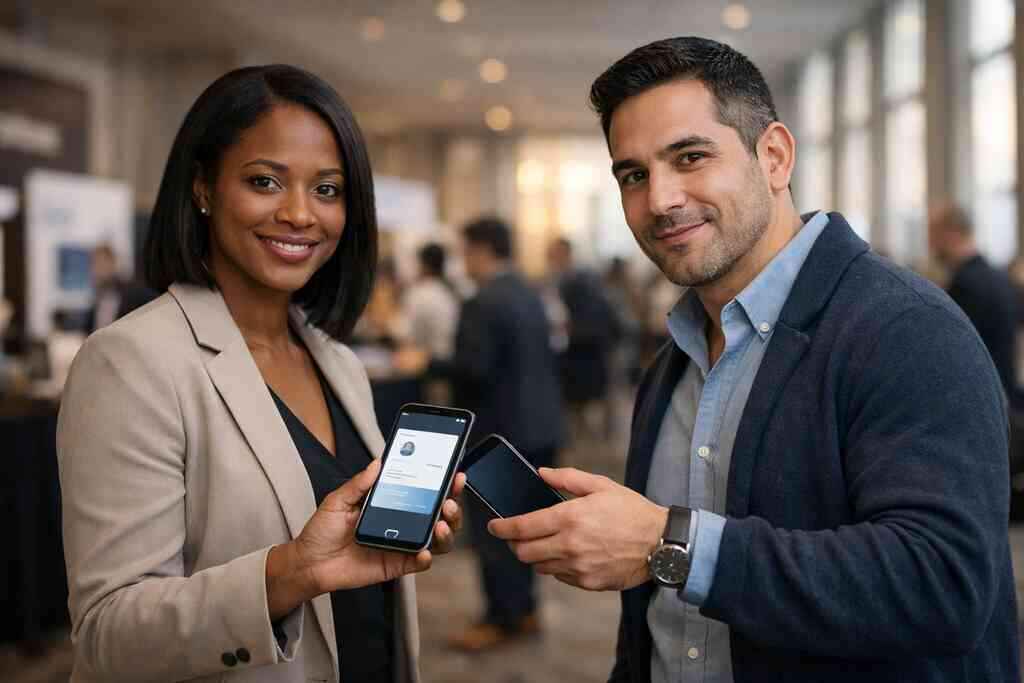
A paid click can look promising right up until the booth gets busy. Then the badge scan gets skipped, the paper card gets bent, and the lead goes cold in a pocket. If you have ever left a conference with a stack of names that never turned into meetings, that frustration is real. The hard part is not getting attention. The hard part is keeping it long enough to act.
Why PPC event leads go cold before the swag bag even closes
What happens when a paid click turns into a forgotten badge scan at the booth
PPC event marketing promises speed, but event floors are messy. People arrive distracted, move fast, and compare five booths at once. A click can bring them to your page, yet the handoff at the booth still fails. The delay between interest and contact is where most event leads cool off.
Here is the part most marketers miss. The booth is not the finish line. It is the first pressure test. If your team relies on memory, badge scans, or a later email, you lose momentum. That is why many teams now pair event ads with digital business cards for PPC event ROI. The goal is simple: capture interest while the conversation still has heat.
Why paper cards disappear faster at trade shows and conference networking tables
Paper cards still look familiar, but they vanish fast. They slip between receipts. They get smudged by coffee. They end up in the wrong coat pocket after a long day of conference networking. A 2023 Adobe survey found 58% of professionals have lost a paper card before ever following up. That statistic matches what many teams see on the ground.
A paper card also gives you no visible trail after the exchange. You do not know if it was kept, scanned, or forgotten. By contrast, digital card analytics for event lead capture can show whether someone opened the card, tapped the links, or saved the contact. That makes the follow-up much less of a guess.
How Long Island and NYC event traffic changes the follow-up window after the handshake
Long Island and NYC event traffic compresses the follow-up window. People leave Hauppauge mixers, Commack co-working events, or Manhattan meetups and immediately jump into trains, traffic, and meetings. The conversation may have been strong, but the memory fades quickly. If you wait until tomorrow, you are already behind.
We saw this with a small service team that split its week between Suffolk County and Midtown. Their booth traffic looked good, but their paper follow-up lagged by days. Once they switched the exchange to a digital card, they started reaching people while the event was still fresh. That timing mattered more than the swag bag ever did. It is why digital business cards for networking in Long Island often outperform paper alone.
Where digital business cards quietly repair the event funnel
How a digital business card turns contactless sharing into immediate lead capture
A digital business card removes the awkward pause after hello. Instead of digging for paper, you share a card instantly through QR, link, or tap. That is contactless sharing at its most practical. It keeps the conversation moving and helps event lead capture happen in real time.
A digital business card can also work like an online business card, an electronic business card, or a virtual business card depending on the setup. The point is not the label. The point is that the contact lands in a usable format while the interest is still warm. If you want the mechanics, the How It Works page explains the basic flow clearly. Most teams find that structure easier than handing out paper and hoping for the best.
Why QR code business cards and NFC business cards reduce friction at crowded booths
Crowded booths punish friction. If someone has to type a URL, they may not bother. If they can scan a code, they usually do. That is why QR code business cards and NFC business cards work so well in conference networking.
QR follows the ISO/IEC 18004 standard, which supports a reliable scan-to-connect experience across mobile devices. NFC relies on near field communication, and Apple’s Core NFC framework helps make tap-to-share behavior dependable on supported devices. The ISO 14443 standard also underpins many NFC data exchange systems. In plain English, both options shorten the path from interest to contact. For a deeper comparison, The Difference Between QR Code and NFC Business Cards in 2026 is a useful reference. If your team prefers tap behavior, The Difference Between NFC and QR Code Cards for Small Business may fit better.
What business card details should live on an online business card instead of a paper one
Paper forces you to choose too little or too much. A good online business card can hold more business card details without feeling crowded. Keep the essentials visible first. Then let people choose what they need next. That is the advantage of a smart business card.
Useful details often include:
- Name and title
- Mobile number
- Email address
- Company name
- Website or portfolio
- Linked social profiles
- Calendar or booking link
- Location or service area
This is where a digital business card design beats a static business card example. You can tailor the layout for sales professionals, real estate agents, freelancers, or corporate teams. You can also protect privacy better by sharing only what is needed. GDPR considerations matter here if you store or process shared contact details, especially for cross-border events.
How custom branding keeps every scan aligned with the campaign that paid for the click
A PPC event campaign should feel coherent from ad to booth to follow-up. Custom branding keeps that chain intact. Your digital card design should echo the same colors, logo treatment, and message used in the campaign. Otherwise, the click lands in one experience and the booth delivers another.
One client in a mixed B2B show in Nassau County learned this the hard way. Their ad used a clean navy theme, but their old booth handout looked like three different brands collided. Once they aligned the digital business card templates with the campaign artwork, scans improved. The card looked intentional. The conversation felt organized. For teams that want consistency, Custom Branding Tips for Digital Business Cards in 2026 is the better lens than a generic business card template.
What makes event ROI measurable instead of assumed
Which digital card analytics actually matter after a PPC event campaign
Not every metric helps. Event teams often stare at vanity numbers and miss the signals that predict revenue. The most useful digital card analytics are the ones tied to action. Think opens, taps, scans, clicks, saves, and completed shares. Those are the behaviors that show real interest.
You also want to compare booth activity with downstream engagement. If 120 people visited the booth and only 18 opened the card, something is off. Maybe the offer was weak. Maybe the handoff was clumsy. How to Measure ROI from Digital Business Cards Analytics helps you separate traffic from traction. That matters for measurable event marketing, not just busy event days.
How trackable networking links reveal attendee conversion beyond the badge count
Badge counts can flatter a campaign that underperforms. Trackable networking links tell a more honest story. You can see who clicked, what they viewed, and which channel drove the visit. That is more useful than a pile of business cards with no context.
Here is a simple way to think about it. Badge count shows presence. Trackable links show interest. Conversion shows trust. When you combine all three, you get a cleaner picture of attendee conversion. If you also use a trackable networking link strategy, you can spot which event assets deserve more budget next time.
Why lead capture for events works better when follow up automation starts instantly
Speed matters after the handshake. If follow-up automation starts right away, the lead feels remembered. If it starts three days later, the event energy is gone. That is why lead capture for events works best when the next message is immediate, relevant, and simple.
A short post-scan sequence usually works better than a long nurture path. Confirm the meeting. Share the promised resource. Offer one clear next action. That keeps the prospect moving without pressure. Teams using How Digital Business Cards Help Email Follow Up Automation often find that their response rates improve because the timing finally matches the conversation.
How CRM integration helps sales professionals and small business teams keep momentum
Momentum dies in messy spreadsheets. CRM integration keeps the exchange alive after the event. When a scan enters your system cleanly, sales professionals can route it, tag it, and follow up without hunting through notes. That saves time and protects the lead from getting lost. 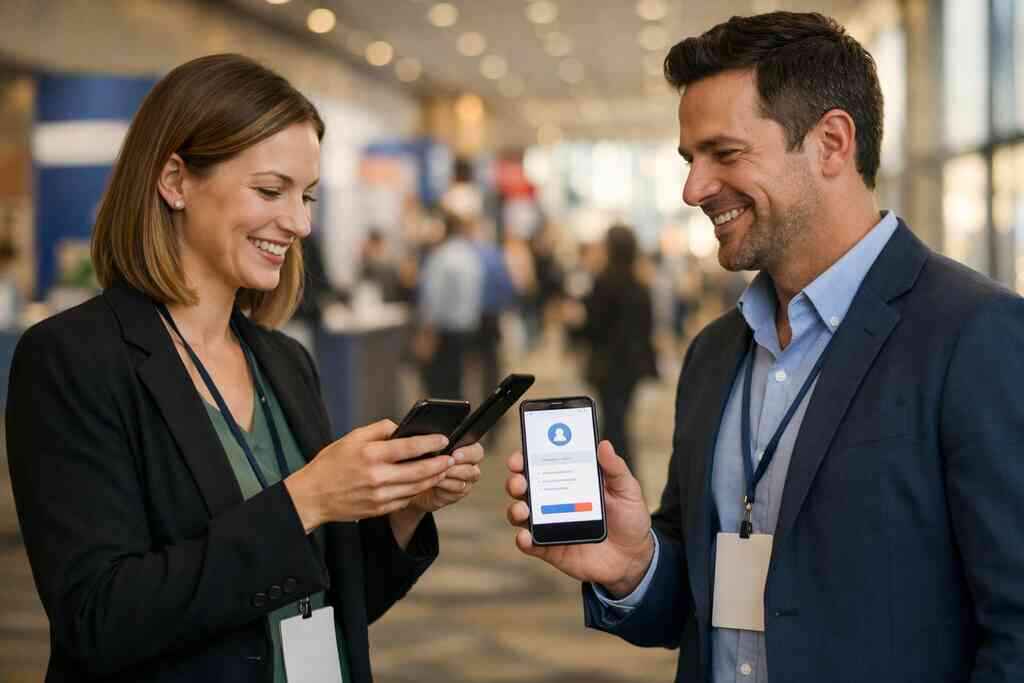
Small business teams feel this especially hard. A single missed handoff can waste a day of booth effort. CRM integration gives you a cleaner path from contactless sharing to pipeline entry. If you want a practical overview, What Is the Best CRM Integration for Digital Business Cards is the right place to compare options. For teams in Suffolk County and NYC, that clarity often matters more than bells and whistles.
The design choices that decide whether people scan or skip
How to make a digital business card that feels polished on mobile
Mobile is where the decision happens. If the card looks cluttered on a phone, people leave. If it opens cleanly, they stay. That is why you need a digital card maker that respects spacing, contrast, and finger-friendly taps. A polished mobile card usually has: – Clear name hierarchy
- One primary action
- Simple contact buttons
- Fast load time
- Easy-to-read text
- No visual overload
Good business card design feels calm. It does not shout. It guides. If you need help shaping the layout, How to Make a Digital Business Card in 2026 for Leads is a strong practical resource. The same idea applies to any digital business card app: keep it easy first, fancy second.
Which digital business card templates work best for professional networking and brand consistency
Templates save time, but not all templates serve the same goal. For professional networking, the best digital business card templates are the ones that protect clarity. They should make the title, contact info, and next action obvious in seconds. Brand consistency matters too, especially when several teammates share the same event presence.
On the projects we’ve seen this year, the best results came from simple layouts with one strong visual anchor. Think clean logo placement, balanced white space, and a single CTA. That supports digital business cards for networking across sales, recruiting, and client service. If your team needs a starting point, Top 10 Digital Business Cards Templates for Realtors in NY can help you compare styles without guessing.
When a simple business card template beats a crowded digital card design
More content does not always mean more conversions. A crowded design creates hesitation. A simple business card template reduces it. That matters when someone is scanning while standing near a loud booth or rushing to a breakout session.
A clean layout usually wins when the goal is one clear action. That might be saving the contact, clicking the website, or booking a call. If your audience is in a hurry, simplicity feels respectful. It also supports digital card vs paper comparisons because the card itself becomes a fast decision tool, not a long read. In practice, the simplest virtual business card often performs best.
Why digital card vs paper is not just a sustainability debate but a conversion decision
Sustainable business cards matter, but that is only part of the story. The deeper issue is conversion. Paper cannot update itself. Paper cannot track behavior. Paper cannot trigger follow-up automation. That makes digital card vs paper a business decision, not just an eco-friendly one.
Here is what almost no online guide mentions. Paper can still work for introductions, but it rarely supports pipeline tracking. A digital card can. That difference changes how you measure lead capture for events and trade show networking. For teams comparing costs and outcomes, Digital Business Cards vs Paper Networking Costs in NY 2026 is a practical place to start. It helps frame the choice in real numbers, not assumptions.
How real estate agents freelancers and corporate teams can tailor a virtual business card for their market
Different markets need different card behavior. Real estate agents often need location, listings, and quick contact paths. Freelancers may want portfolios and booking links. Corporate teams may prioritize department routing and brand control. That is where a virtual business card becomes flexible enough to earn its place.
A Garden City real estate agent once told us her best lead came from a quick digital share after a property tour. The prospect saved the card, clicked the listing page, and reached out later that evening. That is the sort of electronic business card exchange that paper rarely supports. If you want specialized examples, Why Digital Business Cards Work for Real Estate Agents can show how different fields shape the same format.
What to do next when you want better PPC event ROI without more booth spend
How to compare the best digital business card platforms without getting lost in feature claims
Comparison should start with outcomes, not jargon. The best digital business card platforms are the ones that fit your actual event workflow. Ask whether the platform helps you share contact info quickly, track engagement, support custom branding, and keep follow-up organized. If it cannot do those things cleanly, the rest is noise.
Use a simple filter:
- Does it support QR and tap-style sharing?
- Can you update details without reprinting?
- Does it offer analytics you can read quickly?
- Can your team keep branding consistent?
- Does it connect to your CRM or email stack?
If you are comparing vendors, How to Compare Digital Card Pricing for Small Business ROI can help you weigh value more clearly. You do not need the most expensive option. You need the one that removes friction.
When free digital business card tools are enough and when premium digital card plans make more sense
A free digital business card can work well for solo use or light networking. It may be enough if you only need basic sharing and a simple profile. But once you need analytics, team branding, or more structured follow-up, premium digital card plans usually make more sense. That is especially true for event-heavy sales teams.
The mistake we see most often is waiting too long to upgrade. Teams outgrow basic tools after one or two busy conference seasons. Then they have to rebuild workflows under pressure. If your booth spend is meaningful, your card should support that investment. The Pricing & Plans page helps you judge the tradeoff with less guesswork.
Where to start inside Digital Business Cards with the how it works flow and pricing page
If you want a practical setup path, start with the basics. Create your card, test the share flow, and make sure the contact details are correct. Then compare the available pricing path with your team’s needs. That process is usually faster than most people expect.
Digital Business Cards keeps the flow straightforward: create, share, and let people reach you through the channel they prefer. That is helpful for Long Island teams that move between local networking and NYC meetings. If you want a clean onboarding reference, visit the How It Works page and review the pricing page side by side. That gives you a grounded view before you commit.
How Long Island teams can use digital business cards for networking at Hauppauge mixers Commack workspaces and NYC commuter meetings
Local context matters. A Hauppauge business mixer does not feel like a Midtown lunch. Commack co-working spaces move differently from Manhattan lobby events. NYC commuter meetings are faster still. That means your digital card needs to work in seconds, not minutes.
For Long Island teams, the best setup is usually mobile-first and low-friction. Make sure your card is easy to scan in a noisy room and simple to save on the train. If you want a regional guide, How Digital Business Cards Improve Long Island Lead Capture is a helpful companion. Teams doing more city travel may also benefit from How Digital Business Cards Boost ROI for NYC Teams in 2026.
Which setup choices make a digital card exchange ready for LinkedIn Apple Wallet and Google Pay sharing
The strongest setup choices are the ones that remove extra steps. If people can save your card, open it again later, and share it quickly, your odds improve. LinkedIn helps with professional continuity. Apple Wallet business card support can keep your details closer to daily use. Google Pay card sharing can do the same for some users, depending on how you structure the card.
Keep the exchange simple. One clean profile. One clear action. One easy follow-up path. If your team wants a reliable launch path, start with the How It Works flow, then test the card on a phone before your next event. You do not have to overhaul everything today. Pick one booth, one campaign, and one card setup, then make it better before the next handshake.
Frequently Asked Questions
Question: How does How Digital Business Cards Improve PPC Event ROI 2026 apply to event lead capture for sales professionals and corporate teams?
Answer: The main idea is simple: digital business cards help turn event interest into a faster, more organized follow-up process. For sales professionals and corporate teams, that matters because PPC event ROI often depends on how quickly a lead is captured and how cleanly it moves into the next step. Instead of relying on paper cards, badge scans, or delayed emails, a digital business card makes contactless sharing easier at the booth, during conference networking, or after a quick conversation. That means attendees can share contact info right away through a QR code business card, NFC business card, or link, which reduces the chance of losing momentum. The result is a more conversion-focused networking flow that supports lead capture for events, follow-up automation, and a better overall attendee conversion path.
Question: What digital card analytics should I look for when measuring PPC event ROI and post-event follow-up?
Answer: The most useful digital card analytics are the ones that show real engagement, not just activity. Look for signals like opens, scans, taps, clicks, saves, and completed shares, because those help reveal whether event lead capture is actually moving forward. For measurable event marketing, those analytics are more valuable than badge count alone. They help you see which business card design, business card template, or campaign message prompted people to take action. If your digital card analytics show that people viewed the card but did not click through, you can adjust the digital business card design or the follow-up automation sequence. If people are saving the contact but not booking meetings, you may need stronger CRM integration or a clearer call to action. That is how digital business cards make PPC event ROI easier to understand and improve over time.
Question: Should I use QR code business cards or NFC business cards for trade show networking and conference networking?
Answer: Both QR code business cards and NFC business cards can work well, and the best choice usually depends on your audience and environment. QR code business cards are especially useful because they are familiar, easy to scan on most mobile devices, and effective in crowded booths where speed matters. NFC business cards are useful when you want a tap-style digital card exchange that feels smooth and modern. In both cases, the goal is the same: remove friction so people can share contact info without delay. For trade show networking and conference networking, that speed can improve lead capture for events and keep conversations moving. If your team wants a simple, mobile-first way to create digital business card experiences, the right format should support brand consistency, professional networking, and an easy path back to your online business card or electronic business card profile.
Question: What should be included in a digital business card design so it feels polished and useful for Long Island and NYC networking?
Answer: A strong digital business card design should stay simple, clear, and mobile-friendly. The best version usually includes the essentials first: name, title, company, mobile number, email address, website, and a clear next action such as booking a call or saving the contact. For Long Island, New York, and NYC professional networking, the card should open quickly and be easy to use in a busy room, at a Hauppauge mixer, a Suffolk County business meetup, or a Manhattan commuter event. Good digital business card templates also support custom branding so your card matches the campaign, booth, or company look. That consistency matters because the card becomes part of the event experience, not just a digital version of a business card example. Whether you are a real estate agent, freelancer, small business owner, or part of a corporate team, a well-structured virtual business card helps people remember you and respond faster.
Question: Is a free digital business card enough, or do premium digital card plans make more sense for PPC event marketing?
Answer: A free digital business card can be a good starting point if you only need basic sharing and a simple online business card presence. But for PPC event marketing, premium digital card plans often make more sense when you need digital card analytics, CRM integration, custom branding, or more organized follow-up automation. That is especially true for small business teams, sales professionals, and corporate teams that attend events regularly and want a more measurable lead capture process. The value is not only in sharing contact info; it is in what happens after the share. If your event spend is meaningful, then your card should support paperless networking, trackable networking links, and a clean handoff into your pipeline. Digital Business Cards, based in Long Island, New York, is positioned to help teams think through those choices without overcomplicating the setup, so you can compare digital card pricing and choose the path that fits your workflow.