
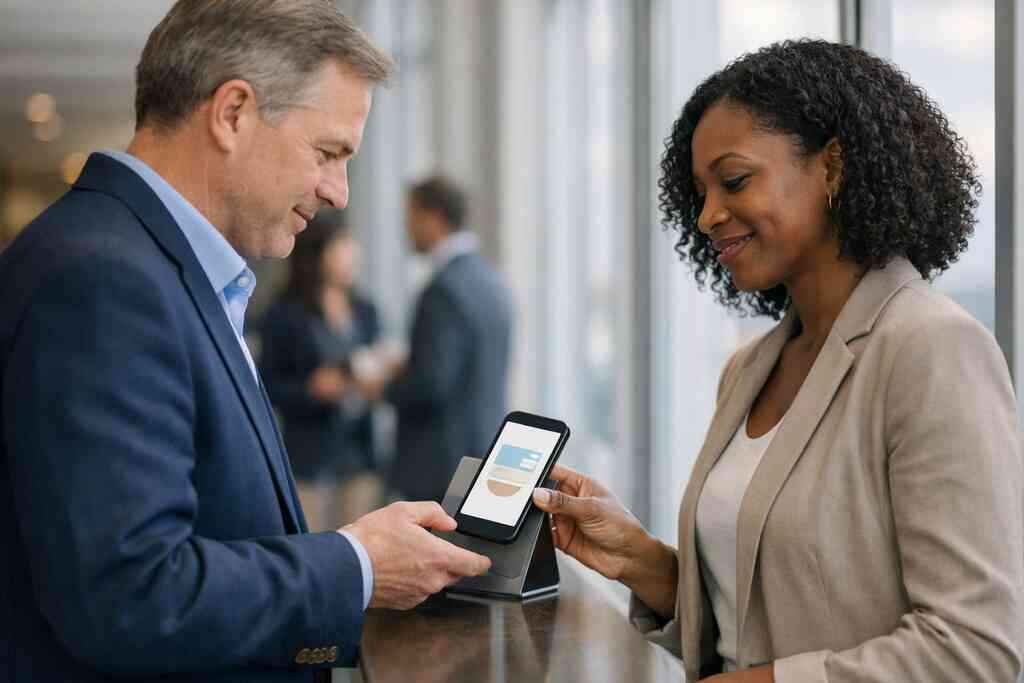
A sales rep in Hauppauge once showed me a wallet packed with paper cards. Half were bent. A few were coffee-stained. None were helping his pipeline. If you have felt that quiet frustration after a networking event, you already understand the real problem. The card itself is not the issue. The missing data is.
When a stack of paper cards stops paying for itself and your data tells the truth
Why lost cards, slow follow-up, and unreadable handwriting hide the real cost of paper networking
Paper networking feels simple until you trace the damage. A card gets lost in a jacket pocket. A name gets misread. A follow-up waits until Monday and then never happens. That delay has a cost, even if nobody invoices it.
A digital business card changes that by turning contact sharing into something you can measure. You are no longer guessing who kept your details. You can review digital card analytics, see which interactions happened, and compare them with actual outcomes. That is the difference between hoping and knowing. It also helps with paperless networking, which matters if you move between Long Island, New York, and Manhattan often.
Here is the part most people miss. A paper card has no memory. A virtual business card can show scans, views, taps, and clicks. That data lets you measure networking return on investment instead of counting how many cards left your hand. If you want a deeper framework, this guide to measuring ROI from digital business card analytics is a useful place to compare methods.
Which digital card analytics matter most for ROI instead of vanity metrics
Not every metric matters equally. A high view count can look impressive, but views alone do not pay invoices. The numbers that matter most are the ones tied to action. You want to watch profile view analytics, call-to-action conversion, business card link tracking, and lead capture performance together.
Think of it like a funnel. A person scans your QR code business card, opens your profile, clicks your website, and submits a form. Each step tells you where interest rises or drops. That is why digital business card funnel analysis matters more than raw traffic. It shows whether your card is helping sales or just creating curiosity.
What we see most often is this: professionals focus on the first number they find, then miss the pattern. The better approach is to track:
- QR code scan analytics
- NFC tap analytics
- digital card click-through rate
- conversion rate from business card scans
- follow-up automation tracking
- CRM integration ROI
If you want to compare tools, the article on digital business cards and lead capture performance explains why the right metrics matter more than volume alone.
How Long Island professionals can spot the break point between busy networking and actual pipeline growth
Long Island professionals know the difference between a full calendar and a full pipeline. A Hauppauge mixer can leave you with twenty conversations and only two serious leads. A Commack coworking event can feel productive, yet still produce almost nothing if follow-up is weak. Busy is not the same as profitable.
The break point appears when your analytics connect to revenue behavior. If your digital business card engagement metrics rise, but your booked meetings do not, the problem may be your call to action. If scans are strong in NYC meetings, but responses are weak, your follow-up may be too slow. On the other hand, a single Garden City real estate agent can use one clean share and a fast response to move a conversation forward.
We have seen this pattern in 2026 specifically. Professionals who pair digital card analytics with a simple follow-up process usually spot weak points faster. That matters for sales professionals, freelancers, real estate agents, and corporate teams alike. If you want the point of entry, review the how it works flow and make sure your sharing step is easy to repeat.
The metric map that shows whether your digital business card is creating revenue or just clicks
How QR code scan analytics and NFC tap analytics reveal real contactless sharing behavior
QR code business cards and NFC business cards do not behave the same way. QR scans often happen in open environments, like conferences or coffee meetings. NFC taps usually happen in closer, more deliberate exchanges. Both are forms of contactless sharing, but they tell different stories.
The QR standard matters here. ISO/IEC 18004 defines how QR codes work, which helps explain why scans are fast and broadly compatible. NFC follows a different model, built around proximity and device support. Apple’s Core NFC framework supports tap-based interaction on compatible devices, which adds reliability when the setup is right. If you want a closer look at the mechanics, our comparison of QR code and NFC business cards is the best companion piece.
A useful rule is simple: QR often measures reach. NFC often measures intent. If you want a more complete view, watch both together. That gives you better electronic business card exchange analytics and a clearer picture of how people actually interact with your smart business card.
Why profile view analytics, call-to-action conversion, and business card link tracking must be read together
A profile view is not the finish line. It is the start of proof. If someone opens your online business card and leaves quickly, the design or message may be weak. If they stay, click, and reply, the card is doing its job.
The mistake we see most often is reading one metric in isolation. A strong digital card analytics dashboard should show what happened before and after the click. You want to know whether the visitor viewed your profile, used the call button, visited your website, or shared your contact details again. That combined view reveals digital business card effectiveness.
Here is a practical way to read the data:
- Check profile view analytics first.
- Review call-to-action conversion next.
- Compare business card link tracking across channels.
- Look for repeat engagement from the same contact.
- Tie the pattern to meetings or closed opportunities.
If you are shaping the card itself, a solid digital business card design and a simple structure usually outperform a crowded layout. Clean design helps people act faster. That matters whether you use an electronic business card or a digital card maker to build it.
How lead capture performance connects to CRM integration ROI, follow-up automation tracking, and sales pipeline impact
This is where ROI becomes visible. A scan is nice. A lead is better. A lead that lands in your CRM without manual typing is better still. That is why CRM integration ROI matters so much for virtual business cards.
If your card connects to your system, you can track the path from contact to conversation. You can see whether someone came from a trade show, a referral meeting, or a follow-up email. You can also measure whether follow-up automation tracking actually improves reply rates. That is more useful than simply saying the card “works.”
We hear this from clients almost every week. They think they need more networking. Often, they need better attribution. Once contacts sync into a CRM, the picture changes fast. The feature set for tracking and analytics should help you connect sharing, lead capture, and follow-up in one flow. That is where sales pipeline impact becomes measurable rather than assumed.
What digital business card engagement metrics mean for sales professionals, freelancers, real estate agents, and corporate teams
Different users should read the same data differently. Sales professionals care about conversion from first touch to booked meeting. Freelancers care about client inquiry quality. Real estate agents care about speed, trust, and recall. Corporate teams care about consistency across many employees. 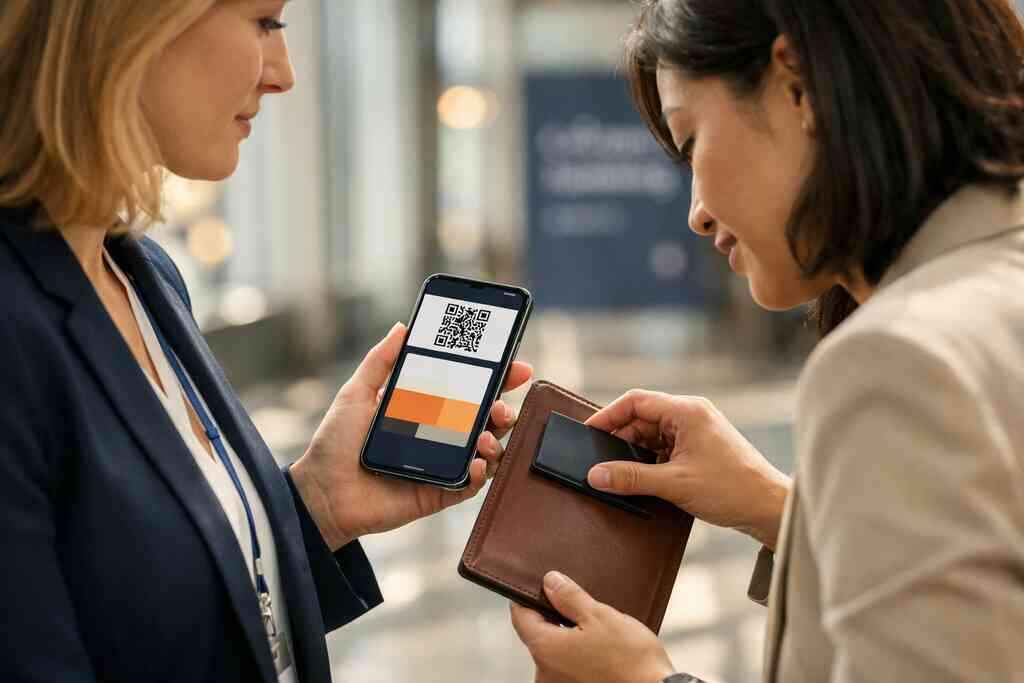
For example, a freelancer might see fewer scans but a higher close rate. That is still strong ROI. A real estate agent may get more profile views after open houses, but only certain calls move the deal forward. Corporate teams often need custom branding and shared standards more than flashy design. For those use cases, real estate digital card examples can help you think about structure and lead flow.
The key is to match the metric to the role. If you chase vanity numbers, you will make the wrong changes. If you track digital business card engagement metrics for lead quality, you can make smarter choices about content, follow-up, and design.
How to compare digital card vs paper ROI using conversion rate from business card scans and electronic business card exchange analytics
The best comparison is not cost alone. It is cost versus conversion. A paper stack may seem cheap, but its hidden losses add up. Lost cards, delayed replies, reprints, and missed contacts all weaken return. A digital card vs paper ROI view makes those trade-offs visible.
Paper CardDigital Business CardContact sharingManualInstantTrackingNoneBusiness card link tracking and scan dataFollow-upDelayedCan be automatedBrand controlLimitedStrong custom brandingUpdate speedReprint neededEdit onceA free digital business card may work for basic sharing. A premium digital card plan may make more sense if you need analytics, branding control, or team consistency. If you are comparing cost structures, our pricing and plans page can help you think through the difference without guessing. The real question is simple: does the card generate enough qualified action to justify the setup? What to change when the numbers are weak and what to scale when they finally move
How business card template optimization and digital business card design testing improve conversion without rebuilding everything
You do not need to rebuild everything to improve results. Small design changes often produce the biggest gains. A clearer headline, a stronger call to action, or a simpler layout can raise response rates fast. That is why business card template optimization matters.
Testing should stay practical. Try one version with a short offer. Try another with a direct booking link. Then compare conversion rate from business card scans over the same type of event. If you use a business card template wisely, you can improve results without adding confusion.
One client in a small Long Island service business changed only the top line on their digital business card design. They stopped leading with a title and started leading with a benefit. The scan volume stayed similar. The inquiries improved. That is the kind of change that proves the card can do more with the same traffic.
When custom branding, digital card maker choices, and digital business card features analysis start affecting lead quality
Branding is not decoration. It is a filter. A polished card signals care. A messy one can reduce trust before the first call. That is why branding for smart business card performance deserves attention.
Your digital card maker choice also matters. Some tools make it easy to build quickly. Others support better structure, branding, or tracking. You should evaluate digital business card features analysis based on your goals, not on a long list of extras. A strong fit usually includes clear contact sharing, easy edits, and reliable reporting. If NFC matters to your workflow, review the NFC and QR code cards for small business option carefully.
On the projects we’ve finished this year, the strongest lead quality usually came from cards that looked deliberate. Clean typography. One clear action. A focused message. Those details affect how people respond, especially in NYC professional networking analytics and other high-speed environments.
How to measure paperless networking performance at Hauppauge mixers, Commack coworking spaces, and NYC meetings
Local context matters. A Hauppauge business mixer feels different from a Manhattan breakfast meeting. Commack coworking spaces have a more casual rhythm. NYC meetings often move faster and leave less room for small talk. Your card analytics should reflect that reality.
Start by segmenting by event type. Then compare scan rates, tap rates, and follow-up outcomes. A high scan count at one mixer may mean the card is visible. A lower count at a private meeting may still produce better leads. That is why Long Island digital networking should be measured by quality, not just volume.
Here is what almost no online guide mentions: weather, commute time, and event format affect sharing behavior. A late train into the city can shorten conversations. A crowded room in Suffolk County can increase quick QR scans. Use paperless networking performance in Long Island and NYC as a benchmark, then compare your own event data against it.
When to use free digital business card options versus premium digital card plans for measurable growth
A free digital business card can be enough if you only need basic contact sharing. It is useful for testing the format, especially if you are new to digital business cards. But if you need analytics, branding consistency, or CRM workflow support, a paid option may be the better fit. The point is not status. The point is control.
Here is a simple decision frame:
- Use free tools if you are testing the concept.
- Use premium plans if you need measurable lead tracking.
- Use premium options when multiple users need consistent branding.
- Use paid analytics if ROI must be shown to a manager or client.
- Use more robust tools when automation matters.
If you want a sense of how structure affects outcomes, look at how to create a digital business card that converts. A better card often starts with a simpler decision, not a bigger budget.
How to turn digital card analytics into a decision framework for the next event, the next follow-up, and the next deal
Analytics only matter when they change behavior. After each event, review three things. What got shared? What got clicked? What produced a reply? Those answers tell you where to focus next.
Use this decision framework:
- If scans are low, improve visibility and opening language.
- If views are high but clicks are low, simplify the profile.
- If clicks are strong but replies are weak, fix the follow-up.
- If leads are good but not tracked, improve CRM capture.
- If one event outperforms others, replicate that setup.
That process turns digital card analytics for follow-up ROI into action. It also helps you make better use of small business lead generation analytics. You do not need perfect data. You need consistent data, a clear review habit, and a card that supports real conversations.
If you are ready to tighten your process, spend fifteen minutes reviewing your last few scans, follow-ups, and meetings today. Then adjust one thing before your next event. You do not have to figure it out alone, and you do not have to fix everything at once.
Frequently Asked Questions
Question: How do digital card analytics help me measure ROI from digital business cards instead of just counting views?
Answer: The most useful way to measure ROI from digital business cards is to track the full path from sharing to action. That means looking beyond vanity metrics and focusing on digital card analytics such as profile view analytics, QR code scan analytics, NFC tap analytics, digital card click-through rate, call-to-action conversion, and lead capture performance. When those numbers are connected to follow-up automation tracking or CRM integration ROI, you can see whether a scan turned into a meeting, a lead, or a sale. Digital Business Cards is built around helping you share contact info in a way that is easier to track than paper, so you can compare digital card vs paper ROI with more confidence. For sales professionals, freelancers, real estate agents, and corporate teams, that kind of visibility makes networking return on investment much easier to understand.
Question: What should I track in a digital business card funnel analysis to understand conversion rate from business card scans?
Answer: A practical digital business card funnel analysis should follow the same path your contacts do: scan or tap, profile view, click, and follow-up. Start with QR code scan analytics or NFC tap analytics, then check whether the person viewed the online business card, clicked your website, opened your digital business card for LinkedIn, or used your call-to-action. From there, compare business card link tracking and share contact info analytics with actual lead capture results. This gives you a clearer view of conversion rate from business card scans and helps you identify where interest drops off. Digital Business Cards makes it easy to create a digital business card that supports this kind of review, especially if you want a simple and professional structure for paperless networking and electronic business card exchange.
Question: How can How to Measure ROI from Digital Business Cards Analytics apply to Long Island, New York, NY, and NYC networking?
Answer: The main idea behind How to Measure ROI from Digital Business Cards Analytics is that local networking should be measured by results, not just activity. That matters in Long Island, New York, Suffolk County, and NYC because networking styles vary by setting. A Hauppauge mixer, a Suffolk County business event, or a Manhattan meeting may all produce different levels of contactless sharing and follow-up behavior. By comparing digital business card engagement metrics across those environments, you can see where your smart business card performs best. Digital Business Cards, based in Long Island, fits that local reality by helping professionals measure paperless networking performance in real settings, not generic assumptions. That is especially useful for real estate agents, small business owners, and sales professionals who need better lead attribution from virtual business cards.
Question: Should I use a free digital business card or premium digital card plans if I want better CRM integration ROI and lead capture performance?
Answer: If you are only testing the concept, a free digital business card may be enough to start sharing contact info and getting a feel for digital business card design. But if your goal is measurable growth, CRM integration ROI, and stronger lead capture performance, a premium digital card plan may be the better fit. The reason is simple: once you can connect scans, clicks, and follow-up automation tracking to your CRM, you can see which contacts are worth pursuing and which channels perform best. That is especially valuable for corporate teams, freelancers, and sales professionals who need reliable reporting. Digital Business Cards is a good option to consider if you want a clean digital card maker experience with the flexibility to support custom branding, digital business card features, and more serious networking return on investment.
Question: What digital business card features and design choices improve virtual business card effectiveness without rebuilding everything?
Answer: Strong virtual business card effectiveness usually comes from clear digital business card design, not complexity. The best improvements often come from business card template optimization, a simpler layout, a stronger call-to-action, and cleaner business card details. If your profile is hard to scan quickly or your message is crowded, people may leave before converting. Testing different business card templates can improve digital card click-through rate, profile view analytics, and call-to-action conversion without requiring a full rebuild. Digital Business Cards can help you create a digital business card that looks polished and professional while still being easy to share as a QR code business card or NFC business card. For users comparing business card example layouts, the key is to keep the path from first touch to follow-up as short as possible.