
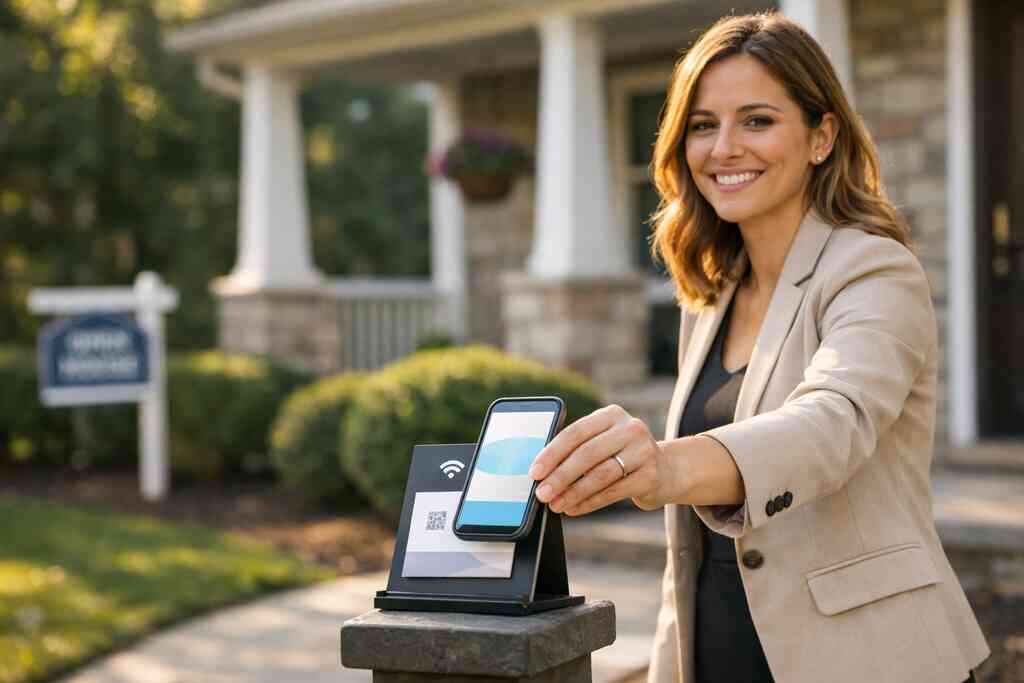
A real estate agent at an open house has about five seconds to look organized. Then the questions start. Someone wants your number, another wants a flyer, and a third asks whether you work in Garden City or farther east. If your paper card is bent, buried, or already out of reach, the moment slips away. That is exactly where a digital business card earns attention fast.
We hear this from agents all the time. They are not confused about networking itself. They are tired of losing good contacts after a quick introduction. If you are juggling showings, MLS updates, and a phone that never stops buzzing, that frustration makes sense. A smart digital card maker should make that load lighter, not heavier.
What a digital card needs to do before it earns a place in your marketing
A strong digital business card is not just a modern replacement for paper. It has to support how you actually meet people, share contact info, and follow up. For real estate agents, that means it should work at an open house, during a commute to Manhattan, or in a hallway chat at a Suffolk County mixer. It should also stay simple enough that a busy buyer uses it without hesitation. The best tools feel effortless.
Which business card details matter most for real estate agents and which ones do not
For agents, the most important business card details are the ones that move a conversation forward. Your name, brokerage, mobile number, email, service area, and a clear call to action matter most. A headshot can help, especially with brand identity for realtors, because buyers often remember faces faster than company names. A clean website or profile link also helps if it leads to listings or a contact form. Everything else should earn its place.
What usually does not help is clutter. Long taglines, tiny print, and too many icons turn a simple card into noise. We see this mistake most often in business card design for agents who try to say everything at once. A digital card vs paper comparison usually favors digital because you can hide the extras and keep the essentials visible. That matters when someone is scanning your card in a parking lot after a showing.
A business card template for real estate should support clarity, not decoration for its own sake. The right digital business card design makes trust visible in one glance. If the card looks dated, it can make a polished agent seem behind the curve. If it looks overly busy, it can make a careful agent seem careless. Here is the part most agents miss: simplicity signals control.
How digital business card design and business card templates shape trust at a glance
Design carries more weight than many agents expect. A polished virtual card design suggests order, and order matters in a field built on timing. If a buyer sees a card with balanced spacing, readable text, and consistent colors, the brain reads it as reliable. That is why business card template choices matter before a single lead is captured. Good design lowers friction.
A digital business card example should feel like a mini listing presentation. It should be easy to read on a phone and equally easy to share. If you are comparing digital business card templates, look for layouts that highlight the most useful action first. That might be tap to save, tap to call, or tap to book. A good template does not make people think.
One agent in Nassau County told us her old paper card disappeared in a stack of brochures after every open house. She switched to a cleaner digital format with her listing photo at the top and a simple contact button below. People started saving her contact before they left the driveway. That is not magic. It is design that respects attention.
Where digital card analytics and CRM integration fit into a real estate workflow
The real advantage shows up after the scan. With digital card analytics, you can see whether people viewed your card, tapped your phone number, or saved your details. That matters because real estate is a follow-up business. It helps you know who is warm, who is curious, and who is just browsing. Without that insight, you are guessing.
CRM integration closes the loop. Instead of manually typing every lead into a spreadsheet, the contact can move into your workflow faster. That is where lead capture for real estate and follow-up automation become practical, not theoretical. If your system can tag a source like an open house or broker event, even better. You spend less time organizing and more time selling.
If you want a deeper look at tracking, digital card analytics for lead tracking is worth reviewing. Just remember one thing: analytics should guide your next move, not replace human judgment. A few taps tell you a lot, but a phone call still closes the distance. Good tools help you act faster. They do not act for you.
Why paperless networking works better for Suffolk County mixers, NYC commutes, and local client meetings
Paperless networking fits how agents actually move through Long Island and nearby NYC. At a Hauppauge business mixer, a QR scan is faster than digging through a bag for cards. On the LIRR or in a crowded subway commute, a contactless sharing moment feels cleaner and safer. During a listing appointment, a digital share keeps the exchange professional and immediate. The contact never gets lost in a pocket.
A paper card also has a way of disappearing at the worst time. It bends in a wallet. It gets coffee stains. It lands under a stack of kitchen flyers after a showing. Sustainable business cards avoid that waste, and they also keep your contact alive on the other person’s phone. That is the practical side of paperless networking.
If you want a local perspective, best digital business cards for Long Island real estate pros fit the way agents work here. Suffolk County often rewards speed and follow-through, while NYC rewards compact, mobile-first communication. A single card should work in both settings. That flexibility makes the card more useful than a stack of paper ever could.
What to check on the pricing page before choosing a free digital business card or premium digital card plans
Pricing deserves careful attention, especially if you are comparing a free digital business card to premium digital card plans. A free option can be useful for testing, but it may not support the growth features you need. Before you choose, check whether the plan clearly explains the limits, if any, on sharing, branding, or tracking. Do not assume a free tier will cover real estate workflows.
The digital card pricing page should answer a few basic questions. Can you customize your profile? Can you change your card later? Does it support multiple contact methods? Does it include the kind of support you expect when you are busy showing homes? If a page is vague, that is a signal to slow down.
Here is a simple comparison to keep in mind:
OptionBest forWatch forFree digital business cardTesting basic sharingLimited branding or fewer controlsPremium digital card plansActive agents who network oftenConfirm what is included before buyingFor a closer look at plan structure, check the Pricing & Plans. The best choice is the one that fits your workflow, not just your budget. A low monthly cost is only a good deal if the card actually helps you win business. That is the real test.
How the right digital card turns every introduction into a next move
A great card does more than share contact info. It turns a hello into a measurable next move. That is where a virtual business card for agents becomes more than a tech swap. It becomes part of your pipeline. If you want the card to work, it needs to match your brand, your market, and your follow-up habits. ### How to make a digital business card that matches your brand and your listing style 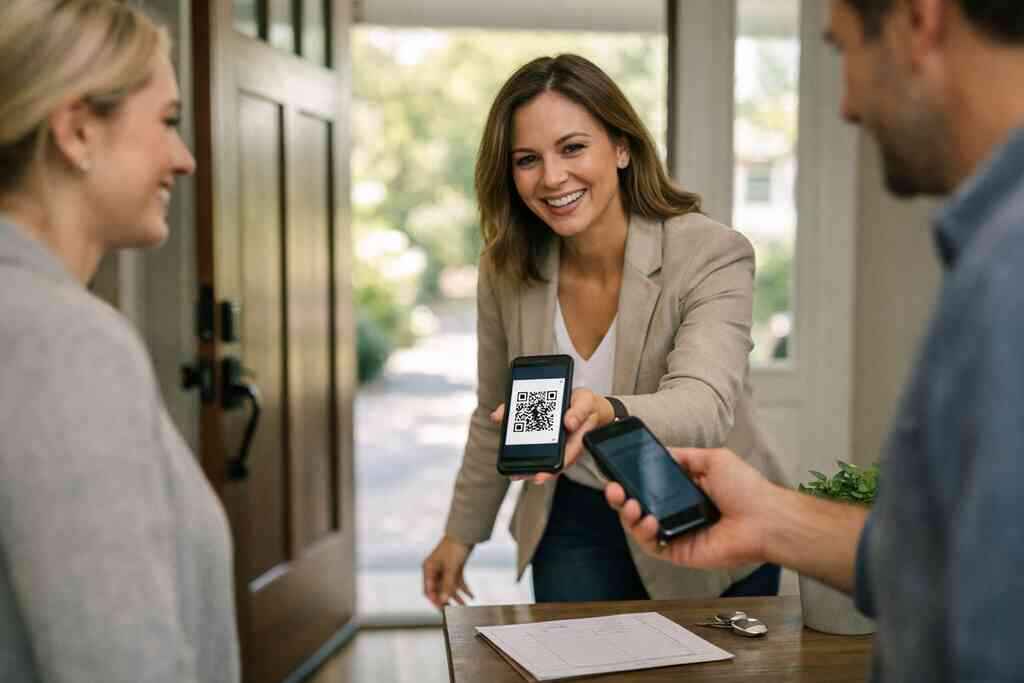
The best place to start is with consistency. Your card should look like your listings feel. If you market luxury homes, your digital business card design for realtors should feel refined and clean. If you work with starter homes, your tone can be warmer and more approachable. Either way, the card should match the impression you want to leave.
If you are learning how to make a digital business card, keep the process simple. Start with your name, contact details, service area, and one strong action button. Then add a photo, logo, or listing image if it supports your message. For guidance, how to create a digital business card for agents lays out a practical path. The goal is not decoration. The goal is recognition.
A digital business card app should let you update details without reprinting anything. That is one of the clearest differences between digital and paper. In fast-moving markets, a number change or brokerage update should not cost you a fresh box of cards. Agents who move often, list often, or brand around specific neighborhoods benefit from that flexibility. It saves time every single week.
When to use an online business card, an electronic business card, or a virtual business card for agents
People use these terms differently, but the practical use is similar. An online business card works well when you want a web-based profile to share through email or text. An electronic business card helps when you want a digital version that mirrors a traditional card layout. A virtual business card is useful when you want a flexible, mobile-first contact point. In day-to-day real estate work, all three can serve the same purpose.
For agents, the best format depends on the setting. A QR-based share is ideal at an open house. An NFC tap can feel smoother at a live event. A texted link works well after a quick referral conversation. If you want a tighter breakdown, QR code business cards for contactless sharing is a useful comparison. The right tool is the one people actually use.
NFC also deserves a quick note. NFC business cards use near-field communication, which can support fast tap-to-share moments on compatible devices. Apple’s Core NFC framework and the ISO 14443 standard help explain why tap-based exchanges can be reliable when set up properly. Still, QR remains valuable because the ISO/IEC 18004 standard makes it widely accessible. In other words, both can work well. The best choice depends on your audience.
How digital business cards for networking support real estate networking beyond the first meeting
The first meeting is not the finish line. It is the opening. Digital business cards for networking keep your name visible after the conversation ends. That matters when someone meets you at a Commack co-working space, a brokerage lunch, or a community fundraiser and needs time before acting. A card stored on the phone is easier to find than paper in a drawer.
We see this every week in real estate networking. People do not always respond right away. They save your contact, then compare neighborhoods, loan options, or timing. A digital share keeps you in that decision set. If you want a stronger network effect, real estate networking with digital business cards shows how those connections compound over time. The contact stays reachable.
One agent in Garden City told us a simple story. She met a buyer at a local event, shared her card by QR, and followed up the next morning with a listing sheet. The buyer later said the clean digital share made her seem organized before they even spoke again. That is the quiet advantage. You do not just share contact info. You shape memory.
Why custom branding and digital business card example pages matter when buyers compare professionals
Buyers compare agents the way they compare homes. They notice finish, clarity, and tone. That is why custom branding matters so much on a digital card. Your colors, logo, photo, and layout should reinforce the same identity people see on your listing signs and social profiles. Consistency builds recognition quickly.
A strong digital business card example page can help you see what polished looks like. It also shows how different business card design choices change the feel of the card. For real estate, that comparison matters because your contact tool is part of your reputation. If you want a visual starting point, Top 10 Digital Business Cards Templates for Realtors in NY offers design ideas worth studying. Good branding should feel familiar, not forced.
The best custom branding for digital business cards does one simple thing: it helps people remember you without effort. That matters more than a flashy layout. A card should make your name easier to recall after a showing, not harder. Trust grows when the details align. And in real estate, trust is the real product.
What to do after the scan so contact info turns into follow-up automation instead of a lost lead
After the scan, act quickly. That is where many agents lose momentum. If the contact lands in your system cleanly, you can trigger follow-up automation with virtual business cards and keep the conversation warm. A thank-you message, listing link, or market update can go out while you still remember the person’s face. Timing matters.
The most useful workflow is simple:
- capture the lead,
- tag the source,
- send a short follow-up,
- and review who engaged.
That sequence sounds basic, but it prevents lost opportunities. If your card supports CRM integration for digital business cards, the process becomes easier to maintain. You can connect the card to your existing process instead of building a second one from scratch. For setup help, the How It Works page is a practical place to start.
Here is the part many agents miss. A scan is not a close. It is an opening. The real value comes from what happens next, and that is where follow-up automation keeps your name from fading. If you want to compare tools, best business card templates for real estate agents 2026 can also help you choose a structure that supports follow-up rather than clutter. Start with one card, one workflow, and one clear action. Then build from there.
Frequently Asked Questions
Question: What makes digital business cards better than paper cards for real estate agents doing open house and real estate networking?
Answer: Digital business cards are a strong fit for real estate agents because they make it easier to share contact info instantly during fast-paced moments like open houses, broker mixers, and listing appointments. Unlike paper cards, a digital business card can be shared by QR code, link, email, or other contactless sharing methods, which helps reduce the chance of a missed connection. This is especially useful for real estate networking in places like Long Island, Suffolk County, and NYC, where agents often move quickly from one conversation to the next. A smart business card also keeps your details easy to save on a phone, which supports follow-up and keeps your name available after the meeting ends. For agents who want a more modern approach, digital business cards for networking can feel more organized, more memorable, and more aligned with how buyers and sellers communicate today.
Question: In the blog Why Digital Business Cards Work for Real Estate Agents, what business card details should a digital business card for realtors include?
Answer: For real estate agents, the most important business card details are the ones that help move a conversation forward. A strong digital business card for realtors should include your name, brokerage, mobile number, email, service area, and a clear action such as contact me or view my listings. A headshot can also help strengthen brand identity for realtors because buyers often remember a face faster than a company name. A clean website or profile link is useful if it leads to listings or a contact form. What is usually less helpful is clutter. Tiny text, too many icons, or long taglines can make the card harder to use. The best business card design keeps the essentials visible and easy to act on, which is why many agents prefer a digital card vs paper approach. A focused business card template for real estate should make your contact information simple to save and easy to revisit later.
Question: How do digital card analytics and CRM integration support lead capture for real estate agents?
Answer: Digital card analytics and CRM integration can make a real difference in how agents manage lead capture for real estate. With analytics, you can see whether someone viewed your card, tapped your phone number, or saved your contact details. That kind of insight helps you understand who is engaged and who may need a quick follow-up. When CRM integration is available, the contact can move into your workflow more smoothly instead of being manually entered later. That supports follow-up automation, which is especially valuable for agents who handle many conversations in a single day. Instead of guessing who to call first, you can prioritize the people who already showed interest. For a real estate professional, that can make the difference between a lost opportunity and a warm lead that moves forward. It is one of the most practical benefits of digital business cards for networking.
Question: What should real estate agents look for when comparing free digital business card and premium digital card plans?
Answer: When comparing a free digital business card with premium digital card plans, real estate agents should look closely at what each option supports before deciding. A free plan may be useful for testing a digital card maker or trying out a basic online business card, but it may not include everything an active agent needs. The key is to review the digital card pricing page carefully and check whether the plan offers enough room for your business card details, custom branding, and any sharing methods you plan to use. It is also smart to confirm whether the card can be updated easily, whether it supports your workflow, and whether it fits your professional networking needs. If you work in a market where your branding needs to stay current, the flexibility of premium digital card plans may be more useful than a limited free digital business card. The best choice is the one that matches how you actually work, not just the one with the lowest entry cost.
Question: How can custom branding and digital business card design help agents create a stronger impression with buyers?
Answer: Custom branding and thoughtful digital business card design help real estate agents create a stronger first impression because the card becomes part of the agent’s overall identity. Buyers often compare professionals the same way they compare homes: they notice clarity, tone, and polish. A well-designed virtual card design can reflect the same feeling as your listings, whether your style is refined and luxury-focused or warm and approachable. Good business card design should use readable text, balanced spacing, and colors that feel consistent with your other marketing. A strong digital business card example often works like a mini listing presentation because it communicates organization and trust at a glance. For agents, that matters because the card is not just a place to share contact info. It is a small but important part of your brand identity for realtors. When the design is clear and consistent, it can make your digital business card feel more professional and easier to remember.