
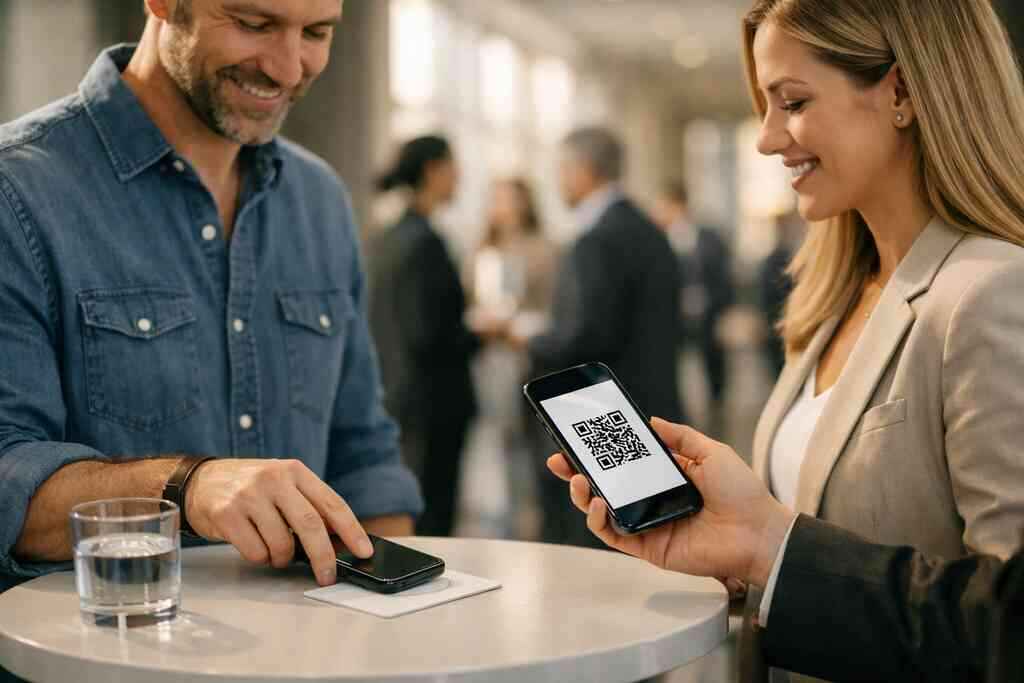
Why the cheapest digital card can quietly become your most expensive networking mistake
You hand out a card at a mixer, and it disappears into a coat pocket. Then the follow-up never happens. That is the part that stings, especially when you are trying to grow a small business and every contact matters. If you are comparing digital card pricing right now, you probably feel that pressure already. The confusing part is that the lowest number is rarely the lowest cost.
What small business owners really pay for when comparing digital card pricing
When you compare digital business cards, you are not really buying a file or a screen. You are buying speed, visibility, and the chance to make contact simple. A digital business card, online business card, or virtual business card can reduce the friction between meeting someone and hearing back from them. That matters for small business owners who cannot afford lost leads. It also matters for sales professionals, freelancers, and corporate teams that rely on repeat introductions.
The real price includes setup time, brand consistency, sharing limits, and how easily you can send contact details. A paperless networking tool can feel cheap until you need custom branding or lead tracking. Then the free option starts asking for trade-offs. That is where digital card pricing becomes a business decision, not a tech purchase.
Where free digital business card plans usually hit their ceiling
A free digital business card can be useful for testing the waters. It may help you create digital business card basics and share contact info quickly. Still, free plans often cap the parts that drive business value. The ceiling usually appears when you want more than a simple link or basic digital card design.
Here is what often becomes limiting:
- Fewer digital business card templates
- Weak or missing digital card analytics
- Limited custom branding
- Reduced sharing contact info options
- No practical lead capture workflow
One founder we spoke with at a Hauppauge business mixer had switched from paper cards to a free plan. The card looked fine. The problem came later, when the team wanted to track who scanned and who replied. That missing visibility made the “free” choice feel expensive. For growing teams, premium digital card plans usually make more sense once the free version becomes a bottleneck.
How paperless networking changes the math for sales professionals freelancers and corporate teams
Paperless networking changes the cost equation because it reduces waste and improves follow-up speed. A paper card can be lost, tossed, or smudged. A smart business card can stay in a phone, wallet, or inbox. That difference sounds small. In practice, it affects how many conversations turn into meetings.
For sales professionals, the math often comes down to response time. For freelancers, it is about looking polished without printing stacks of cards. For corporate teams, it is about brand consistency and easier sharing across people and departments. If you want a simple benchmark, compare card cost to the cost per lead. Then compare that to how often your contacts actually reappear in your pipeline.
What belongs in a real ROI comparison not just a price tag
A real ROI comparison starts with outcomes, not assumptions. You are not asking, “What is cheapest?” You are asking, “What helps me win more useful conversations?” That shift changes everything. It also keeps you from overpaying for features you will never use.
Which digital business card features actually affect cost per lead
The features that matter most are the ones that reduce friction or increase follow-up. That includes contactless sharing, lead capture, analytics, and easier handoff to your CRM. A digital business card features and pricing comparison should ask a simple question: how many steps does this remove from the path to a conversation? Fewer steps usually mean lower cost per lead.
Not every feature carries the same weight. A beautiful virtual card design is helpful, but it does not pay the bills by itself. A QR code business card or NFC business cards setup can speed up sharing. That speed becomes valuable only if the recipient can act immediately. The best digital business card platforms make that action feel almost effortless.
How to weigh custom branding digital card analytics and lead capture together
Custom branding matters because people remember what looks credible. Digital business card design should reflect your brand colors, logo, and tone. Analytics matter because memory is not enough. You need to know whether the interaction led somewhere. Lead capture matters because interest without contact details is only a near-miss.
Think of those three as a group, not separate boxes. Custom branding supports trust. Digital card analytics show behavior. Lead capture turns attention into an actual contact. If one of those parts is missing, your ROI comparison is incomplete. For many small businesses, that missing part is exactly where the hidden cost lives.
Why contact management efficiency matters more than a low monthly number
Here is the part most people miss. A low monthly number can still create expensive admin work. If you manually copy contact details from every scan, your time cost rises fast. That is especially true for busy small business networking situations where five leads arrive in one afternoon. Business networking and contact management should feel lighter, not heavier.
A digital card maker should help you store and sort contacts with less effort. That is where an electronic business card becomes more than a modern replacement for paper. It becomes a workflow tool. If your team spends less time chasing details, your hidden return improves. The savings may be small per contact, but they stack up quickly.
When CRM integration and follow up automation should raise the value of a plan
CRM integration for digital business cards becomes important when your follow-up process is already serious. If your team tracks leads in a CRM, you do not want to retype data. Follow-up automation can help you respond faster and stay organized. That matters for sales teams, corporate teams, and anyone managing many contacts at once. It also supports a cleaner electronic business card exchange.
A long-time account manager in Garden City once told us their biggest issue was not lead volume. It was lead drift. Names sat in notes, then in inboxes, then in limbo. Once the team connected scanning to their CRM workflow, the card stopped being decorative. It became part of the sales process. That is when a plan deserves a higher price.
The pricing signals that separate a smart buy from a polished trap
A polished landing page can make anything look valuable. That is why you have to read the signals beneath the design. You want a smart buy, not a shiny trap. The easiest way to do that is to compare what the plan permits, not just what it promises.
How to compare free digital business card offers against premium digital card plans
Free and premium options serve different stages of growth. A free digital business card may be enough for testing, solo use, or occasional networking. Premium digital card plans usually matter when you need consistency, analytics, or wider sharing. That is why a pricing page should be read like a tool list, not a sales page. The question is simple: what do you need now, and what will you need in six months?
Comparison pointFree digital business cardPremium digital card plansBrand controlUsually limitedTypically strongerAnalyticsOften minimalUsually more usefulLead captureMay be basicOften more completeTeam useLimitedBetter for scaleROI visibilityHarder to measureEasier to trackThat table is the practical view. If the free tier only delays the real purchase, it is not saving money. It is delaying clarity.
What subscription tiers often hide behind limits on sharing contact info
Some subscription tiers look generous until you count how often you share. Limits on sharing contact info can quietly cap your return. A plan might let you create a digital business card, but only under narrow usage rules. Others may restrict team access or certain digital business card features. Those limits can hurt especially fast during conference season or local networking bursts.
If your team meets people every week, sharing limits matter. A freelancer may be fine with modest usage. A small business sending multiple cards per day is not. You should also check whether the plan supports multiple business card details or a single profile only. The wrong limit can turn a smart card into an awkward workflow.
Why a smart business card with NFC business cards and QR code business cards may justify a higher spend
A smart business card with NFC business cards and QR code business cards can save time at the exact moment that matters. NFC works well for tap-to-share moments. QR code business cards are useful when someone wants a quick scan with no app friction. The technical standards behind them are real, too. NFC relies on ISO 14443, while QR code business card sharing follows ISO/IEC 18004. Apple’s Core NFC framework also supports reliable tap interactions on compatible devices. The best choice is often not either-or. It is about matching behavior. At a Commack co-working space, someone may prefer a scan. At a crowded trade show, a tap may feel smoother. The right format reduces hesitation, and hesitation kills follow-up. That is why these formats can justify a higher spend. ### How to read digital business card templates digital card design and business card template options without overpaying 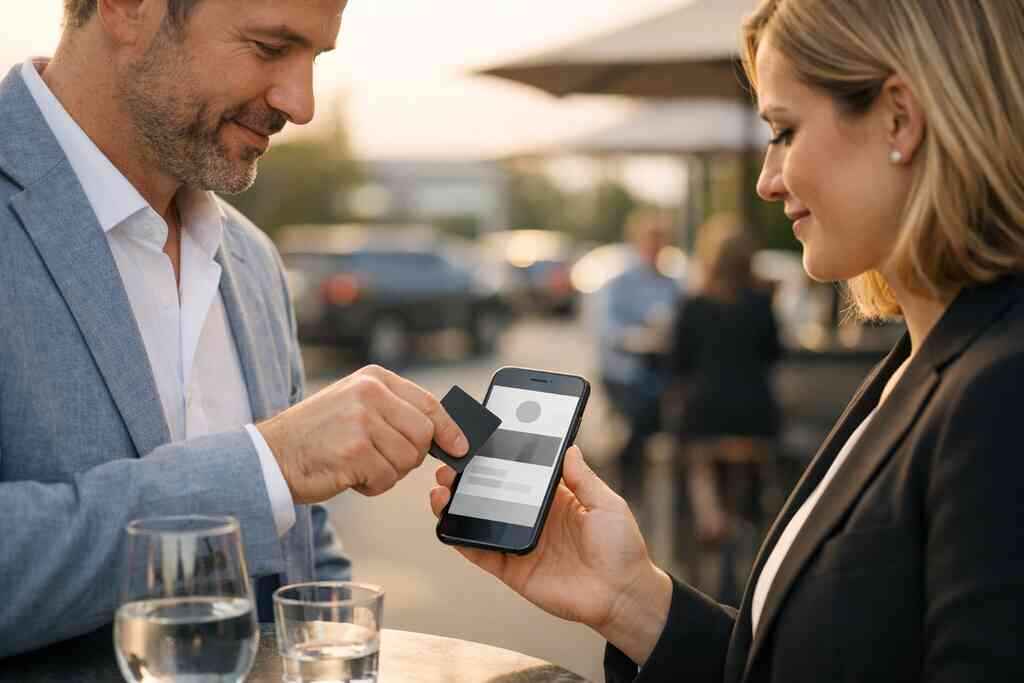
Templates can make setup fast, but too many options can distract you. Digital business card templates should support your brand, not bury it. A business card template is valuable when it helps you launch quickly and stay consistent across your team. It becomes a problem when every edit takes time or every card looks slightly different. Consistency matters more than novelty.
Look for clean virtual card design, clear business card details, and enough flexibility for your use case. If you are in real estate, your card should support property links, phone calls, and quick follow-up. If you are a freelancer, a simple design may work better than a crowded one. The rule is simple: pay for control you will actually use. Do not pay for decoration.
How Long Island businesses can judge ROI in the real world
Long Island business networking is different from a generic online sales funnel. People remember in-person interactions here. They also move fast between meetings, train stations, and job sites. That makes contactless sharing especially useful. The value of a digital card rises when your networking is local, repeated, and time-sensitive.
Why Long Island New York and Suffolk County networking changes the value of contactless sharing
On Long Island, New York, many professionals work across Suffolk County, Nassau County, and NYC. That means contacts are not always sitting at a desk when they receive your info. They may be commuting, on a job site, or heading into another meeting. Contactless sharing helps because the exchange happens instantly. A digital business cards for networking approach fits that rhythm better than paper.
We see this especially around regional mixers and chamber events. Someone takes your card, then forgets which pocket it went into. A scan removes that problem. In Suffolk County, where local relationships often overlap with commuter schedules, speed matters more than in theory. It matters in practice.
What real estate agents sales professionals and small business owners should measure after a scan
After a scan, do not measure vanity metrics only. Measure response time, saved contacts, and actual follow-up actions. Real estate agents should track how often a contact turns into a showing, call, or email. Sales professionals should track how many scans become booked meetings. Small business owners should track cost per lead and conversion tracking.
A digital business cards for real estate agents in New York setup can be powerful because it shortens the handoff between meeting and follow-up. But the scan itself is not the win. The win is the conversation that comes after. If your team cannot tell which scans turned into prospects, your ROI picture is incomplete. That is why measurable networking performance matters.
How NYC commuter habits and local professional networking affect digital card vs paper results
NYC commuters live in a very different flow from paper-only networking. People are moving. They are checking phones. They are often handling several conversations at once. In that environment, digital card vs paper comparisons usually favor the digital option. A paper card may still work, but it asks for more memory and more care.
This is where the difference becomes obvious at local events and on trains into the city. A virtual business card can be saved in seconds. An electronic business card can be shared again later without panic. Paperless networking fits faster behavior. That is especially true when attention is fragmented.
Where a digital business card for LinkedIn or Apple Wallet business card fits into a local follow up flow
A digital business card for LinkedIn can help bridge networking and profile credibility. An Apple Wallet business card can make access easy for people who prefer that format. The best local follow-up flow is simple. Share the card. Save the contact. Send a tailored message. Then connect the context back to the original meeting.
For some teams, Google Pay card support may matter too, depending on how contacts prefer to store information. The key is reducing friction without adding confusion. If the card lives where the prospect already looks, you improve the odds of a response. That is the practical value of format flexibility.
The decision frame that turns pricing into a yes or no
Pricing only becomes clear when you match it to your stage, team, and workflow. You do not need every feature. You need the right mix. That is the frame that turns research into a decision. It also helps you avoid overthinking the purchase.
How to match digital card pricing to your stage of growth and team size
Solo users usually need simplicity, solid design, and easy sharing. Smaller teams often need shared branding and light administration. Larger teams need more control, more consistency, and tighter tracking. That is why digital card pricing should scale with complexity. A small business should not pay enterprise-style costs unless the workflow demands it.
If you are just testing the waters, compare digital card plans carefully and watch the limits. If you are growing quickly, think about the cost of inconsistency. One bad first impression can cost more than a monthly subscription. That is the logic behind a smart ROI comparison framework.
What to test before you commit to one of the best digital business card platforms
Before you commit, test the basics in real use. Share the card at a meeting. Scan it on different phones. Check how fast the contact lands. Review the layout on mobile. Then inspect the follow-up path.
Use this checklist:
- Does the card load fast?
- Is the digital business card app easy to use?
- Can you share contact info in more than one way?
- Do the templates match your brand?
- Can you track what happens after the scan?
A platform can look great on a screen and still fail in motion. That is why testing matters more than marketing language.
Which signals tell you a digital card maker is worth scaling across a company
A digital card maker is worth scaling when it makes the whole team easier to recognize and easier to contact. Look for brand consistency, manageable admin, and clear reporting. Also look for features that support digital business cards for networking across roles. That matters for sales professionals, real estate agents, freelancers, and corporate teams alike. If the tool reduces setup friction, it may be ready for wider use.
What we’ve seen in 2026 specifically is that teams care more about measurable networking performance than fancy extras. They want clean tracking, simple updates, and fewer lost contacts. They also want confidence that the tool works in real life, not just in a demo. That is where digital business card reviews for small business teams can help, if you are comparing options carefully.
How to choose the next move using your pricing page template options and /how-it-works/ path
Your next move should be practical, not dramatic. Compare the pricing page, the template options, and the onboarding flow. Then decide whether the tool matches your current business rhythm. If you want a simple path, review how digital business cards work before you commit. That gives you a clearer picture of setup, sharing, and everyday use.
If you are based on Long Island, New York, keep your local networking reality in mind. A card that works at a Suffolk County breakfast mixer should also work during a quick NYC commuter exchange. That is the real test. You do not have to solve everything today. Start by comparing two or three plans, then choose the one that makes follow-up easier by tomorrow.
Frequently Asked Questions
Question: How can I compare digital card pricing for small business ROI without focusing only on the lowest monthly cost?
Answer: The best way is to compare the full value of the plan, not just the sticker price. With digital business cards, the real return comes from contactless sharing, easier follow-up, lead capture, and how quickly someone can save your details. A free digital business card may be fine for testing, but premium digital card plans can make more sense when you need custom branding, better digital card analytics, or smoother contact management. If a plan saves time and helps more conversations turn into actual leads, it can improve cost per lead even if the monthly price is higher.
Question: What features should small businesses look for in a digital business card to improve small business ROI?
Answer: For small business ROI, focus on the digital business card features that support real networking outcomes. That usually includes a strong digital business card design, easy sharing contact info, mobile-friendly business card details, and options that support digital card analytics or lead capture. If your team uses CRM integration or follow-up automation, those can also raise the value of the plan because they reduce manual work. A smart business card should help sales professionals, freelancers, real estate agents, and corporate teams move from introduction to follow-up with less friction. That is where ROI starts to improve.
Question: How does How to Compare Digital Card Pricing for Small Business ROI apply to digital business cards for networking on Long Island, New York and Suffolk County?
Answer: On Long Island, New York, and especially in Suffolk County and nearby NYC professional networking settings, speed and convenience matter. People are often commuting, moving between appointments, or meeting several contacts in one day. Digital business cards for networking fit that rhythm better than paper because a digital card vs paper comparison usually favors instant sharing and easier follow-up. A virtual business card or electronic business card can be stored right away, which helps reduce lost contacts. For local small business networking, that can make a meaningful difference in measurable networking performance.
Question: Should I choose a free digital business card or premium digital card plans for my team?
Answer: It depends on how your team networks and what you need from the platform. A free digital business card can be useful for learning how to make a digital business card or trying out a basic digital card maker. But premium digital card plans often become more valuable when you need digital business card templates, custom branding, broader sharing, or better tracking. If your team needs consistent business card template options, stronger business card design control, or support for electronic business card exchange at scale, a paid plan may be the better ROI choice. The key is to compare digital card plans based on workflow, not just cost.
Question: Can QR code business cards and NFC business cards help improve follow-up automation and CRM integration?
Answer: Yes, they can be a strong fit when your workflow depends on fast contact exchange. QR code business cards make it easy for someone to scan and save your card, while NFC business cards support quick tap-to-share interactions. Both formats can reduce friction in the first moment of contact, which helps with lead capture and follow-up automation. If your team already uses CRM integration, a digital business card app that fits your process can make it easier to turn a scan into an organized next step. That is especially useful for sales professionals, real estate agents, and corporate teams who need dependable follow-up after every introduction.
Question: What should I test before I choose one of the best digital business card platforms?
Answer: Before you commit, test how the card works in real networking situations. Check whether the digital business card app is easy to use, whether the virtual card design looks good on mobile, and whether the card shares cleanly as a link, QR code, or other contactless sharing method. Review whether the digital business card templates fit your brand, and whether the platform supports the business card details you need for your role. If your goal is better ROI, also check whether you can track scans, manage contacts efficiently, and support a digital business card for LinkedIn or an Apple Wallet business card workflow if that matters to you. The best platform is the one that makes sharing, saving, and following up simpler for your real-world business needs.