
When a sales team misses the follow-up, where does the ROI disappear
The painful part is rarely the meeting itself. It is the silence that follows. If you have ever left a conference with a pocket full of paper cards, you already know how quickly momentum fades. A smudged number, a missing last name, or a card buried under hotel receipts can erase a good conversation. That is where the ROI leaks out.
Most teams do not lose deals because they failed to introduce themselves. They lose them because the contact never reaches the CRM, the follow-up arrives late, or the rep forgets why the conversation mattered. We hear this from sales professionals all the time, especially after busy events in Long Island, New York, where handshakes move fast and cardholders get stuffed before dinner. The frustration is real. You did the hard part. Then the lead slipped away.
The hidden cost of paper cards that never make it into the CRM
Paper cards look cheap until you count the hidden work. You print them, reorder them, sort them, and then someone still has to type the details into the CRM. That extra step sounds small. In practice, it is where deals stall. A paper card only creates value if someone captures it accurately and quickly.
Here is the part most people miss. The card itself is not the expense. The expense is the delay, the manual entry, and the missed reminder to follow up. We have seen reps leave a Hauppauge business mixer with twenty cards and only six usable contacts by Monday morning. The rest were incomplete, unreadable, or never entered at all.
Why a lost contact matters more than the cost of one card
A single lost contact can cost far more than the paper stock in your hand. One strong prospect may represent months of pipeline value, repeat business, or referrals. Losing that connection because the card sat in a coat pocket is a bad trade. The math is simple, even if the moment is frustrating.
For sales teams, paperless networking is not about looking modern. It is about keeping the lead alive while interest is still warm. One missed follow-up can mean another rep got there first. In New York, where buyers move quickly and inboxes fill fast, that timing gap matters more than most teams admit.
How digital business cards keep the conversation alive after the meeting ends
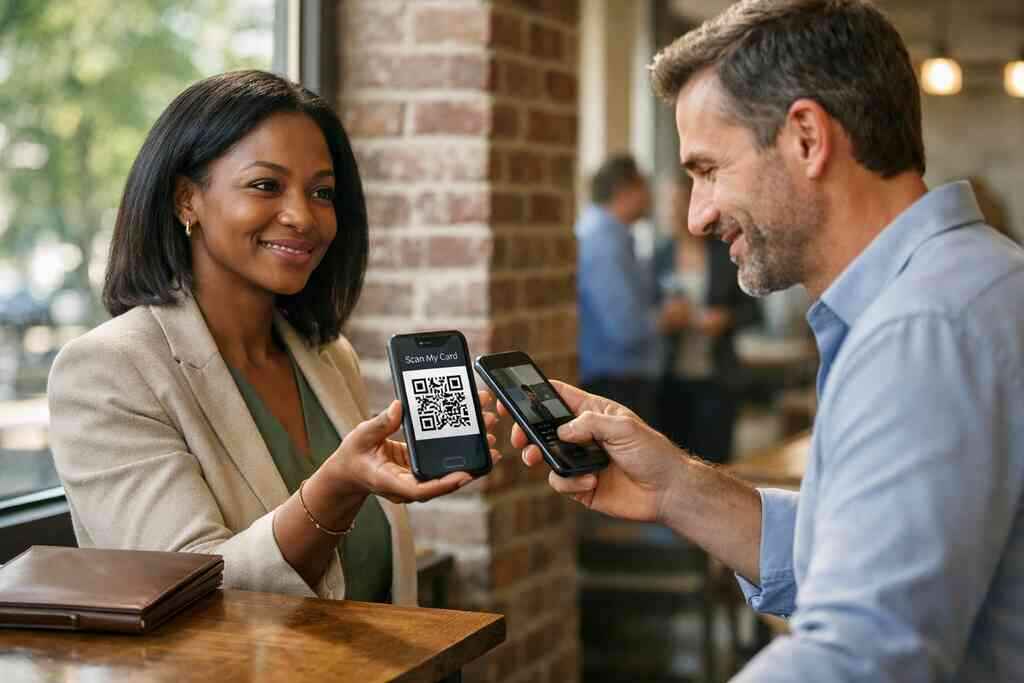
A digital business card changes the handoff. Instead of hoping someone enters your details later, you can share contact info instantly through a QR code, tap, email, or link. That shift matters because the contact moves from memory to system before the conversation cools. It also supports cleaner handoff into the CRM when the workflow is set up well.
One real estate agent in Garden City told us she used to carry two cardholders and still ran out at open houses. She switched to a virtual business card and started sharing the same link after every showing. That did not magically create deals. It did, however, keep her name in front of more buyers, and her follow-up became faster and tidier.
What a digital business card actually earns back for sales pros
A digital business card earns back value in three places: lead capture, time, and tracking. That sounds simple, but those three gains compound fast inside a sales team. At conferences, client lunches, and local mixers, every saved minute matters. A smoother handoff also keeps the next step visible. That is where the ROI starts to become measurable.
For many teams, the shift is emotional before it is financial. You stop worrying about whether someone can read your number. You stop checking your blazer pocket for cards that may already be gone. Then you notice something better: more contacts are actually making it into the pipeline.
Lead capture gains from contactless sharing at meetings and events
Contactless sharing is one of the most practical benefits of digital business cards for networking. A prospect scans a QR code, taps an NFC card, or opens a link. No one has to type anything by hand. That reduces friction, especially in crowded rooms where introductions happen quickly.
At a Commack co-working space event, one rep we spoke with had a line of people waiting after a panel. He switched from handing out paper to using a smart business card with QR code sharing. The stack in his pocket never touched the table. More importantly, his new contacts were saved immediately, which made his Monday follow-up much cleaner.
Time saved when one online business card replaces repeated manual entry
An online business card can save far more time than people expect. Every manual contact entry takes a few minutes, then a second pass to correct spelling, title, company, and phone format. Multiply that by dozens of leads per week, and the drag becomes obvious. That is time you could spend calling, qualifying, or booking meetings.
This is why many sales professionals prefer a digital card maker over a stack of printed stock. One profile can support multiple uses, from email signatures to event sharing. You are not rebuilding the same contact over and over. You are keeping one source of truth.
Why digital card analytics make prospect tracking more precise than paper
Digital card analytics are where paper cards fall apart completely. A paper card tells you nothing after it leaves your hand. A digital card can show when someone opened it, clicked a link, or revisited a profile, depending on the platform’s available features. That makes prospect tracking more precise and follow-up timing more intentional.
If you are exploring how to measure ROI from digital business cards analytics, the real value is not vanity. It is visibility. You can see which introductions turn into meetings and which channels deserve more attention. That kind of data helps sales team lead generation move from guesswork to pattern recognition.
The math behind digital card ROI that sales managers can defend
Sales managers do not need hype. They need a case they can defend in front of finance. The ROI of digital business cards becomes clearer when you compare conversion lift, admin time, and print waste. You do not need perfect precision to justify the switch. You need a credible model tied to real workflow changes.
The best way to think about it is this: if a tool improves follow-up speed and contact quality, it can improve pipeline efficiency. That is true even before you price in printing and shipping. On teams that live inside CRM dashboards, that matters. The result is a cleaner pipeline with fewer dead leads.
Measuring conversion lift from faster follow-up and cleaner contact data
Follow-up automation works best when contact data arrives cleanly. If the name is correct, the email is complete, and the CRM receives the lead on time, the rep can move faster. Faster follow-up usually means higher response rates. That is not magic. It is timing.
Why digital business cards improve email follow-up ROI is easy to see in practice because digital tools reduce the delay between meeting and outreach. People still want human contact. They just want the handoff to be easier. When a digital profile supports CRM integration, the conversion path gets shorter. That shorter path is where ROI starts to show up.
Comparing digital card pricing against printing, reprinting, and shipping paper cards
Digital card pricing should always be compared against the full paper workflow, not just the first print order. Printing, shipping, reprinting after title changes, and emergency rush orders all add up. Then there is the hidden cost of outdated cards sitting in a drawer. If your team changes roles often, paper waste rises quickly. If you are comparing how to compare digital card pricing for small business ROI, keep the math honest. Look at the cost per active rep, the number of events attended, and how often cards need updates. For some teams, digital business cards pricing guide for small teams 2026 may feel like an upgrade at first, but the reduction in reprints can offset a surprising amount. ### Where premium digital card plans can make sense for growing teams 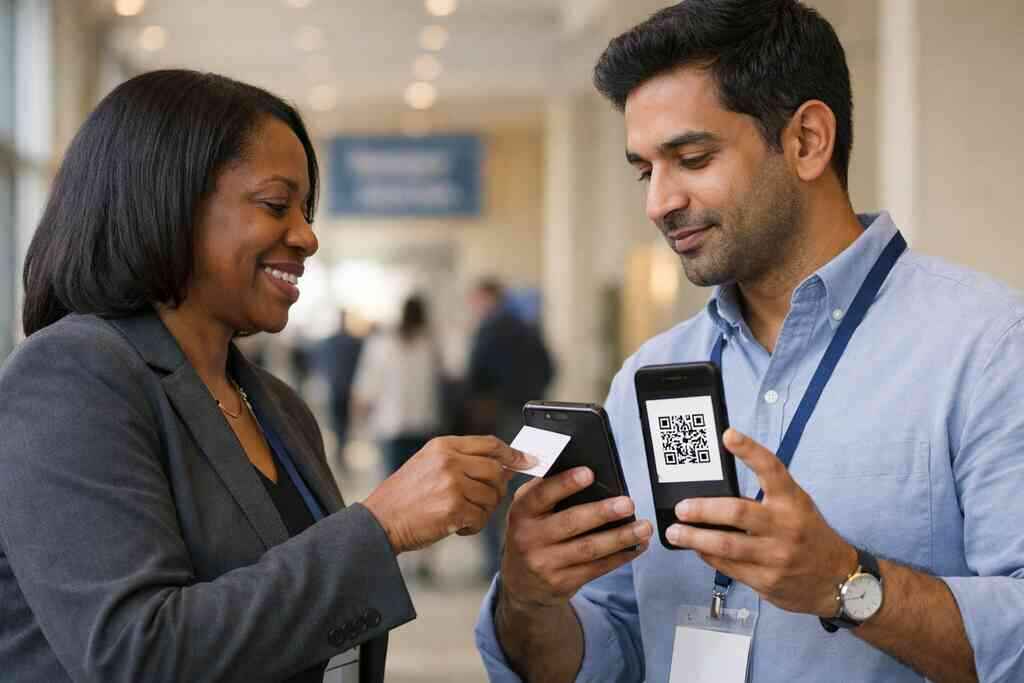
Premium digital card plans can make sense when your team needs more than simple sharing. That may include centralized branding, better admin control, or deeper reporting. I am not going to invent specific features here, because platforms vary. Still, the pattern is clear. As the team grows, coordination matters more.
A small agency can survive with a basic free digital business card approach for a while. A fast-moving sales org may need stronger controls and consistency. That is especially true for corporate teams and small business groups that need every rep to present the same brand. In that situation, digital business cards drive ROI in Long Island becomes easier to defend because the savings show up in time and process, not just print costs.
Why QR code business cards and NFC business cards change the field
The choice between QR code business cards and NFC business cards is really a question of context. Both can improve speed. Both can support contactless sharing. The difference is how your prospects prefer to interact. In sales, the faster path usually wins, but the room matters too.
Here is the good news. You do not need to choose blindly. The smartest teams test both. They use whichever option creates the fewest barriers at the moment of exchange. That is a practical decision, not a trendy one.
When QR code business cards win because they are universal and instant
QR code business cards work well because almost every modern phone can scan them. The standard behind QR codes, ISO/IEC 18004, is widely recognized. That makes QR sharing simple across devices and situations. It also helps when you are meeting people who do not want to install an app.
This is why many digital business cards for networking rely on QR first. At a busy trade show, speed matters more than explanation. The prospect looks once, scans once, and moves on. That is especially useful for professional networking in places like Manhattan commuter events or Suffolk County mixers, where lines form quickly.
When NFC business cards help in tap-heavy sales environments
NFC business cards shine when your audience is comfortable with tap-to-share behavior. NFC uses short-range contactless communication, and Apple’s Core NFC framework has helped normalize that experience on supported devices. The underlying ISO 14443 standard is also familiar in card-based environments. That makes NFC feel smooth in the right room.
If you are evaluating the difference between QR code and NFC business cards, think about the environment. If you are at a polished client reception or a tech-forward sales event, NFC can feel effortless. If your audience is broader or mixed, QR often remains the safer default. In either case, the goal is the same: reduce friction and capture the lead.
How Apple Wallet business card and Google Pay card sharing fit mobile-first networking
An Apple Wallet business card or Google Pay card approach can be useful for mobile-first networking. Some people prefer keeping everything in one place on their phone. That makes storage and retrieval easier later. It also supports cleaner recall after the event ends.
This matters for commuters from Long Island into NYC, where mobile habits are strong. People check phones on trains, in lobbies, and between meetings. A digital business card app that supports easy mobile access fits that reality. It also keeps your business card details close at hand without asking someone to search for paper later.
The next move for Long Island sales teams that want better pipeline math
If you are leading a sales team, the next move is not to overhaul everything. It is to test the workflow. The strongest ROI usually comes from a small pilot, not a giant launch. That lets you see what changes in follow-up speed, lead capture, and CRM cleanliness. For teams in Long Island, New York, that practical approach is often the difference between a nice idea and a working process.
The mistake we see most often is choosing a tool before defining the sales motion. Start with the motion. Then match the card format, the branding, and the handoff to that motion. That is how the numbers become believable.
How to choose a digital card maker that matches your sales workflow
A good digital card maker should fit how your team already works. If your reps live in LinkedIn, email, and CRM screens, the card should support that flow. If your group attends events often, the sharing method should be fast and obvious. If design matters, use a strong business card template or digital business card templates that keep the brand consistent.
When you review a platform, look at the basics carefully. Ask how easy it is to create digital business card profiles, update titles, and share contact info in multiple ways. If you need a digital business card for LinkedIn use case, test that path directly. Here is a simple checklist:
- Can reps update their own profile quickly?
- Can managers control brand consistency?
- Does the card fit event, email, and mobile sharing?
- Does the workflow support CRM handoff?
- Is the design clean enough for a prospect to trust it?
If you need a starting point, the best digital business card platforms for sales professionals are usually the ones that keep the process simple. Fancy does not always mean effective.
Where custom branding, CRM integration, and follow-up automation matter most
Custom branding is not just visual polish. It signals consistency across the team. When every rep shares a similar digital business card design, the prospect feels a stronger brand presence. That matters more than people think. A polished profile builds trust before the follow-up call even starts.
The bigger ROI comes from digital business cards for networking and CRM integration. Once the contact moves cleanly into the system, follow-up automation can do its job. That may mean reminders, task creation, or email sequences, depending on the setup. Just remember to keep the process compliant and clear, especially if you store personal data. GDPR-style privacy discipline is smart even when your team is not in Europe.
How teams in Long Island, New York, Suffolk County, and NYC can pilot digital business cards for networking with a clear ROI test
A pilot should be small and measurable. Pick a handful of reps. Give them one consistent digital business card format. Then track lead capture, follow-up time, and meetings booked from those introductions. Compare that to a similar group still using paper.
For Long Island business networking, this works especially well at chambers, coworking spaces, and regional mixers. A rep who also travels into NYC can use the same profile across both markets. That reduces confusion and keeps branding tight. If your team wants a local rollout, best digital business cards for summer events in Long Island 2026 can be a practical place to start. For reps in Suffolk County and NYC, the goal is simple: prove the tool helps the pipeline, then expand with confidence.
You do not need to solve everything at once. Start with one event, one team segment, and one tracking rule. Then see what the data says. If you want a cleaner read on ROI, compare the pilot against your current paper-card process and review the results with your sales manager before the next event.
Frequently Asked Questions
Question: What is the ROI of digital business cards for sales teams, and how does it compare to paper cards?
Answer: The ROI of digital business cards for sales teams usually comes from three places: faster lead capture, less manual data entry, and better follow-up timing. With a paper card, a rep still has to keep track of the card, retype the business card details, and hope the contact makes it into the CRM. A digital business card can help reduce that friction by letting you share contact info instantly through QR code business cards, NFC business cards, email, or a link. That means the lead is more likely to be captured while the conversation is still fresh. For sales professionals, that can translate into better sales pipeline efficiency and fewer missed opportunities. The card itself is not the only cost to compare. The real digital card vs paper difference is the time, reprints, and delayed follow-up that paper often creates.
Question: How does a digital business card help with CRM integration and lead capture for networking events?
Answer: A digital business card can make lead capture much smoother at events, client meetings, and professional networking gatherings. Instead of collecting paper cards and entering contact details later, reps can share a digital business card that routes the prospect into a more organized workflow. When CRM integration is part of the process, the contact can be captured more cleanly and follow-up automation becomes easier to manage. That is especially useful for sales team lead generation, where speed and accuracy matter. For teams in Long Island, New York, Suffolk County, or NYC, this can be a practical advantage because busy networking situations often leave little time for manual entry. It also supports paperless networking and can align with sustainable business cards goals, since there is less printing and less waste.
Question: In the blog What Is the ROI of Digital Business Cards for Sales Teams, which digital business card features matter most for sales professionals?
Answer: For sales professionals, the most valuable digital business card features are usually the ones that make sharing, tracking, and updating easier. That often includes a clean digital business card design, flexible ways to share contact info, and support for CRM integration or prospect tracking where available. A strong digital card maker should also make it simple to create digital business card profiles, update titles or business card details quickly, and keep branding consistent across the team with custom branding or a business card template. Some teams may also want an Apple Wallet business card or Google Pay card style of mobile-first access, but the right choice depends on the workflow and the platform’s actual capabilities. We recommend choosing based on how your team networks, how often details change, and how much manual work you want to remove from the sales process.
Question: Are QR code business cards or NFC business cards better for digital business cards for networking?
Answer: QR code business cards and NFC business cards can both be effective, and the better choice depends on the room. QR codes tend to be the most universal option because most smartphones can scan them easily, which makes them a strong choice for broad digital business cards for networking use. NFC business cards can feel especially smooth in tap-friendly environments and can be a good fit for some mobile-first networking situations. Many sales teams use both so they can match the sharing method to the prospect’s preference. If your audience includes a mix of real estate agents, freelancers, corporate teams, and small business contacts, a flexible approach is usually best. The goal is not to impress people with the format. It is to make electronic business card exchange fast enough that the lead does not cool off before the follow-up begins.
Question: How can a digital card maker help Long Island sales teams choose the right digital card pricing and plan?
Answer: A good digital card maker should help teams evaluate digital card pricing based on how many reps need access, how often cards need updates, and whether the team wants basic sharing or more advanced organization. For some teams, a free digital business card option may be enough to test the workflow. For others, premium digital card plans may make more sense if the team needs stronger admin control, custom branding, or more consistent digital business card design across the group. The best way to judge value is to compare the plan against the full cost of paper cards, reprints, shipping, and the time spent updating details manually. For Long Island, New York teams that network across Suffolk County and NYC, the right plan is the one that supports how the team actually works, whether that is in-person events, digital business cards for LinkedIn networking, or ongoing CRM integration. If the platform helps the team create digital business card profiles quickly and keep everyone on-brand, it can be a practical investment rather than just another tool.