
When a Paper Card Disappears Before the Follow-Up, What Small Businesses in Long Island Are Missing
At a Hauppauge mixer, I watched a polished stack of cards sit untouched on a table. By the end of the night, half had disappeared into pockets, and half had vanished into the usual black hole. That is the frustrating part. You do everything right, then the follow-up falls apart. If you are reading this because you keep losing contacts, that feeling makes sense.
Why paper cards slip through the cracks at conferences, client meetings, and local mixers
Paper cards rely on memory, timing, and a clean pocket. That is a lot to ask after a long day of pitching, shaking hands, and trying to remember who said what. At conferences, client meetings, and local mixers, cards get tucked into notebooks, coffee-stained folders, and jacket liners. Then they surface later with no context. The contact becomes a mystery instead of a lead.
What we’ve seen on Long Island is simple. The more crowded the room, the faster paper slips away. A real estate agent in Garden City once told me her best prospect handed her a card beside a loud entrance hall. She found it two days later, bent and unreadable. That kind of delay kills momentum before it starts.
The contact loss problem behind smudged ink, broken holders, and forgotten stacks
Paper fails in small ways that add up. Ink smudges in rain. Holders crack in bags. Stacks get mixed, bent, or left behind on a desk. Even a perfect card can become useless if the person’s name is missing from your memory. That is why the problem is not design alone. It is retention.
A digital business card solves that by keeping the contact connected to the moment of exchange. Instead of hoping someone types your details later, you let them save or share information right away. That is especially useful for small business owners moving between client sites, coworking spaces, and commute-heavy meetings into NYC. The card is still there, even when the paper version is not.
What a digital business card changes the moment someone scans, taps, or clicks
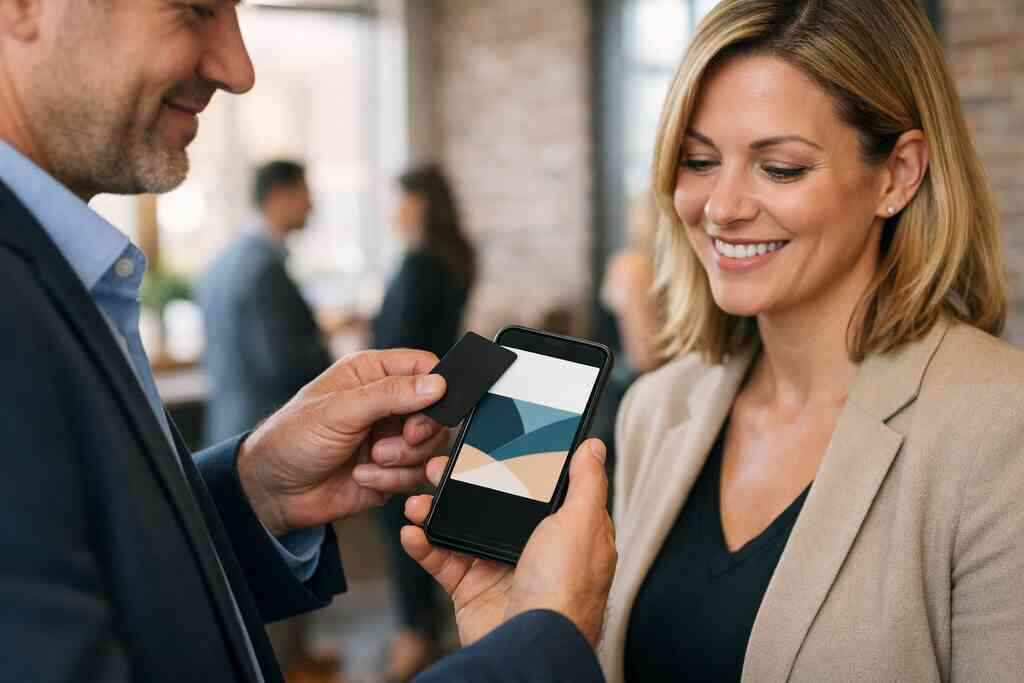
The biggest shift is speed. Someone scans a QR code, taps an NFC card, or clicks a link, and your details can be saved instantly. That sounds simple, but it changes behavior. The contact no longer depends on a desk cleanup or a later search through old notes. It becomes immediate.
A digital business card, also called an online business card, virtual business card, or electronic business card, can help you share contact info without friction. Many teams use it as a digital card maker tool for cleaner networking. If you want a closer look at the flow, see how digital business cards work for small businesses. The practical benefit is not novelty. It is follow-through.
Why Long Island professionals are using contactless sharing to stay top of mind
Long Island professionals are busy, and travel matters. Many move between Suffolk County, Nassau County, and NYC in the same week. That makes contactless sharing valuable because it keeps networking simple on a train platform, in a parking lot, or outside a venue. It also fits better with modern expectations. People already scan menus, tickets, and payment codes.
One consultant I met near Commack said her old card routine felt like admin work after every meeting. She switched because she wanted less clutter and more consistency. That is the heart of paperless networking. It is not about being trendy. It is about making it easier for people to remember you, reach you, and act while interest is still warm. For local visibility, digital business cards for online branding in Long Island can be a practical place to start.
What makes a digital business card work as an online branding asset instead of just a prettier contact card
A strong card does more than display a phone number. It signals who you are before anyone reads a word. That is why online branding for small businesses matters here. Your card should feel like an extension of your site, email signature, and social profiles. If it looks disconnected, people notice.
The brand signals hidden inside digital business card design and business card details
Design carries meaning. Fonts, colors, spacing, and even the order of business card details affect trust. A clean digital business card design says you are organized. A cluttered one can feel rushed. The same is true for a business card example or business card design you show to prospects. People judge fast.
This is where a thoughtful virtual card design matters. Your logo, headline, and contact fields should work together. You do not need flashy effects. You need clarity. A well-built digital card can look polished while still feeling human. That balance helps with brand and identity development for smaller firms that want to look established without pretending to be a giant brand.
How custom branding keeps a small business consistent across LinkedIn, email, and mobile sharing
Consistency builds memory. If your card, LinkedIn profile, and email signature all look different, people hesitate. They wonder which version is current. Custom branding solves that by keeping colors, messaging, and visual cues aligned across channels. That matters even more on mobile, where attention is short.
A good digital business card for LinkedIn should feel like it belongs in the same family as your profile photo and headline. The same is true for text shared by email or text message. Many teams ask for small business branding support because they want one clear identity across every touchpoint. That is smart. It reduces confusion and helps your brand feel steady, not improvised.
Why business card templates matter when your team needs speed without looking generic
Templates save time. They also create consistency across departments. But templates should not trap you in a generic look. The best business card template or set of digital business card templates gives your team structure while leaving room for logo, colors, and role-specific details. That is especially useful for corporate teams and growing local businesses. 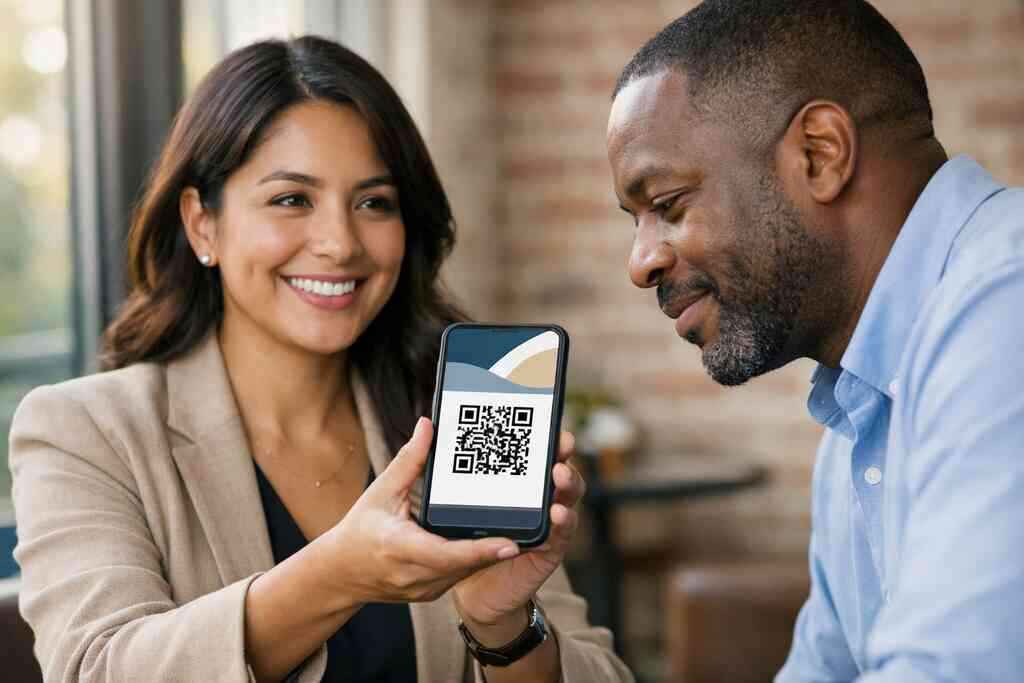
Here is the part most owners miss. Templates are not just about speed. They are about scale. When you onboard a new rep, a new listing agent, or a new freelancer contractor, the setup should feel fast and controlled. A good template system helps you create digital business card profiles without redesigning from scratch each time. That keeps the team moving.
OptionBest forMain advantageStatic paper cardSimple one-time handoutsLow effort, but easy to loseTemplate-based digital cardTeams and repeat networkingFast setup with consistent brandingCustom digital card designPremium brand presentationStronger visual control### Where digital card analytics, lead capture, and follow-up automation fit into the bigger picture
This is where the card becomes a business tool. Digital card analytics can show what gets opened, saved, or clicked, depending on the platform. Lead capture matters because it turns a simple exchange into an actionable record. Follow-up automation can help teams respond faster, which is often the difference between a warm lead and a cold one.
If your team works in sales or client services, this part deserves attention. A card that connects to your process can reduce missed opportunities. Some businesses also look for CRM integration, which helps tie contact exchanges into the tools they already use. If that is your priority, explore create a digital business card with CRM integration. Done well, the card becomes part of your workflow, not just another profile.
When NFC business cards, QR code business cards, and Apple Wallet business card options make sense
Different situations call for different tools. NFC business cards work well when tapping feels natural, especially at in-person meetings. QR code business cards are useful because almost any phone can scan them. Apple Wallet business card options can fit mobile-first users who want quick access. There is no single winner for every business.
What matters is reliability and context. NFC business cards use near-field communication technology, which is governed by standards such as ISO 14443. QR codes rely on the broader QR standard, ISO/IEC 18004. Apple also provides Core NFC support on compatible devices, which helps tap-based sharing work smoothly. If you want a focused breakdown, NFC business cards versus QR code business cards are worth comparing against your daily routine.
The moves that turn one shared card into real momentum for a small business
A card only helps if it leads somewhere. That is the real test. You want the handoff to feel smooth, the contact to feel remembered, and the next step to feel obvious. On Long Island, where many professionals juggle local appointments and NYC meetings, that simplicity matters. Time is tight. Attention is tighter.
How to make a digital business card that supports professional networking without friction
Start with the basics. Your name should be easy to read. Your title should be direct. Your phone, email, website, and social links should load quickly. Then test the sharing path on a real phone. If a prospect needs instructions, the process is too heavy.
A strong how to make a digital business card workflow usually follows a simple pattern:
- Add clear business card details.
- Choose a clean digital business card design.
- Attach a QR code or tap method.
- Test saving on mobile.
- Share it in a real meeting.
If you want a practical setup guide, how to make a digital business card for leads is a useful place to compare your options. The goal is not complexity. It is easy, repeatable sharing.
Which industries in Long Island and NYC benefit most, including sales professionals, real estate agents, freelancers, and corporate teams
Some groups feel the change immediately. Sales professionals like faster handoffs. Real estate agents need quick follow-up after showings and open houses. Freelancers want a polished identity without printing new cards every few months. Corporate teams need consistency across multiple employees.
Long Island and NYC both reward speed. A rep leaving a meeting in Midtown may have two more stops before lunch. A freelancer moving between Commack co-working spaces and client sites needs easy sharing. Real estate teams especially benefit because listing conversations often begin in motion. For that audience, real estate digital card examples can show how digital sharing supports local relationship work.
What to check before choosing a digital business card app or comparing digital card pricing
People often compare price before they compare fit. That can be a mistake. First check the basics: sharing methods, branding control, analytics, and support for team use. Then look at digital card pricing. If you need more than a free tool offers, compare a free digital business card against premium digital card plans carefully.
Ask what you actually need. Do you want one card or many? Do you need analytics? Do you need CRM connection? Do you need team setup? These questions matter more than a headline price. If setup is your concern, the pricing page can help you compare options without guessing. The best digital business card app is the one that fits your workflow, not just your budget.
Why paperless networking and sustainable business cards now influence brand perception
This part is bigger than convenience. Sustainable business cards signal that your brand thinks carefully about waste and efficiency. Many people notice that. They may not say it out loud, but they do register it. A digital card vs paper choice can shape how modern or outdated your brand feels.
Paperless tools also help reduce stacks that never get used. That matters for firms trying to look current without sounding performative. If a client sees you use digital business cards for networking, they see a practical brand decision, not a gimmick. That can support credibility, especially with younger buyers and mobile-first teams. If you want broader context, digital business cards versus paper cards for sales teams offers a useful comparison.
The cleanest next action for readers who want to explore templates, pricing, or setup through Digital Business Cards
If you are ready to test this, keep it simple. Pick one person on your team. Build one clean card. Send it to a colleague, a client, and one person you met this week. Watch where the friction shows up. That will tell you what to improve.
You do not need to overhaul everything today. You need a clean starting point and a tool that fits your team’s pace. If you want setup guidance, templates, or a better sense of the platform, start with how digital business cards work for small businesses. You can also compare options on the digital business card pricing and plans for small teams page. Start with one card, one contact, and one real follow-up.
Frequently Asked Questions
Question: What makes digital business cards better than paper cards for small business networking in Long Island, New York?
Answer: Digital business cards are designed to make sharing contact info faster and more reliable than paper cards, especially for small business owners who are networking in Long Island, Suffolk County, and NYC. Instead of hoping someone keeps a paper card safe, you can share a digital business card, virtual business card, or electronic business card through QR code business cards, NFC business cards, a link, or email. That makes contactless sharing much easier during professional networking, meetings, mixers, and on-the-go introductions. Digital Business Cards helps reduce the risk of lost or damaged cards while supporting paperless networking and a more modern brand presence.
Question: How can Digital Business Cards help with online branding for small businesses and digital brand consistency?
Answer: A digital business card can do more than share a phone number. It can support online branding for small businesses by keeping your business card design, business card details, and custom branding aligned with your website, LinkedIn profile, email signature, and other channels. Digital Business Cards is built for small business branding and online business branding that feels consistent and professional. Whether you need a digital business card for LinkedIn, a smart business card for mobile sharing, or a cleaner virtual card design, the goal is to make your brand easy to recognize and easier to remember. That kind of consistency helps strengthen brand and identity development without requiring a complicated setup.
Question: In the blog Digital Business Cards and Online Branding for Small Businesses 2026, what kinds of businesses benefit most from a digital card maker?
Answer: The blog highlights that sales professionals, real estate agents, freelancers, and corporate teams often see the most immediate benefit from a digital card maker because they rely on quick follow-up and frequent professional networking. A create digital business card workflow is especially useful for small business owners who move between client sites, coworking spaces, open houses, and meetings in Long Island or NYC. Digital Business Cards makes it easier to build a digital business card example that fits your role, your brand, and your workflow. With digital business card templates and business card template options, teams can keep things organized while still allowing room for custom branding and role-specific business card details.
Question: What digital business card features should I look for before choosing a digital business card app?
Answer: When comparing digital business card features, it helps to focus on the tools that support your actual workflow rather than just the look of the card. For many businesses, that means checking whether the platform supports QR code business cards, NFC business cards, contactless sharing, digital card analytics, lead capture, follow-up automation, and CRM integration. You may also want to compare digital card pricing, free digital business card options, and premium digital card plans to see what fits your team. Digital Business Cards is focused on helping you share contact info in a simple, mobile-first way, and the best digital business card platforms are the ones that make setup, sharing, and follow-up straightforward for your team.
Question: Can digital business cards support sustainable business cards and reduce the hassle of digital card vs paper for local networking?
Answer: Yes, digital business cards are a practical option for businesses that want to move toward sustainable business cards and away from the hassle of printing, storing, and replacing paper cards. In a local networking setting, that can make a big difference because your card is always easy to update and share. A digital card vs paper comparison usually comes down to convenience, consistency, and accessibility. With Digital Business Cards, you can create digital business card profiles that are easy to share in person or online, which supports paperless networking and a more modern professional image. For many Long Island small businesses, that balance of practicality and presentation is exactly what makes digital business cards worth exploring.