

When paper cards turn into lost revenue instead of leads
A stack of paper cards can feel productive. Then the meeting ends, the drive home starts, and the card slips into a jacket pocket. By the time you need it, the ink is smudged, the notes are missing, or the whole stack is buried under receipts. That is the quiet problem small businesses face every week. The contact was real, but the trail disappeared.
If you are frustrated by that pattern, you are in good company. We hear this from sales professionals, freelancers, and real estate agents all the time. The hard part is not collecting contacts. The hard part is knowing which contact came from which conversation, event, or referral. That gap makes networking feel busy without being measurable.
Why a stack of paper cards rarely tells you which meeting actually paid off
Paper cards do one thing well: they hand over a name and phone number. After that, they go silent. You cannot tell which card was scanned later, which one got tossed, or which one led to a real appointment. That is why a paper stack rarely helps you track ROI from networking. It stores contact details, but not context.
Here is the part most people miss. ROI needs a chain, not a pile. If you met three prospects at a chamber breakfast, you need to know which one answered, which one booked, and which one asked for a proposal. A paper card gives you none of that. A digital business card, by contrast, can support that trail when it is built for sharing and tracking.
One consultant in Huntington described sorting fifty cards after a trade show. She had great conversations, but no way to rank them. A week later, she was still guessing which follow-up should go first. That kind of guesswork costs time and weakens conversion tracking. It also makes customer acquisition tracking much harder than it needs to be.
How a forgotten card at a Hauppauge mixer can break your follow-up flow
A Hauppauge business mixer can move fast. You shake hands, hear a brief pitch, and exchange business card details before the next introduction. Then you get home and realize the card is gone. Maybe it stayed on the table. Maybe it fell into a tote bag. Either way, the follow-up flow breaks.
That break matters more than people think. When your contact lives on a card alone, the relationship depends on memory and luck. If you are a freelancer or solo owner, that is risky enough. If you are juggling multiple prospects, it becomes a real bottleneck. Paperless networking solves that bottleneck by keeping the contact in a shared digital space instead of a pocket.
If you are using digital business cards, the share itself can become the record. You can send a link, have QR code business cards scan, or use an electronic business card exchange through a mobile-friendly format. That makes follow-up easier to manage. It also reduces the chance that a promising lead vanishes before you reach out.
The small business cost of contact loss for sales professionals, freelancers, and real estate agents
Contact loss is not a small inconvenience. It can distort your sales pipeline visibility. A sales rep may think one event underperformed, when the real issue was lost contact data. A freelancer may forget which client asked for a quote. A real estate agent may miss a warm buyer who needed a fast response.
The cost shows up in simple ways. You send fewer timely follow-ups. You lose momentum. You spend extra hours re-creating notes from memory. Over a month, that can mean fewer conversations turning into revenue. In the projects we have seen, the problem is rarely effort. It is traceability.
For real estate agents in particular, the difference is obvious. A quick conversation at an open house can lead to a showing, but only if the contact survives the day. That is why many teams now prefer digital business cards as a paperless networking alternative. It keeps the exchange cleaner. It also helps you measure networking ROI without relying on a notebook full of fragments.
What a digital business card can measure that paper never could
A digital business card is more than a prettier online business card. It is a measurable contact point. When someone opens, taps, or shares your card, you gain a signal. That signal helps you connect networking activity to real business outcomes. For a small business, that visibility matters.
The emotional relief is real, too. You stop wondering whether the meeting mattered. You start seeing evidence. That shift lowers stress and sharpens decisions. It also helps you spend your energy where it pays back.
How digital card analytics reveal who viewed, tapped, or shared your contact details
Digital card analytics can show more than a paper card ever could. Depending on the platform, you may see who viewed your card, when it was accessed, or whether it was shared onward. That is useful because it turns vague networking into trackable activity. It helps you measure contact sharing analytics instead of guessing.
Think of it like this. A paper card says, “Here I am.” A digital card can say, “Someone opened this, then used it.” That difference is huge when you are trying to understand lead quality. It helps you see whether a connection was casual or active.
A smart business card can also support digital business card features that fit professional networking. If your digital card maker includes tracking, you can compare outreach by event, channel, or audience. You can then improve your digital business card design based on real behavior. That is much more useful than a business card example that looks good but tells you nothing.
Why contactless sharing creates cleaner lead capture than handwritten notes
Handwritten notes are useful until they are not. People write fast. Names get misspelled. Numbers get transposed. Notes from a crowded event can become a mess by Monday morning. Contactless sharing removes much of that friction.
With QR code business cards or NFC business cards, the exchange is simple. Someone scans, taps, or opens a link. Their contact pathway stays intact. That improves lead capture because the information enters a digital workflow sooner. It also reduces the risk of transcription errors.
A lot of people first notice the difference at a conference. They collect ten paper cards, then spend an hour figuring out who is who. With contactless sharing, the person can send contact info instantly. If your setup supports it, the record can live in the same place as the follow-up plan. That is cleaner, faster, and easier to manage.
The difference between a digital business card example and a paper card with no trail
The difference is simple: one leaves a trail, the other disappears. A digital business card example can include a scan, a click, or a saved contact action. A paper card usually cannot. That is the gap between activity and attribution.
For example, a digital business card design template for LinkedIn networking can help you share contact details in a way people already use. If someone views your card after a LinkedIn message, that sequence becomes meaningful. You are no longer guessing where the connection came from. You are reading a trail.
What we have seen in 2026 specifically is that small businesses want simpler proof. They do not want complex dashboards for the sake of dashboards. They want to know who engaged, who replied, and who bought. That is why digital card analytics matter. They turn a card into a measurable touchpoint.
The tracking chain that turns a shared card into measurable ROI
ROI from networking does not happen by accident. It happens when each step in the handoff is visible. Share the card. Capture the lead. Follow up quickly. Tie the response back to the source. That chain is what makes the difference between busy networking and measurable business development.
This is where digital business cards for small business owners earn their keep. They reduce manual work and make attribution easier to see. That is especially helpful when your week includes client visits, local mixers, and online outreach. You need a simple system that keeps pace with you.
How lead capture connects the share to the sale without extra admin work
Lead capture is the bridge between interest and action. If someone taps your card and enters their details, that information can move into your process faster. You spend less time retyping names and more time having the right conversation. That alone can improve conversion tracking.
When the lead arrives in a usable format, the sale becomes easier to trace. You can tell whether the prospect came from a trade show, a referral, or a cold outreach follow-up. That is what makes digital business cards for networking so useful. They support the full chain from first contact to closed deal.
A small accounting firm in Commack used to collect names on folded note cards. By the time the office processed them, half the context was gone. After switching to digital sharing, they had a cleaner handoff and fewer missed follow-ups. The work did not change. The visibility did.
Why follow-up automation and CRM integration matter for pipeline visibility
Follow-up automation saves time, but it also protects momentum. If someone requests your details, your next touch should not depend on memory alone. CRM integration can place that contact where your sales process already lives. That makes pipeline visibility much better. 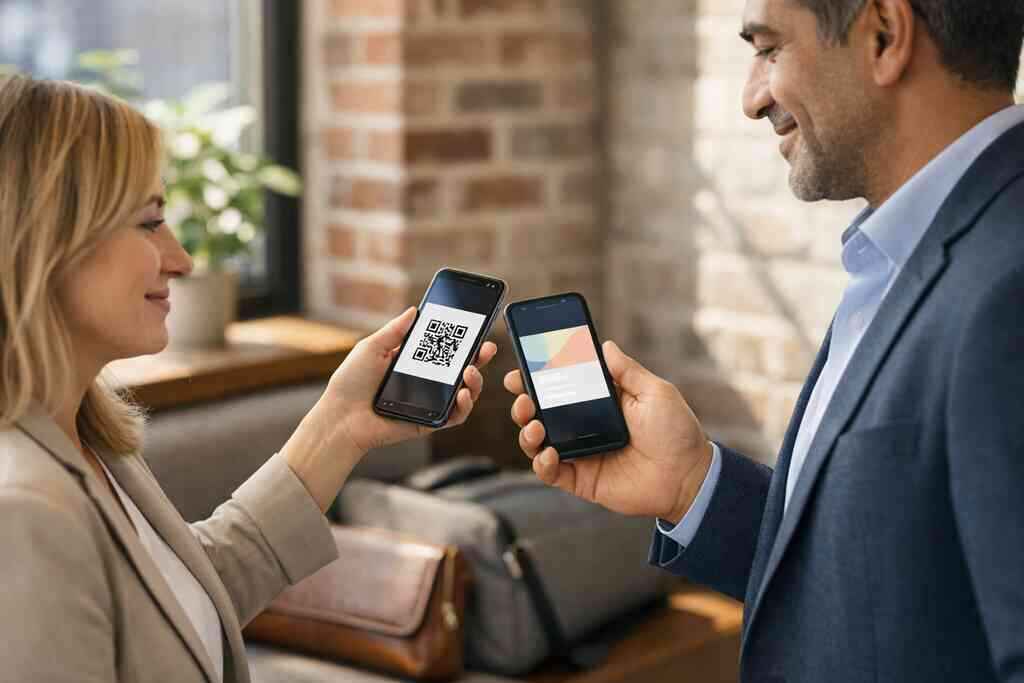
If your setup supports digital business cards with CRM integration for sales pipeline visibility, you can track what happened after the share. Did the lead open the message? Did they respond? Did they become an opportunity? Those questions matter because they connect marketing attribution for networking to real outcomes.
Here is the working truth: small businesses do not need more data noise. They need fewer blind spots. A connected workflow can help you see which contacts deserve attention now. It can also keep you from losing good leads in a crowded inbox.
How to track marketing attribution for networking across email, link sharing, and QR code business cards
You can track attribution across several channels if you keep the system simple. Email sharing can show opens and replies. Link sharing can reveal clicks and repeat visits. QR code business cards can show who scanned during in-person meetings. Together, they give you a better picture than paper ever could.
A good process often looks like this:
- Share the card in person or by message.
- Record the source, such as event, referral, or meeting.
- Watch for views, taps, or scans.
- Connect the contact to your CRM or follow-up list.
- Review which source converted.
If you want a deeper breakdown, digital business card analytics for lead capture and follow-up automation is where the measurement story becomes clearer. The point is not to collect every possible metric. The point is to know which networking activity actually produces revenue. That is measurable ROI.
Why Long Island networking gets sharper when every exchange is traceable
Long Island has its own rhythm. You may meet prospects in Suffolk County one day and in NYC the next. You may go from a Hauppauge business mixer to a Commack coworking space without much downtime. That kind of movement makes traceability even more valuable. Every exchange needs to be easy to find later.
The same is true for professionals who commute into the city. If you are meeting people across Long Island, New York, NY, Suffolk County, and NYC, your system has to keep up. Paper gets messy fast. Digital tracking gives you a cleaner picture of which conversations matter.
How professionals in Long Island, New York, NY, Suffolk County, and NYC can spot which events produce real opportunities
Event volume can fool you. A crowded room feels productive, but not every room drives business. When you track digital exchanges, you can compare outcomes by location and event type. That helps you spot which settings produce real opportunities.
A digital business cards for networking on Long Island approach can be especially helpful when you move between neighborhoods and industries. Maybe one local breakfast generates more replies than a larger expo. Maybe a Midtown meetup leads to more consultations than a weekend fair. Without traceability, you would never know. With it, you can spend smarter next month.
This is where digital card analytics become practical, not abstract. You can see which event gave you the most engaged contacts. You can then adjust your calendar, your pitch, and your follow-up timing. That is how small business lead tracking becomes a real business habit.
What business card details matter most at local meetings, coworking spaces, and client visits
People often focus on style first. Style matters, but clarity matters more. Your card should make it easy for someone to contact you, understand your role, and remember why they should reach out. The best business card details are the ones that remove friction.
At minimum, your digital card should make these details easy to find:
- Name and title
- Company or service name
- Mobile number or preferred contact method
- Email address
- Website or booking link
- Social profile, if relevant
- A clear call to action
A strong digital business card design keeps all of that readable on a phone. If you are meeting people in coworking spaces or client sites, simplicity wins. You do not need clutter. You need clear next steps. That is what turns a business card design into a useful tool.
Why digital business cards for networking fit real estate, corporate teams, and small business growth
Different roles need different sharing habits. Real estate agents need fast contact exchange at open houses and showings. Corporate teams need consistent branding and smooth handoffs. Freelancers need a reliable way to stay memorable after one brief meeting. Digital business cards fit all of that.
For digital business cards for real estate agents in NYC, speed and traceability matter most. For corporate teams, consistency matters more. For small business growth, the goal is simple: keep the conversation moving. That is why many teams now look at digital business cards for corporate teams and small business growth. The tool changes less than the workflow does. The workflow is where ROI appears.
Which setup gives you the cleanest ROI picture without overcomplicating the process
The best setup is usually the one you will actually use every day. That may be a simple digital card maker with a clean template. It may be a more branded setup for a team that needs uniform presentation. It may even be a mix of QR and NFC depending on how you meet people. The goal is not complexity. The goal is measurable follow-through.
If you want the cleanest ROI picture, start with the least complicated system that still tracks activity well. Then add only what improves clarity. That is the same advice we give when someone asks how to make a digital business card without overbuilding the process. Keep the path short. Keep the data useful.
When a digital card maker and business card template are enough versus custom branding needs
A solid template is enough when your priority is speed. If you are a freelancer, solo consultant, or early-stage owner, that can be the right move. You can create digital business card details quickly, share them easily, and start tracking engagement. That gets you moving without a design bottleneck.
Custom branding becomes more important when several people represent the business. In that case, consistency can improve trust. It also helps the card match your broader business card design system. If you need help with branding support for custom digital card design, a stronger visual identity may be worth it. The key is not to overdesign before you have proof that the workflow works.
How to compare digital card pricing, free digital business card options, and premium digital card plans without guessing
Price should be compared against utility, not just against the lowest number. A free digital business card can be useful for testing. Premium digital card plans may make sense if you need more consistency, tracking, or team use. The right answer depends on how often you network and how much visibility you need.
A simple comparison helps:
OptionBest forTradeoffFree digital business cardTesting and light useLimited depthTemplate-based setupFast personal useLess brand controlPremium digital card plansGrowing teams and measurable workflowsHigher commitmentIf you want a clearer view, digital card pricing and premium digital card plans should be reviewed alongside your follow-up process. Do not pay for features you will not use. Also, do not underbuy if your pipeline depends on reliable tracking. The best deal is the one that supports ROI.
What to look for in the best digital business card platforms when you want measurable results and a clear next move
Look for clarity first. You want sharing that feels easy, tracking that makes sense, and branding that does not confuse people. If the setup is hard, it will gather dust. If the workflow is smooth, it will support real lead capture.
A strong platform should help you:
- Share contact info quickly by QR, link, or tap
- Keep the card readable on mobile
- Support measurable engagement
- Connect to your CRM or follow-up system
- Fit your branding without extra clutter
If NFC matters to your team, NFC business cards versus QR code cards for small business networking is worth reviewing before you decide. NFC can feel elegant. QR is often more universal. Many teams use both. That flexibility can make your next move easier, especially if you serve clients across Long Island and NYC.
FAQ
Do digital business cards work without an app?
Yes, many do. A good digital business card can often open through a link, QR scan, or mobile browser. That makes sharing simpler for people who do not want to install anything. The exact setup depends on the platform, so check how it shares before you commit. If you want a smoother workflow, review the How It Works details before setting up your card.
Can I customize the design of my digital card?
Usually, yes. Customization often includes colors, logos, profile details, and layout choices. That helps your online business card match your brand. If you want to keep things simple, a business card template may be enough. If you need more polish, custom branding can help your card feel more professional and consistent.
Is NFC safe for sharing contact info?
NFC business cards are generally safe for contact sharing because they exchange small amounts of information at very close range. The security question is more about how your data is stored and shared after the tap. In practice, you should also think about privacy rules like GDPR if you store contact details. For a deeper comparison, see the NFC overview and then match it to your workflow.
Are QR code business cards better for networking events?
They can be, especially when many people need a quick scan without tap compatibility. QR code business cards work well across most phones and are easy to display on screens or print materials. They are also useful for contactless sharing at busy events. If your audience varies widely, QR is often the most flexible option.
How do digital business cards help track ROI from networking?
They help by linking the share to the follow-up. When someone views, taps, or saves your card, that action becomes measurable. If your card connects to CRM integration or lead capture, you can see which contact became an opportunity. That is the core of marketing attribution for networking. It gives you a real trail from introduction to outcome.
What should small businesses in Long Island look for first?
Start with ease of sharing and reliable tracking. If you work in Long Island, New York, Suffolk County, or NYC, you need something fast enough for real meetings. Look for a platform that supports digital business cards for networking, simple design, and clear follow-up. Then test it in one event or one client meeting before rolling it out wider.
Can digital business cards fit real estate and corporate teams?
Yes, and they often fit both well. Real estate agents need quick exchange and follow-up. Corporate teams need consistent presentation and easy contact sharing. Digital business cards can support both, especially when branding and tracking matter. If your team wants a more structured approach, review options built for small business growth and team use.