
Why a missed card handoff can cost a showing
A listing appointment can look perfect on paper, then one small miss slows everything down. The conversation goes well. The homeowner nods. You leave thinking follow-up will be easy. Then the paper card disappears into a coat pocket, and the contact never makes it into your CRM. If you have ever felt that quiet frustration, you already understand the problem.
The real estate moment when paper cards disappear before follow up
Real estate runs on momentum, and paper cards break momentum fast. A homeowner may set your card on a kitchen counter, then it gets buried under flyers and grocery receipts. A buyer may slide it into a wallet, then forget the name by dinner. That is not a small inconvenience. It is a lost chance to keep the conversation moving.
One agent I spoke with after an open house in Garden City described the same pattern three times in one month. The card looked sharp, but the follow-up never happened because the contact details were not easy to grab again. Here is the part most people miss: memory is unreliable after a busy showing. A digital business cards vs paper cards for networking approach keeps the exchange visible long after the handshake ends.
Why a digital business card keeps your contact details in the deal instead of the glove box
A digital business card does one simple thing better than paper. It keeps your contact information one tap or scan away. That matters when you are juggling buyers, sellers, inspectors, and lenders. It also matters when the client is standing in a driveway in the rain and wants your number now.
With digital business cards for real estate agents in Long Island, the contact can live on a phone instead of in the glove box. That sounds small, but small details drive follow-through. The quicker someone can save you, the more likely they are to call you back. In a field built on trust, convenience quietly becomes credibility.
How Long Island agents lose momentum after open houses and listing appointments
Long Island agents know the rhythm of local networking. You move from an open house in Suffolk County to a broker meeting, then maybe to a Hauppauge business mixer. Every stop creates new names and new chances. The trouble is not meeting people. The trouble is keeping them organized after you leave.
We have seen agents come back from a full Saturday with a pocket full of paper cards and no clean way to sort them. By Monday, some names are still in a jacket pocket. Others are under a car seat. That delay creates gaps in open house follow-up, and gaps turn warm leads cool. A virtual business card reduces that friction because it shares contact info instantly and stores it in a form people can use right away.
The quiet advantage of contactless sharing at busy events in Long Island New York
Contactless sharing matters more than people expect. Busy rooms make paper awkward. You do not want to dig through a stack of cards while a serious buyer is waiting. You want a fast exchange that feels polished and respectful.
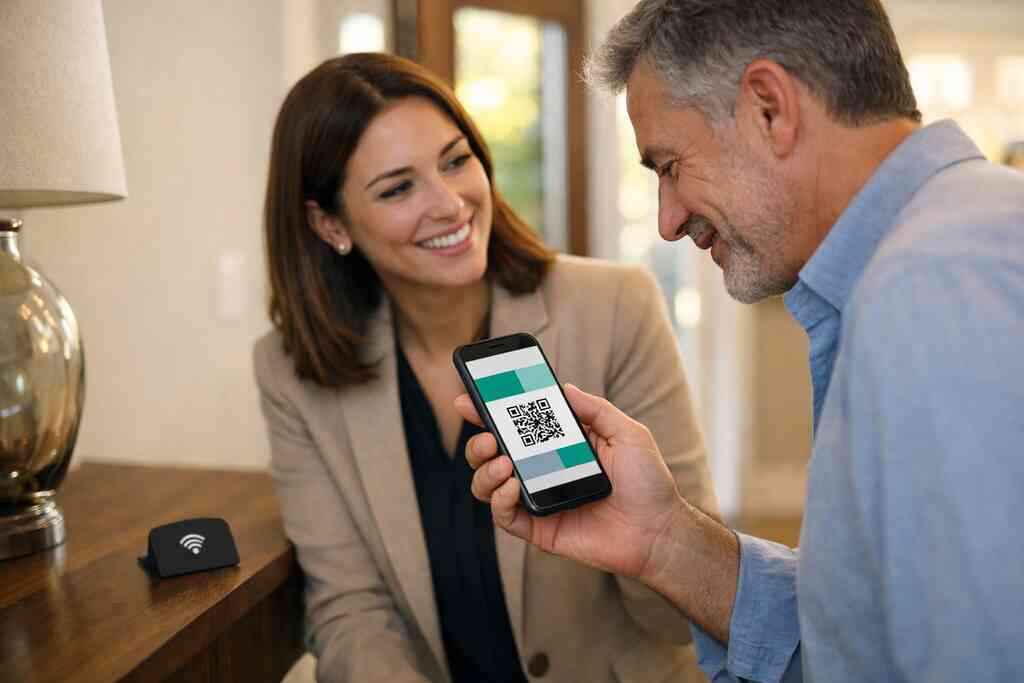
At crowded events across Long Island, New York, and even at NYC commuter meetups, a smart business card keeps the exchange smooth. QR code business cards and NFC business cards both support that style of paperless networking. They also help when someone prefers to save your details without touching a shared stack of cards. For agents, that ease can shape the next conversation before the room even clears.
What makes a digital business card a better closing tool than paper
Paper cards introduce delay. Digital tools remove it. That is the core difference, but the real advantage goes deeper. A digital business card can carry branding, tracking, and follow-up paths that a folded paper card never could. If you sell homes, you already know closing starts long before the contract. It starts the moment someone believes you are organized, easy to reach, and worth remembering.
How QR code business cards and NFC business cards speed up instant contact exchange
QR code business cards work because the scan is familiar and fast. NFC business cards work because tap-to-share feels natural on a modern phone. Both support instant contact exchange with very little explanation. That matters in real estate, where the best introductions often happen in motion.
The technical pieces are not random. QR codes follow the ISO/IEC 18004 standard, which helps explain why they are so widely recognized. NFC systems also rely on established standards, including ISO 14443, and Apple’s Core NFC framework supports reliable tap interactions on compatible devices. If you want a deeper look at tap-based sharing, The Difference Between NFC and QR Code Cards for 2026 is worth reading. The point is simple: less friction means more saved contacts.
Why a smart business card feels more polished in listing presentations and buyer meetings
A smart business card does more than share a phone number. It signals that you pay attention to details. That matters in listing presentations, where sellers are looking for competence before they even ask about commission. It also matters in buyer meetings, where first impressions can influence whether someone trusts your process.
A clean digital card design looks intentional, not improvised. It can reflect your brand colors, logo, and photo without looking crowded. It can also function as a digital card example of how modern networking should feel: simple, quick, and professional. I have seen agents walk into a coffee meeting in Commack with a worn paper stack and a stale first impression. I have also seen the same meeting open faster when the card looked polished on the phone.
How digital card analytics can reveal who actually engaged after a share
This is where digital business cards move beyond convenience. With the right setup, digital card analytics can show you whether someone opened your card, tapped through, or returned later. That does not guarantee a deal. It does, however, tell you where interest exists. For sales professionals, that kind of signal matters.
A paper card gives you hope. Analytics give you evidence. If you want to understand that layer better, Guide to Digital Business Cards Analytics for Labor Day 2026 can help frame the issue. What we have seen in 2026 specifically is that agents value visibility more when lead volume rises. You stop guessing who remembered you. You start following up with more precision.
Where CRM integration and follow up automation fit into real estate lead capture
Lead capture for real estate works best when the handoff connects to your system. That is where CRM integration and follow-up automation matter. When contact details flow into a pipeline cleanly, you reduce manual entry and reduce mistakes. You also make room for faster outreach, which helps when another agent is calling the same lead.
One client in Suffolk County used to enter contacts by hand after every open house. It took hours, and names were missed. After streamlining the process, the follow-up became more consistent because the data moved faster. If you are exploring that workflow, Integrating Digital Business Cards With Your CRM for 2026 is a practical place to start. For many agents, this is where a digital card becomes a real business tool.
Why custom branding and a clean digital business card design build trust faster than a worn paper card
Trust in real estate often begins before the pricing discussion. A branded card, a clear headshot, and simple business card details tell a prospect you are prepared. A bent paper card with faded ink sends the opposite message. People notice that. They may not say it aloud, but they feel it.
Custom branding also helps you stay consistent across listing presentations, emails, and social profiles. That consistency supports professional networking because the same name, image, and tone show up everywhere. If you want to see how presentation choices affect response, How to Create a Digital Business Card That Converts Leads gives useful guidance. The cleaner the design, the easier it is to trust the person behind it.
When a digital card for LinkedIn or mobile wallet sharing makes the handoff easier for busy commuters
Busy commuters on Long Island and in NYC do not want extra steps. They want fast access, then they want to move on. A digital card for LinkedIn or a mobile wallet share can fit that reality well. It reduces the chance that a contact is lost between platforms.
That is especially useful when you are meeting someone near Penn Station, on a train platform, or after a late evening showing. A smart business card should make the next action easy. If you want to see how digital cards fit modern professional networking, Digital Business Cards for LinkedIn Networking in 2026 is a helpful reference. The easier the save, the easier the follow-up.
The move that turns every introduction into a next conversation
Good networking is not about collecting more names. It is about making each name usable. That is the real advantage of a digital card strategy for real estate agents. You can shape the contact exchange, the design, the follow-up, and the brand experience in one place. That gives every introduction a better chance of becoming a call, a showing, or a referral. ### How to create digital business card details that fit a real estate agent workflow 
If you want to create digital business card details that actually help you work, keep the structure simple. Include your name, title, phone, email, office area, and a direct link to schedule a call. Add only what supports action. Too much information slows people down. Too little leaves them guessing.
A strong workflow also reflects how agents really operate. You may need a separate card for buyers, sellers, or referral partners. You may want different calls to action for open houses versus listing appointments. If you need a practical starting point, How to Create a Digital Business Card That Converts Leads is the right setup guide. The goal is not decoration. The goal is faster response.
Which digital business card templates help agents look sharp without overcomplicating the design
The best digital business card templates do three things well. They keep the layout clean, they make the name easy to read, and they leave room for branded elements. That is enough for most agents. You do not need visual clutter to look professional.
A business card template should support the way you sell, not fight it. Use one that matches your photo style, logo placement, and color palette. If you work in a team, stay consistent so everyone looks like part of the same operation. For more examples, Top 10 Digital Business Cards Templates for Realtors in NY can help you compare formats without overthinking the design. Simple usually closes better than busy.
When to use a free digital business card versus premium digital card plans from the pricing page
Not every agent needs the same setup on day one. A free digital business card may be enough if you want to test the workflow, share contact info, and learn how people respond. Premium digital card plans may make more sense if you need branding, team use, or deeper lead tracking. The decision depends on how heavily you network.
This is also where digital card pricing should be reviewed carefully. Do not assume every platform includes the same digital business card features. Compare what is actually listed. If you are evaluating options, the Pricing & Plans page is the obvious place to review. A small monthly difference can matter less than choosing the right tool for your pipeline.
How real estate agents in Suffolk County and NYC can use digital cards for open house networking and referral marketing
Open house networking is a different animal from a quiet office meeting. People move fast, ask short questions, and leave with competing priorities. In Suffolk County and NYC, that pace is even sharper. A digital card helps you stay present without being pushy.
It also supports client referral marketing because your contact details remain easy to resend. If a buyer meets you once, then introduces you to a sibling later, your card should still be easy to find. That is why many agents pair digital card sharing with follow-up notes and saved contacts. If you want a region-specific resource, Top 7 Digital Business Cards for Real Estate in NYC offers a useful angle for dense markets. The same logic works across Long Island.
What to check before choosing the best digital business card platforms for team use and small business growth
The best digital business card platforms should fit how you actually sell. Check whether the platform supports easy sharing, clear branding, and simple updates. If you work with a team, see whether card details can stay consistent across agents. If you are a small business, make sure the setup will not create extra admin work.
You should also check privacy and storage practices. If contact details are collected, you need to think about consent and basic data protection. GDPR matters in some contexts, and good data habits matter everywhere. For local firms and agents, the right tool should feel practical, not complicated. If you want a broader business lens, How Digital Business Cards Boost Real Estate ROI is a smart companion read. Pick the system that helps you follow up faster, not the one with the longest feature list.
Why the next step is to pair your card with the right setup on our how it works and real estate pages
A digital business card only works well when the setup matches your daily routine. That means clear business card design, simple sharing habits, and a follow-up plan you will actually use. It also means choosing a platform that supports your workflow instead of complicating it. The right digital card maker should make updates easy.
If you are considering a full rollout, start by seeing how the process works and how the real estate use case is framed. The setup should feel natural from the first share. For a practical overview, How It Works and the real estate page are the best places to begin. You do not have to figure it all out today. Pick your card format, clean up your details, and test it at your next showing.
Frequently Asked Questions
Do digital business cards work without an app?
Yes, many do. In most cases, someone can open a shared link or scan a QR code without downloading anything. That makes the exchange easier during open houses and meetings. Some platforms may offer app-based options, but the better experience is usually the one with the fewest barriers. If you want a broader comparison, review the platform’s sharing flow carefully before choosing.
Can I customize the design of my digital card?
Usually, yes. Custom branding is one of the main reasons agents switch from paper to digital. You can often adjust colors, photos, logos, and layout choices. The exact options vary by platform, so check the available digital business card templates before committing. A clean design helps prospects focus on you, not the clutter.
Is NFC safe for sharing contact info?
NFC is generally designed for short-range contact exchange, which makes it practical for business use. It does not work like open Wi-Fi, and it requires close proximity. That said, you should still be thoughtful about what information you share. Keep the card focused on business details, not unnecessary personal data. If you want to compare tap sharing with scan-based sharing, look at the NFC-specific setup page.
What should a real estate digital card include?
At minimum, your card should include your name, role, phone number, email, and a clear action button. For real estate agents, you may also want a link to listings, scheduling, or a contact form. Keep the layout simple enough for fast use. The best cards make it easy to save, call, or message you right away.
Are digital business cards better than paper cards for networking?
For many professionals, yes. Digital cards make sharing faster, reduce lost contacts, and support follow-up more reliably. Paper still has a place in some settings, but it cannot match instant sharing or tracking. The choice often comes down to how often you network and how fast you need leads to move.
How do I choose between free and premium plans?
Start with your workflow. If you only need basic sharing, a free digital business card may be enough. If you need branding, analytics, or team coordination, premium digital card plans may fit better. Compare the actual listed options instead of assuming every platform offers the same support. That way, you choose based on use, not hype.