
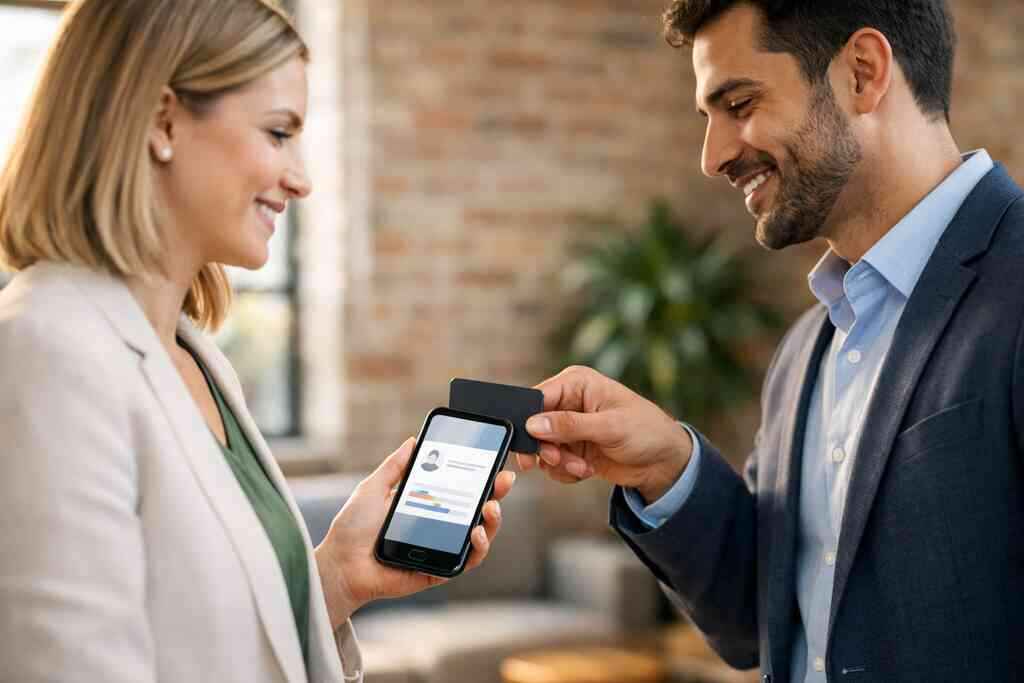
1) The LinkedIn profile move that makes your card impossible to ignore
If your LinkedIn profile gets views but not replies, that frustration is real. You may have a strong headline, yet people still leave without taking action. The fix is not louder self-promotion. It is making your digital business cards for LinkedIn networking in 2026 impossible to miss. A digital business card gives visitors one clean place to share contact info, scan, and move forward.
Why a digital business card belongs in your headline, featured section, and contact buttons
Your headline should do more than name your job. It should signal value and make your next step obvious. A digital business card, virtual business card, or online business card fits naturally in your featured section. It also belongs in your contact buttons, where it removes friction quickly. If someone is curious, you want them to act before they forget.
The mistake we see most often is hiding the card behind extra clicks. That slows the conversation. Instead, treat your digital card like a living part of your profile. On LinkedIn, that means using clear language, not clever language. For sales professionals, freelancers, and corporate teams, clarity wins because it respects attention.
How to turn a profile visit into a share contact info moment without sounding salesy
People do not want to feel pitched when they land on your page. They want a clean path. So use simple phrasing like “View my digital business card” or “Save my contact details.” That feels helpful, not pushy. It turns passive profile traffic into an electronic business card exchange.
One consultant we spoke with in Commack had the same issue many people face: a great profile with weak follow-through. After placing a smart business card link in the featured section, their outreach felt less scattered. People could open the card, save details, and reply later without searching their inbox. That is the small shift that changes follow-up quality.
Which digital business card details matter most for sales professionals, freelancers, and corporate teams
Not every field belongs on the card. Start with the business card details people need most: name, title, company, phone, email, and a clear action button. Then add only the extras that help the next conversation happen. For some users, that might mean scheduling links or a portfolio. For others, it may be a simple contact page.
Here is the part most LinkedIn guides miss: different roles need different emphasis. Sales professionals want speed and lead capture. Freelancers want proof and personality. Corporate teams need consistency across every shared card. A well-built digital card maker helps you balance all three without turning the page into clutter.
How to keep your virtual business card aligned with personal branding on LinkedIn and custom branding
Your virtual card should look like your LinkedIn profile sounds. That is personal branding consistency. If your profile is polished and calm, your digital business card design should match. If your tone is direct and practical, keep the layout simple. Custom branding matters because people remember what feels coherent.
A strong business card template should support your brand, not hide it. Use colors, typography, and spacing that match your profile image and banner. If you are comparing digital card vs paper options, remember this: paper cannot adapt. A digital business card app can. That makes it much easier to keep your brand current across channels.
2) The QR code business card strategy that works when people will not tap
Sometimes people will not tap. Sometimes they are holding coffee, carrying a coat, or rushing to the next booth. That is where QR code business cards shine. A QR code gives people a quick path without asking them to understand NFC or install anything first. For fast-moving professional networking, that matters.
When a QR code business card beats NFC business cards in fast-moving networking settings
QR code business cards work best when the room is moving quickly. Think conference hall traffic, lobby introductions, or a hallway conversation outside a Hauppauge business mixer. In those moments, a scan is easier than a tap. It also works well on printed signs, speaker slides, and LinkedIn graphics. That flexibility is hard to beat.
We saw this pattern in a crowded event near the Long Island Expressway corridor. A team had NFC cards, but half the room did not know how to use them. Their QR code solved the problem instantly. People scanned, saved, and moved on. No explanation needed. That is the value of contactless sharing that feels obvious.
How to place a QR code in LinkedIn posts, banners, and message signatures without clutter
Placement matters more than size. A QR code should support your message, not compete with it. Put it in a post image when the goal is direct action. Use it in a banner when you want repeated visibility. Add it to your message signature only if it stays clean and readable. Otherwise, it becomes visual noise.
A helpful rule is to keep one purpose per asset. If the post is educational, do not bury the QR code in the corner. If the goal is profile growth, pair the code with a short call to save your online business card. The best digital business card platforms make this easy because the code links straight to one clear destination. That reduces confusion and boosts scanning.
What makes a QR code scan feel frictionless at conferences, client meetings, and Long Island networking events
A frictionless scan starts with good contrast. The code should be easy to see, not decorative. It also needs a landing page that loads fast on mobile. If the page stalls, the moment is lost. That is why the scan experience matters as much as the code itself.
Long Island professionals know how busy these events can get. Between NYC commuting, Suffolk County meetings, and after-work mixers, nobody wants a clunky setup. A QR code that opens a simple digital business card example creates a smooth experience. It helps when the person only has one hand free. It helps when the connection is brief. It helps when attention is already split.
How ISO IEC 18004 style QR logic supports reliable contactless sharing across devices
The technical backbone matters because reliability matters. ISO/IEC 18004 is the standard behind QR code structure. In plain English, that means the code is designed for broad compatibility across devices. You do not need special hardware for most phones. That is why QR code business cards remain dependable.
For practical use, think less about the standard and more about the result. Your contactless sharing should work on older phones, newer phones, and everything in between. That is the promise people expect. If you want a broader comparison of digital card vs paper, this is one more reason digital wins. It is faster, lighter, and easier to update.
3) The tap to connect play that makes NFC business cards feel effortless
There is a different kind of relief in tap-to-share. It feels smooth. It feels modern without trying too hard. NFC business cards work best when you want the handoff to feel almost invisible. For busy people, that matters more than flashy design.
Why NFC business cards can outperform a paperless networking handoff at in person events
NFC business cards reduce the awkward pause after an introduction. You do not search through a wallet. You do not type a name later from memory. You tap, and the card opens. That makes paperless networking feel natural instead of forced.
On projects we’ve finished this year, we have seen this help especially at close-range introductions. A real estate agent in Garden City used tap-to-share at an open house mixer. The interaction stayed conversational. No fumbling. No paper stack. Just a quick exchange and a cleaner follow-up path. That simplicity is why many people prefer smart business card tools at live events.
How tap to share supports an electronic business card exchange on compatible phones
Tap-to-share depends on compatibility, but when it works, it feels seamless. The other person brings a compatible phone near the card, and the electronic business card exchange begins. That is why this approach is so useful for professional networking. It removes steps that people usually skip.
If you are sharing with mixed audiences, explain it in one sentence. Keep it simple: “Just tap your phone here.” That is enough. The less explaining you do, the more natural the moment feels. The more natural it feels, the more likely the contact gets saved.
Where Apple Core NFC and ISO 14443 matter for trust and reliability in simple terms
You do not need to become a hardware engineer to use NFC wisely. But it helps to know the basics. Apple Core NFC is the framework that supports NFC interactions on compatible iPhones. ISO 14443 is the family of standards that helps NFC data exchange stay consistent. In simple terms, both exist to make the tap feel dependable. Trust matters because people notice when tech behaves strangely. If the tap is delayed or the wrong page opens, confidence drops fast. That is why reliable setup matters more than fancy wording. If you want a deeper look at near field communication tap to share contacts, the idea is simple: keep the experience short and predictable. 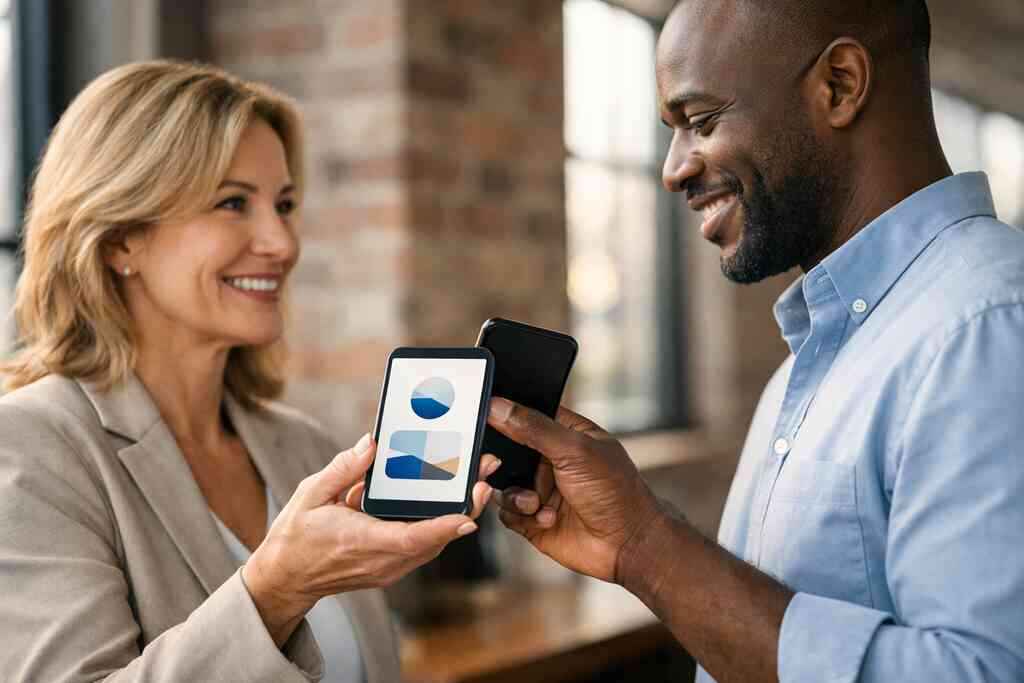
When an NFC digital business card makes sense for real estate agents, consultants, and busy teams
Not every role needs NFC first. But some do benefit more than others. Real estate agents, consultants, and busy teams often move from one short conversation to the next. They need speed. They need consistency. They need something that works without a long explanation.
That is where an nfc-digital-business-cards/ setup can make sense, especially when you meet people in person often. If your work mixes meetings, property showings, and quick introductions, tap-to-share can save time. It also helps teams present one clean standard. For people who value efficiency, that alone is compelling.
4) The digital card design choices that get saved instead of ignored
Good design is not decoration. It is decision support. If your card looks impressive but feels hard to use, people will close it. If it looks simple and clear, they will save it. That is the design challenge with digital business cards and digital business card templates.
What a strong digital business card design must include before you worry about style
Before color or animation, handle the basics. Your digital business card design needs a clear name, role, contact details, and one obvious action. It should load cleanly on mobile. It should also be readable in a few seconds. Those are not extras. They are the foundation.
A strong card also respects hierarchy. The most important detail should appear first. Secondary details should support the main action. If the goal is lead generation, then lead capture belongs close to the top. If the goal is trust, then your title and company matter more. Design should serve the purpose, not distract from it.
How to use digital business card templates and business card templates without looking generic
Templates are useful when they give you speed without making you look like everyone else. The trick is to customize them with intention. Use digital business card templates as a starting point, then adjust spacing, image choices, and colors. Do the same with any business card template you borrow from a library. Generic happens when you stop after the first draft.
If you want to branding and custom branding for professional cards, think about tone as much as visuals. A freelancer may want warmer colors and a portfolio link. A corporate team may need a tighter layout and brand consistency. The right template should reflect that difference. Otherwise, your card feels copied.
Which business card details should stay front and center for LinkedIn networking strategy
Your LinkedIn networking strategy should guide what stays visible. Put the most useful business card details first. That usually means your name, title, company, email, and phone. Then add one or two helpful extras, such as website, service area, or calendar link. Stop there unless a detail truly helps action.
The best cards also avoid clutter from too many social icons. LinkedIn already gives people a professional context. Your card should reinforce that context, not scatter it. A digital business card for LinkedIn works best when it feels focused. People should know what to do next within seconds.
How virtual card design changes for small business owners, NYC commuters, and Suffolk County professionals
Different audiences use cards differently. Small business owners often want versatility. NYC commuters want speed on the train platform or between meetings. Suffolk County professionals may want something easy to share in local networking circles. Virtual card design should reflect those real settings.
One small business owner from Long Island told us their old paper cards stayed in a car cup holder for weeks. Their digital card changed that pattern. The contact lived on a phone instead of in a glove box. That is the quiet advantage people miss. Your card only works if it stays accessible after the handshake.
5) The follow up system that turns a shared card into a real conversation
A shared card is not the finish line. It is the opening. If you do not build a follow-up system, the contact fades fast. That is why lead capture, analytics, and automation matter. They help you move from connection to conversation without relying on memory.
How lead capture and follow up automation keep your digital card from vanishing after the scan
Lead capture turns a simple share into an action you can track. When someone opens or saves your card, you get a chance to respond intelligently. Follow-up automation then helps you continue the conversation at the right pace. That matters because most people do not reply instantly.
If your card disappears into a phone drawer, you lose momentum. If your system captures the contact and prompts a next step, you stay present. That is especially useful for sales professionals and small business teams. It also supports sustainable business cards because you are no longer printing a stack for every event.
When CRM integration and digital card analytics actually help you work smarter
This is where many teams overcomplicate things. CRM integration only helps if it saves time. Digital card analytics only helps if it changes what you do next. If you are just collecting numbers, it is noise. If you are using the data to prioritize outreach, it becomes useful.
For digital business cards and CRM integration for teams in NYC in 2026, the value is often in the handoff. Contacts move into the system faster. Notes are easier to organize. Follow-up timing becomes clearer. That is a practical advantage, not a buzzword. If you want more detail, analytics should show who engaged, when, and how often.
Why a digital business card app matters for tracking contacts, timing, and next steps
A digital business card app gives you one place to manage the whole exchange. That includes creating the card, sharing it, and reviewing engagement. It also helps keep contact info current. If your phone number changes, you update once. Everyone sees the new version. That is far better than reprinting.
For teams, this matters even more. A shared app keeps messaging consistent. It helps newer staff look polished faster. It also supports contactless sharing during busy seasons when no one has time to rework a stack of paper cards. If you want a clear view of digital card analytics for lead capture and ROI, tracking and timing are the places to watch.
How to decide between a free digital business card and premium digital card plans using the pricing page and features page
If you are comparing a free digital business card with premium digital card plans, start with your use case. Ask how often you share. Ask whether you need custom branding, tracking, or team coordination. Then check the features page and pricing page together. That keeps the decision grounded in actual use.
A free option may suit light networking. A paid plan may make more sense if you need more control or reporting. The right choice depends on how seriously you use LinkedIn and in-person networking together. If you want to compare options, review the Pricing & Plans page and see what matches your workflow. You do not need to solve everything today. Start by choosing the setup that makes sharing easier tomorrow.
Frequently Asked Questions
Question: How can a digital business card improve my LinkedIn networking strategy in 2026?
Answer: A digital business card can make your LinkedIn networking strategy much more effective by giving people one clear place to view your business card details, share contact info, and take the next step. Instead of asking a profile visitor to search for your email or wait until later to reconnect, you can place a digital business card for LinkedIn in your featured section, contact buttons, or profile summary so the action is immediate and simple. That is especially helpful for sales professionals, freelancers, corporate teams, and small business owners who want a cleaner path from profile visit to conversation. At Digital Business Cards, based in Long Island, New York, we focus on making that process feel practical, professional, and easy to manage. Our approach supports paperless networking, custom branding, and a more polished online business card experience without relying on paper cards that can be misplaced.
Question: Should I use QR code business cards or NFC business cards for professional networking on LinkedIn?
Answer: It depends on how and where you network. QR code business cards are often the best fit when people need a fast, visual way to scan and save your contact details during conferences, meetings, or LinkedIn-driven in-person introductions. NFC business cards can feel even smoother in one-to-one settings because a tap can create an electronic business card exchange with very little effort. In practice, many professionals benefit from using both contactless sharing options depending on the audience and setting. If you are creating a digital business card app experience that supports professional networking, the goal is to remove friction and make it easy for someone to save your details immediately. Digital Business Cards helps users think through the right format for their workflow, whether they are focused on Long Island networking, NYC networking, Suffolk County business networking, or broader digital business cards for networking use.
Question: What should I include in a digital business card design so people actually save it?
Answer: A strong digital business card design should focus on clarity first and style second. The most important business card details usually include your name, title, company, phone, email, and one clear action button. After that, you can add helpful extras such as a website, scheduling link, or portfolio if they support the conversation. Good digital business card templates and business card templates should make the card easy to read on mobile and simple to understand in a few seconds. That matters for personal branding on LinkedIn because your card should feel like a natural extension of your profile, not a separate or confusing asset. Whether you are a real estate agent, freelancer, or part of a corporate team, the right virtual card design should help people remember you and follow up without delay. If you are looking for a digital business card example, think clean, focused, and mobile-friendly rather than crowded or overdesigned.
Question: How does follow-up automation and CRM integration help after someone scans my digital card?
Answer: Follow-up automation and CRM integration can turn a simple scan into a more organized workflow. Instead of letting a contact disappear after the first interaction, you can track lead capture, review digital card analytics, and follow up at the right time. That is especially useful for sales professionals and small business teams who need to manage many conversations at once. The value is not just in collecting names; it is in making the next step easier to act on. If your system supports CRM integration, it can help your team stay consistent and respond more efficiently without relying on memory or manual entry. Digital Business Cards encourages a practical approach here: use the digital business card app or platform features only where they help you stay organized, save time, and keep your contact info current.
Question: What makes Top 5 Digital Business Cards Strategies for LinkedIn in 2026 useful for Long Island professionals?
Answer: The strategies in Top 5 Digital Business Cards Strategies for LinkedIn in 2026 are useful because they reflect how professionals actually network today on Long Island, in Suffolk County, across New York, and in nearby NYC business circles. Whether you are comparing digital card vs paper, deciding between a free digital business card and premium digital card plans, or looking at digital card pricing, the main goal is to make sharing easier and follow-up more effective. For Long Island professionals, that often means balancing in-person networking with LinkedIn profile optimization and a digital business card for LinkedIn that supports both. Digital Business Cards is based in Long Island, New York, and our focus is on helping people create digital business card setups that feel credible, simple, and modern. If you want sustainable business cards that fit your workflow, support custom branding, and reduce the hassle of paperless networking, these strategies are a strong place to start.