
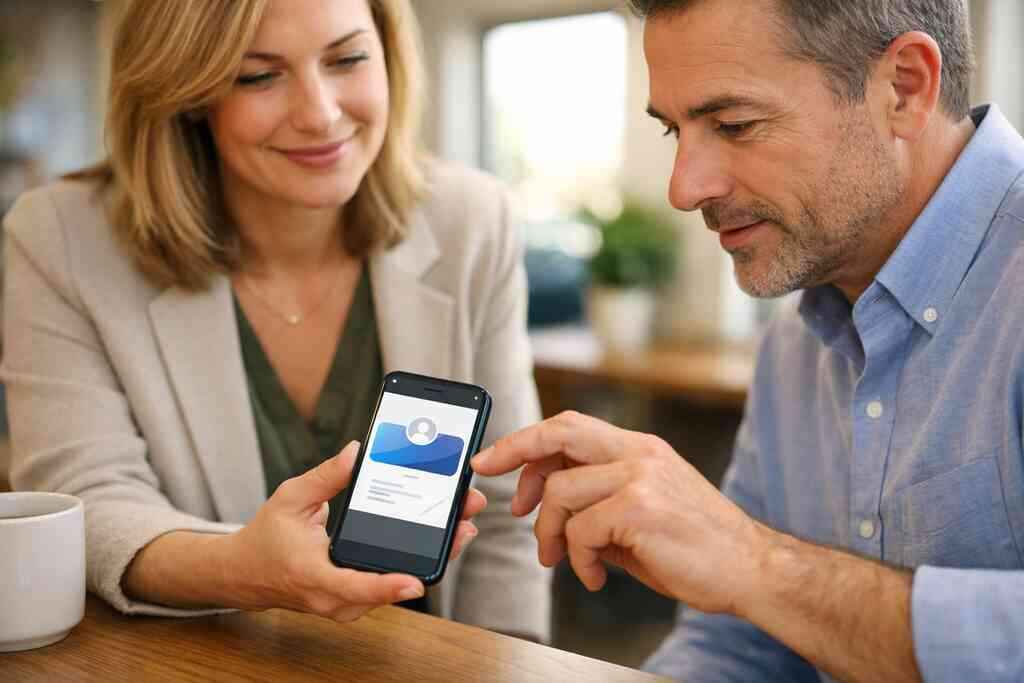
A paid click feels expensive the moment it lands. Then the contact disappears into a coat pocket, glove box, or desk drawer. If you have ever watched a warm lead cool off because the follow-up never happened, you know that feeling well. The hard part is not getting attention. The hard part is keeping the connection alive long enough to convert it.
When a paid click lands and the paper card disappears
Why PPC traffic is expensive enough that one lost contact can wreck the entire click-to-lead chain
PPC traffic is not cheap, so every missed contact hurts. You paid for intent, timing, and attention. If the prospect cannot reach you again quickly, the chain breaks. That is why why digital business cards improve PPC lead capture in 2026 matters so much for local campaigns. A digital business card keeps the next move visible.
We hear this from clients almost every week. They run search ads, get the click, and then lose the follow-up window. The problem is rarely the ad itself. It is the handoff after the ad. In a lead generation strategy, that handoff is where money leaks.
A 2023 Adobe survey found that many professionals had lost a paper card before following up. That sounds small until you multiply it by ad spend. One missed call, one buried card, one forgotten name. That is all it takes. PPC lead capture only works when contact sharing happens while intent is still hot.
How paper cards get buried in bags, dashboards, and desk drawers before follow-up ever happens
Paper cards look simple, but they are fragile in real life. They get bent, smudged, split, and mixed with receipts. On Long Island, New York, that happens fast during commuting, parking lot handoffs, and conference rushes. A card from a Hauppauge mixer may sit in a jacket until Friday. By then, the memory is gone.
One real estate agent in Garden City told us she found a stack of paper cards after a week of showings. She could not match half of them to the right property conversations. That is the hidden cost of digital vs. paper. Paper is easy to hand over, but hard to use later. It is contact sharing without continuity.
The better question is not, “Can you give someone a card?” The question is, “Can they still reach you when they are ready?” A virtual business card answers that with less friction. It also supports paperless networking and sustainable business cards without adding complexity.
What a digital business card changes when the prospect is already mobile and ready to act
A digital business card changes the timing. The prospect is already on a phone, already engaged, and already one tap away from action. That is why a smart business card works better than a paper card in mobile moments. It turns a quick interaction into instant contact sharing. It also reduces the chance of a lost handoff.
A digital business card app or digital card maker can help you create digital business card assets that are ready for mobile behavior. The best digital business card platforms usually focus on simplicity first. That matters because the prospect does not want a lesson. They want a clean way to save your business card details and move on. digital business cards vs paper cards: which is better is not only a cost question. It is a speed question.
Here is the part most people miss. A digital card does not need to be flashy to work. It needs to be reachable, readable, and easy to save. That is especially true for sales professionals, freelancers, and small business owners who depend on fast follow-up. The simpler the path, the more likely the lead survives the day.
What a high-intent visitor actually needs the second they tap your ad
Why landing page conversion improves when the next action is instant contact sharing instead of a long form
High-intent visitors do not want a ten-field form after a paid click. They want a clear next move. They want to know who you are, what you do, and how to respond. A mobile-friendly lead form helps, but instant contact sharing often converts faster. That is why landing page conversion improves when the next step is obvious.
A digital business card can act like a soft landing page. It gives the visitor business card details, a short brand story, and contactless sharing options. That is enough for many PPC campaigns. It is also easier to measure than a paper exchange. For some offers, the card becomes the conversion surface itself.
The emotional part matters too. If you are already nervous about ad spend, you do not need another clunky form. You need a cleaner path. A digital business card example can show a prospect exactly where to go next. That clarity can reduce hesitation. It also keeps the click-to-lead chain intact.
How a digital card fits sales professionals, real estate agents, freelancers, and corporate teams without slowing them down
Different teams need different levels of structure, but the same basic behavior. Sales professionals want speed. Real estate agents want local trust. Freelancers want easy sharing. Corporate teams want consistency. A digital business card can support all of them without forcing a new habit.
For best digital business cards for real estate agents in NY 2026, the value often comes from quick listing conversations and open-house scanning. For freelancers, the value is mobile-first simplicity. For corporate teams, it is brand control and measurable sharing. A digital business card design should fit the role, not fight it.
- Sales professionals need fast lead capture.
- Real estate agents need contactless sharing at showings.
- Freelancers need lightweight sharing on the go.
- Corporate teams need consistent branding.
- Small business owners need a simple follow-up path.
The best digital business card features are the ones that help people act quickly. That may include a business card template, a digital business card design, or a smart business card layout that stays readable on small screens. The goal is not decoration. The goal is conversion.
Why Long Island, New York, and NYC prospects respond faster when the contact path feels local, simple, and familiar
Local trust still matters, especially in Long Island, New York, and NYC. People respond faster when the exchange feels familiar. If you are meeting at a Commack co-working space or a Midtown lunch spot, they want a contact path that feels effortless. QR code business cards and NFC business cards fit that expectation well. They feel modern without feeling complicated.
We have seen this pattern in regional networking. At a local business mixer, people rarely want a long explanation. They want your name, your role, and a fast way to save you. An electronic business card exchange gives them that. It also supports professional networking without making the interaction feel forced. how digital business cards improve Long Island lead capture fits that local pace well.
A digital business card for LinkedIn can also help here, because many prospects already think in terms of profile links and mobile taps. The easier you make the path, the faster you move from stranger to remembered contact. That is especially useful for NYC commuters who check messages between stops. Familiarity reduces friction. Friction kills response.
The scan-to-convert workflow that turns a digital business card into a lead capture asset
How to create digital business card assets that match your ad promise and business card design
Your ad promise and your card must tell the same story. If the ad offers a quick consultation, the card should feel immediate and simple. If the ad promotes a niche service, the card should reflect that focus in its business card design. Mismatch creates doubt. Consistency builds trust.
A good digital card maker lets you create digital business card assets that support the offer, not distract from it. Use a business card template that keeps the main value visible. Then customize the card with clear business card details, strong branding, and a direct call to act. create a digital business card that converts leads is the right mindset here. The card should feel like the ad continued, not a new conversation.
What we have seen in 2026 specifically is that simple designs outperform busy ones in PPC lead capture. That is not about taste. It is about cognitive load. When the visitor is mobile and impatient, every extra choice reduces the chance of action. Clean virtual card design wins because it respects the moment.
Where QR code business cards and NFC business cards make the handoff from ad click to lead feel frictionless
QR code business cards and NFC business cards both reduce the time between interest and action. QR code technology for scan-to-convert lead capture is useful when the prospect wants visual control. NFC is useful when the tap feels even faster. Both support contactless sharing. Both work well in a mobile-first lead flow.
For small business use, the right format depends on the setting. A QR code business card is easy in printed environments and trade show booths. NFC business cards can feel seamless at face-to-face meetings. If you want a deeper comparison, the difference between NFC and QR code cards for small business is a helpful reference. The main point is simple: use the tool that matches the moment.
Apple’s Core NFC framework supports tap-based experiences on compatible devices. NFC also relies on standards such as ISO 14443 for reliable data exchange. QR codes follow ISO/IEC 18004. Those standards matter because lead capture should be dependable, not mysterious. Reliability is part of trust.
Why a mobile-friendly lead form, custom branding, and clear business card details matter more than flashy graphics
Flashy graphics rarely save a weak conversion path. Clear business card details do. A mobile-friendly lead form should be short, readable, and easy to finish with one hand. Custom branding should reinforce recognition, not clutter the screen. That balance matters more than animation or decoration.
One client in Suffolk County used a dense card design filled with too much text. People scanned it, but few saved it. After simplifying the layout and clarifying the contact path, more prospects stayed engaged. The lesson was obvious once we saw it. Good digital business card design supports memory, not noise. best business card details to include for maximum impact in 2026 should guide every layout choice.
If you serve local audiences, the card should also feel grounded. Mention Long Island, New York only where it helps recognition. Keep the brand promise tight. Include the details people need right away. That is how a digital card becomes a lead capture asset instead of a digital brochure.
How CRM integration and follow-up automation keep new leads moving after the first scan
The scan is not the finish line. It is the trigger. CRM integration helps move that trigger into a real workflow. Follow-up automation then keeps the lead from stalling. That matters because speed still shapes conversion.
A digital business card app with CRM integration can send contact data into your system faster than manual entry. That reduces mistakes. It also helps sales teams and corporate teams keep records cleaner. how to integrate digital business cards with CRM in 2026 is where the operational value becomes obvious. The card stops being a one-time share and starts acting like a routing tool.
GDPR considerations also matter when storing shared contact details. You should only collect and store what you can justify, protect, and manage responsibly. That is true for any electronic business card exchange. If a card can feed follow-up automation, it should also support clear consent and clean handling. Trust is not just marketing. It is process.
Why the smartest PPC teams measure shares, taps, and follow-up instead of just clicks
What digital card analytics can reveal about audience targeting and ad click quality
Clicks tell you who arrived. Digital card analytics tell you who cared enough to act. That distinction matters. A click can be curiosity. A tap or save is stronger intent. how digital business cards use analytics to track follow-up ROI helps you separate traffic quality from raw traffic volume. Analytics can reveal which ads drive real engagement. If one campaign generates many visits but few contact saves, the message may be off. If another campaign generates fewer clicks but more shares, it may attract the right audience. That is useful for lead nurturing and audience targeting. It also helps local business marketing stay efficient. 
The mistake we see most often is judging success too early. A PPC campaign is not just a traffic machine. It is a behavior system. Shares, taps, and contact saves tell you where attention turns into intent. That is much closer to revenue than a click count.
How to use digital business card features to compare QR scans, tap behavior, and contact saves
A strong digital card should help you compare behaviors without confusing you. QR scans show one kind of engagement. NFC taps show another. Contact saves show a deeper level of interest. Together, those signals show how the prospect moved.
If your platform offers top 7 digital business cards features for sales teams 2026, use the data to refine your sales motion. Look for patterns in device type, time of day, and follow-up response. That helps you understand what people actually do after the first touch. It also sharpens retargeting campaigns. A smarter audience picture creates cleaner PPC lead capture.
Here is a practical frame:
- QR scan means the card got noticed.
- Tap behavior means the handoff was easy.
- Contact save means the prospect wanted you back later.
- Follow-up reply means the funnel stayed alive.
That is a better scorecard than click-through rate alone. It also gives your team better language for optimization. You can improve what you can see.
Why conversion tracking should connect your ads, your card, and your sales funnel optimization plan
Conversion tracking should not stop at the landing page. It should connect the ad, the card, and the sales funnel. Otherwise, you only know half the story. A PPC manager needs to see how the prospect moved after the click. That is where digital card analytics become valuable.
If you want a broader framework, lead marketing strategies for PPC campaigns can help you think in stages. Start with the ad click. Then watch the card interaction. Then measure contact saves, replies, and booked calls. That sequence shows the real return on spend. It is also more honest.
A digital business card near me search often starts with proximity, but conversion depends on behavior. When a lead keeps moving, your funnel is working. When they stall after the scan, something is broken. Tracking the full path makes the broken point easier to find. That is what good sales funnel optimization looks like.
How local business marketing on Long Island can be tuned using lead nurturing signals from real prospect behavior
Long Island marketing works best when it respects local timing and local habits. People commute, multitask, and respond in short windows. A digital business card supports that reality because it keeps contact details accessible on mobile devices. It also gives you lead nurturing signals you can actually use.
If a prospect scans your card after a Hauppauge meeting, saves your contact, and opens your follow-up email, that is useful behavior. If they only scan and disappear, that tells you something too. You can tune your message, timing, and offer based on the signal. That is how local business marketing becomes more precise. how digital business cards improve Long Island lead capture is really about reading intent better.
For NYC and Suffolk County prospects, clarity wins. They do not need a dramatic pitch. They need an easy way to remember you and reach you again. That is why digital business cards for networking can outperform paper in practical terms. They stay alive after the room gets noisy.
What to put in place before your next campaign goes live
How to choose the right digital business card template and digital business card design for the offer you are promoting
Pick the card based on the campaign goal. If the offer is local and fast-moving, use a simple template. If the offer is brand-sensitive, lean on custom branding. The right business card template should match the ad promise and the audience expectation. That is true for every digital business card example we have seen work well.
best business card templates for real estate agents 2026 are useful if your campaign is property-related, but the broader principle applies everywhere. The design should guide action. Keep the text short. Keep the buttons clear. Keep the business card design readable on a small screen.
One good rule: if a prospect has to think, the card is too busy. If they can understand it in seconds, you are closer. That is the difference between a virtual business card and a cluttered flyer. Your card should help the click feel complete.
When free digital business card tools are enough and when premium digital card plans make more sense for PPC lead capture
Free digital business card tools can be enough for light use. They are often fine for testing, basic sharing, or early-stage networking. But PPC lead capture usually demands more structure. That is where premium digital card plans may make more sense. Digital business card pricing should be judged against workflow, not vanity.
A free digital business card may work if you only need basic sharing. A premium plan may fit better if you need custom branding, analytics, or smoother follow-up. I cannot verify every platform feature, so you should confirm the specifics before you buy. Still, the framework is simple. If the card must support paid traffic, it should support measurable action. That is not a luxury.
For a small business, the decision often comes down to volume and repeat use. If one campaign brings steady leads, a more capable plan can pay for itself in saved time. If you only network occasionally, free may be enough. The right choice depends on how much follow-up your campaigns require.
Why digital card vs. paper is really a conversation about speed, trust, and measurable follow-up
The digital card vs. paper debate sounds like a format debate. It is really a workflow debate. Paper is familiar, but slow. Digital is fast, but only useful if it is easy to use. Speed, trust, and measurable follow-up decide the winner.
A digital business card app should make sharing simple, not complicated. That is true for sales professionals, corporate teams, and freelancers alike. If the card cannot support follow-up automation or easy contact capture, it will not help PPC much. In that case, paper and digital both fall short. The real advantage comes from repeatable action.
For networking in Long Island and NYC, digital often fits the rhythm better. People move quickly. They switch devices. They expect instant access. When you give them that, you reduce the chance of a lost lead. That is the practical side of modern networking.
How to use how-it-works, templates, features, pricing, and nfc-digital-business-cards to build a cleaner lead path
If you are building your setup now, start with the basics. Use How It Works to understand the flow. Then review Pricing & Plans to compare options. Check features if you need analytics or contact capture support. If tap sharing matters, The Difference Between NFC and QR Code Cards for Small Business is worth a look.
That path keeps the process simple. It also prevents rushed decisions. You do not need every feature on day one. You need the right path from ad click to saved contact. That is the whole point of contactless lead capture.
The decision frame for turning your next ad into an electronic business card exchange that actually keeps working after the click
Before the campaign goes live, ask three questions. Can the prospect understand the offer fast? Can they share or save your contact without effort? Can your system track what happens next? If the answer is yes, your electronic business card exchange is built for PPC.
That is especially useful for Long Island, New York, NY, and Suffolk County campaigns. Local prospects want convenience, not ceremony. They want to know you, remember you, and reach you later. digital business cards for corporate teams can help frame the internal process if you work across departments. The same principles still apply.
Do not wait to make this cleaner. Pick one current ad, match it to one card, and test the path with two teammates today. Then check whether the contact is easier to save than a paper card. You do not have to solve every funnel problem at once, and you do not have to do it alone. Start with one campaign, one card, and one smoother handoff.
Frequently Asked Questions
Question: How can digital business cards improve PPC lead capture compared with paper cards for local campaigns in Long Island, New York, NY, and NYC?
Answer: Digital business cards help keep the next step visible after a paid click, which is exactly where PPC lead capture often breaks down. With paper cards, a contact can end up in a pocket, glove box, or desk drawer before follow-up ever happens. A digital business card, online business card, or virtual business card makes it easier to share contact info instantly while the prospect is still engaged. That matters for high-intent traffic because the handoff happens while interest is hot.
Question: What should I include in a digital business card design or business card template to support landing page conversion and instant contact sharing?
Answer: A strong digital business card design should stay simple, readable on mobile, and aligned with the ad promise. Include only the business card details a prospect needs right away, such as name, role, company, and a clear way to respond. If the card is being used for PPC lead capture, the best approach is usually a clean business card template or digital business card templates that reduce friction instead of adding clutter. Custom branding can help the card feel trustworthy, but it should not overwhelm the layout. The goal is not decoration; it is conversion. A mobile-friendly lead form, concise messaging, and clear contactless sharing options can all help improve landing page conversion and keep the scan-to-convert workflow moving.
Question: How does How to Use Digital Business Cards for PPC Lead Capture connect with CRM integration and follow-up automation?
Answer: The main idea behind How to Use Digital Business Cards for PPC Lead Capture is that the scan, tap, or save should trigger a real follow-up process. If your digital business card app supports CRM integration, contact details can move into your system faster and with fewer manual steps. That helps sales professionals, real estate agents, freelancers, and corporate teams keep records cleaner and reduce the chance of lost leads. Follow-up automation can then route the prospect into email, sales, or retargeting campaigns based on what they did next. This is especially valuable for lead generation strategy because it connects the ad click, the card interaction, and the sales funnel optimization plan instead of treating them as separate events.
Question: Should I use QR code business cards or NFC business cards for contactless lead capture in professional networking?
Answer: Both QR code business cards and NFC business cards can support contactless sharing, but the best choice depends on the setting. QR code business cards are useful when the prospect wants visual control or when you are using printed materials, booths, or open-house style networking. NFC business cards can feel faster in face-to-face conversations because a tap feels seamless. For professional networking in Long Island, Suffolk County, and NYC, either option can work well as long as the path from interest to save is simple. If you are comparing digital card vs. paper, the important part is not the format itself. It is whether the card helps the prospect act immediately and remember you later.
Question: What digital business card features matter most for sales professionals and small business teams trying to measure lead quality?
Answer: The most useful digital business card features are the ones that help you understand behavior after the first interaction. Digital card analytics can show whether people scanned, tapped, saved, or replied, which is much more helpful than click counts alone. That kind of tracking supports audience targeting, retargeting campaigns, and better lead nurturing. For sales professionals and small business teams, custom branding, clear business card design, and simple sharing options also matter because they make the card easier to use in real conversations. If you are deciding between free digital business card options and premium digital card plans, it is worth comparing whether the platform supports the workflow you need for measurable lead capture. A good digital card maker should help you create digital business card assets that fit your funnel, not just look polished.
Question: Can Digital Business Cards help me build a more local, mobile-friendly lead path for digital business cards near me searches and PPC traffic?
Answer: Yes, that is one of the strongest use cases. A digital business card can make local follow-up easier because it keeps your contact details accessible on mobile devices, which is ideal for Long Island, New York, NY, Suffolk County, and NYC audiences. When someone finds you through a nearby search or a paid ad, they usually want a fast, familiar way to reach you again. A digital business card for LinkedIn, an electronic business card exchange, or an Apple Wallet business card or Google Pay card style workflow can help keep the connection alive after the first tap. For local business marketing, the best path is simple: make the offer clear, make the card easy to save, and make the follow-up easy to track. That is how digital business cards for networking can support sustainable business cards, paperless networking, and better conversion over time.