

A digital business card is a shareable online profile that lets you exchange contact details instantly by QR code, NFC tap, email, or link. For marketing teams, it works less like a paper card and more like a lightweight lead tool that keeps contact info searchable, editable, and ready to share.
Key Takeaways
- A digital business card replaces a paper card with a contactless, updateable way to share business card details.
- For marketing teams, the real value is faster follow-up, cleaner contact capture, and less lost information after events.
- Digital business cards can be shared through QR code business cards, NFC business cards, email, and direct links.
- A strong setup should include custom branding, clear contact info, a simple business card template, and links to relevant channels.
- For teams in Long Island, New York, digital networking helps at conferences, client meetings, and local events where speed matters.
When a paper card dies in the room, what your marketing team actually loses
A paper card does not just get lost. It breaks the handoff between interest and follow-up. For marketing teams, that delay can mean a warm conversation at a conference turns cold by the time someone transcribes a name, checks a number, and tries to remember where the meeting happened.
Why a crumpled paper card slows down follow-up after conferences, client meetings, and events
The hard part is not collecting cards. It is doing something with them before they disappear into a bag, a drawer, or the car console. At a Hauppauge business mixer, for example, a marketer may meet ten people in an hour. If those cards are paper-only, the follow-up work starts later and gets messy fast.
A digital card reduces that delay. You can share one card in seconds, and the recipient can save it right away. That matters for paperless networking because the next step becomes simple: open the link, save the contact, and continue the conversation. Research from sources like Pew Research helps show how deeply digital habits shape everyday communication, including how people expect to receive contact details now.
One client in a crowded Suffolk County event space had a stack of paper cards that never made it into their CRM. Their team spent nearly an hour rebuilding contacts from memory. A digital share would have cut that cleanup work to minutes, not because it is magical, but because it removes manual transcription.
How a digital business card keeps contact info searchable, shareable, and ready for the next conversation
A digital business card keeps your contact information in one place and makes it easy to update later. If your phone number changes, or your team adjusts a landing page, you do not reprint anything. That flexibility is one reason digital business cards for networking fit fast-moving teams better than paper. The practical advantage is speed. People can save, tap, scan, or click without friction. That means fewer missed leads and fewer awkward moments where someone says, “Do you still have a card?” In Long Island, New York, and NYC, where professionals move between offices, trains, and events quickly, that convenience matters more than people expect.
A useful digital setup also supports contactless sharing. You can use a QR code at a booth, an NFC tap at a meeting, or a direct link in email and LinkedIn messages. For teams that spend a lot of time on the move, that is a cleaner workflow than trying to keep paper cards perfect in your pocket.
What a digital business card really is and why it behaves more like a lead tool than a name tag
A digital business card is a mobile-friendly contact page that shares your name, role, company, and chosen action links in one place. It behaves like a lead tool because it can direct people to call, email, book, follow, or save your details instead of just handing over a static card. 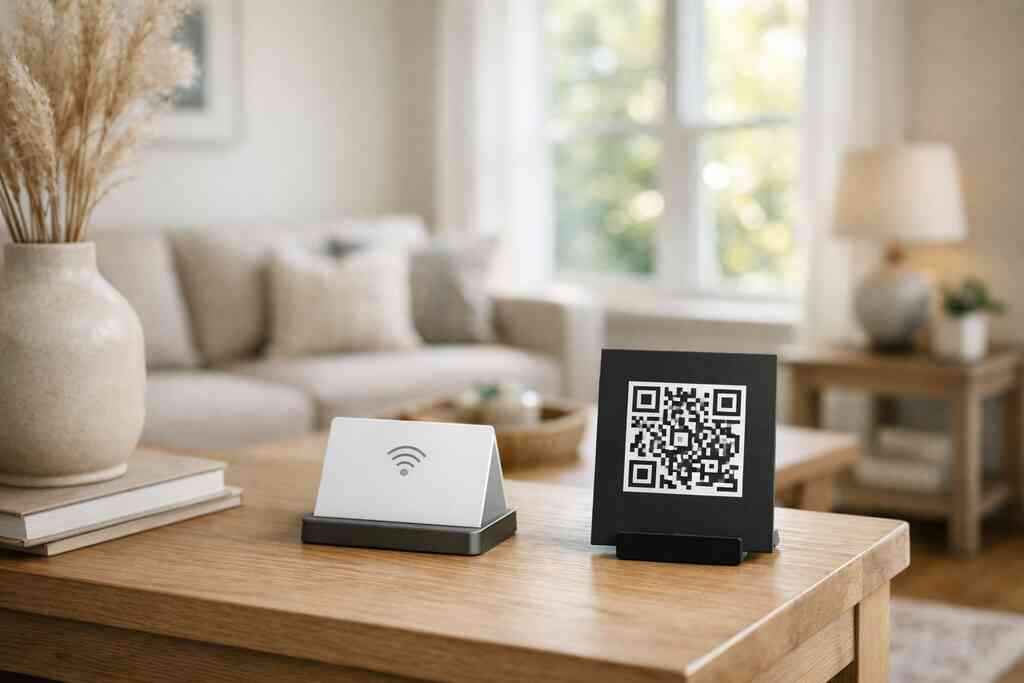
Digital business card, online business card, and virtual business card explained in plain language
The terms digital business card, online business card, virtual business card, and electronic business card usually mean the same basic thing: a digital version of your card that lives online and can be shared instantly. Some teams call it a smart business card when it adds tap-to-share or QR functionality.
Here is the simplest way to think about it:
TermPlain meaningBest useDigital business cardA shareable online profile with contact infoEveryday networkingOnline business cardA card hosted on the webLink sharing and email signaturesVirtual business cardA digital-only version of a cardRemote and hybrid teamsElectronic business cardA broad term for digital contact exchangeGeneral business useIf you are comparing digital card vs paper, the digital version wins on editability and sharing speed. Paper may feel familiar, but it cannot be updated after printing. That is a problem when your team changes roles, launches campaigns, or needs to track where a lead came from. For a closer look at rollout options, how it works explains the setup in simple terms.
The business card details marketing teams should always include, from branding and links to contact capture and a clean business card template
A strong digital card should feel like your brand, not a generic placeholder. Start with the basics: full name, title, company, phone, email, website, and one clear call to action. Then add links that help the recipient continue the conversation, such as LinkedIn, booking pages, or a relevant landing page.
Here is what marketing teams should include:
- Branding that matches your website and visual identity
- Business card details that are easy to read on mobile
- A short headline that explains what you do
- One or two action buttons, not a crowded menu
- Optional contact capture fields if your platform supports them
- A clean business card template that works on small screens
- A version that can be adapted for corporate teams, small business, freelancers, or sales professionals
This is also where custom branding matters. A polished digital business card design helps people trust the share. In the real world, a real estate agent in Garden City may need one card style for open houses and another for referral partners. A marketer may need one for trade shows and another for internal teams. The structure should stay consistent, but the message can change.
If you want to see how a digital card can be built around team use, our templates page is the right place to start. And if you are comparing platforms, pricing plans can help you understand what is available before you commit.
A good digital card maker should make it easy to create digital business card profiles without technical hassle. The best setup is simple enough for busy marketers, flexible enough for brand control, and fast enough to use after a meeting, on the train to NYC, or at a Suffolk County networking event. If that is the bar, Digital Business Cards is a strong option because it supports QR, NFC, and direct link sharing without asking recipients to install an app. For teams focused on digital business card analytics and lead capture, that kind of workflow is even more useful.
Frequently Asked Questions
Question: What is a digital business card, and how does it help marketing teams with paperless networking and follow-up?
Answer: A digital business card is a shareable online profile that lets you share contact info instantly by QR code, NFC tap, email, or link. For marketing teams, it works like a lightweight lead tool rather than a static piece of paper. Instead of handing out a card that can get lost or outdated, you can create digital business card profiles that are easy to save, search, and update.
This is especially helpful for paperless networking at conferences, client meetings, and local events across Long Island, New York, Suffolk County, and NYC. When someone scans a QR code business card or taps an NFC business card, they can save your details right away and continue the conversation without delay. That makes follow-up easier and helps reduce the friction that often comes with digital card vs paper comparisons.
For marketing teams, the big advantage is speed. A digital business card keeps business card details in one place, supports contactless sharing, and makes it easier to stay organized after a busy networking day. It is a practical option for corporate teams, small business owners, freelancers, sales professionals, and real estate agents who want a more modern way to connect.
Question: What should marketing teams include in a strong digital business card design or business card template?
Answer: A strong digital business card design should be simple, branded, and easy to use on a phone. At minimum, include your name, title, company, phone number, email, website, and one clear call to action. For marketing teams, it also helps to add relevant links such as LinkedIn, booking pages, campaign landing pages, or a contact form.
The best business card template is one that looks clean on small screens and reflects your brand identity. Custom branding matters because it helps the card feel professional and trustworthy. A smart business card should not feel crowded or generic; it should make it easy for someone to save your details and know what to do next.
Digital Business Cards can help you create digital business card profiles that fit a variety of uses, including business card example layouts for sales professionals, real estate agents, freelancers, and corporate teams. If your team needs flexibility, a digital card maker that supports different templates and simple updates is a strong choice.
Question: How do QR code business cards and NFC business cards compare for professional networking?
Answer: QR code business cards and NFC business cards both make contactless sharing easier, but they work a little differently. A QR code business card lets someone scan your card with a phone camera and open your digital profile immediately. An NFC business card lets someone tap their phone to share the same information, which can feel especially quick in face-to-face settings.
For professional networking, both formats are useful because they reduce the need to carry stacks of paper cards. They also make it easier to share your contact details at events, meetings, and trade shows without worrying about lost or damaged cards. If your audience prefers scanning, QR is a natural fit. If you want a tap-to-share experience, NFC can be a strong option.
Digital Business Cards supports modern sharing methods that fit busy marketing teams and other professionals who need a simple way to share contact info. That flexibility is one reason digital business cards for networking are becoming a better fit for fast-moving teams in Long Island and beyond.
Question: How does the blog What Is a Digital Business Card for Marketing Teams explain the value of digital card vs paper?
Answer: The blog What Is a Digital Business Card for Marketing Teams explains that the biggest weakness of paper cards is not just that they can be lost, but that they slow down follow-up. A paper card may sit in a bag, drawer, or car console before it ever gets entered into a CRM. That delay can make a warm conversation go cold.
By contrast, a digital business card keeps your information searchable, editable, and ready to share again whenever needed. If your phone number, website, or campaign changes, you can update the digital version without reprinting anything. That makes it a better fit for marketing teams that need efficient workflows and cleaner contact capture.
The blog also highlights that digital business cards are useful across Long Island, New York, including Suffolk County and NYC, where professionals move quickly between meetings and events. In that environment, contactless sharing and fast access matter a lot. A digital business card example is not just a modern replacement for paper; it is a more practical networking tool.
Question: Is Digital Business Cards a good option for small business, corporate teams, freelancers, and sales professionals looking for digital business cards near me?
Answer: Digital Business Cards is a strong option for professionals who want a simple way to share contact details without the hassle of paper. Because the company is based in Long Island, New York, it is a good local fit for anyone searching for digital business cards near me in Long Island, Suffolk County, or NYC.
The platform is useful for small business owners, corporate teams, freelancers, sales professionals, and real estate agents who need a clean digital business card design and an easy way to share their information. It supports modern networking habits like QR code business cards, NFC business cards, and direct link sharing, which makes it easier to connect during meetings and events.
If you are comparing best digital business card platforms, look for one that supports custom branding, clear business card details, and a simple business card template. Digital Business Cards focuses on helping users create digital business card profiles that are easy to share and easy to manage, which is exactly what many marketing teams need for paperless networking and follow-up.